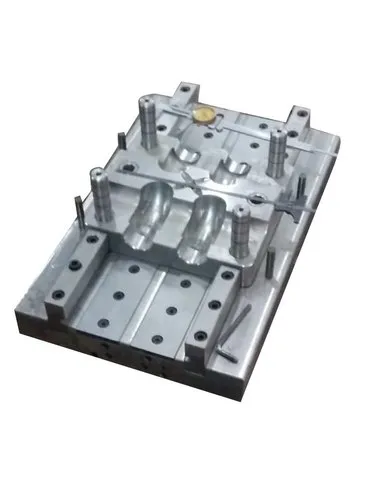
3D Blow Moulding is a revolutionary advancement in the traditional blow moulding process, enabling the production of complex, three-dimensional hollow plastic parts. Unlike conventional methods that are limited to linear or 2D preform orientations, 3D blow moulding allows for more intricate shapes, reduced material usage, and greater design flexibility. This has led to its increasing adoption in industries such as automotive, medical, and consumer packaging.
Overview of 3D Blow Moulding
Traditional Blow Moulding Types:
Extrusion Blow Moulding (EBM)
Injection Blow Moulding (IBM)
Stretch Blow Moulding (SBM)
These methods involve creating a parison (tube-like plastic form) or preform which is then inflated into a mould. However, they are limited in shape complexity and often require secondary operations like welding or assembly.
3D Blow Moulding:
This technique allows for precise control of the parison within a 3D space using robotic or articulated arms before the blowing process. This results in seamless hollow parts with curves, branches, and non-linear geometries.
Emerging Technologies in 3D Blow Moulding
1. Suction Blow Moulding (SBM)
Used especially for automotive ducts and tanks.
The parison is formed and sucked into a 3D cavity using vacuum pressure.
Benefits: Precise wall thickness control, smooth internal surfaces, reduced weight.
2. Continuous 3D Extrusion Blow Moulding
A robotic arm guides the extruded parison directly into a complex 3D mould.
Ideal for forming long, curved parts like air ducts or fluid lines.
Reduced cycle time and material waste.
3. Water-Assisted Injection Blow Moulding
Combines blow moulding with water-assisted techniques to form hollow parts.
Used to form complex internal channels without core inserts.
Improves surface finish and reduces cooling time.
4. Robotic Parison Manipulation
Multi-axis robots precisely control the orientation and positioning of the parison.
Offers design freedom, minimizes material usage, and enhances repeatability.
5. Hybrid Additive-Blow Moulding
Integration of 3D printing with blow moulding to create moulds or even directly shape parts.
Allows rapid prototyping and small-batch production.
Reduces tooling cost and lead time.
6. Smart Process Monitoring and AI Integration
Incorporates sensors, AI, and real-time data analytics to optimize process parameters.
Ensures consistent quality and predictive maintenance.
Applications of 3D Blow Moulding
Automotive: Fuel tanks, air ducts, fluid reservoirs, EV cooling systems.
Medical: Complex tubing systems, fluid transport channels.
Consumer Goods: Custom bottles, ergonomic packaging, children’s toys.
Industrial: HVAC ducts, fluid conveyance systems.
Advantages of 3D Blow Moulding
Greater design flexibility and geometric freedom.
Seamless production of complex shapes (reduces welding and joining).
Lighter, stronger components due to optimized material distribution.
Enhanced efficiency with reduced scrap and lower tooling costs.
Supports automation and high-volume production.
Challenges and Future Directions
Challenges:
High initial investment in robotic and control systems.
Requires specialized design and simulation expertise.
Limited availability of trained personnel.
Future Directions:
Integration with Industry 4.0 and IoT for smarter production.
Development of sustainable and recyclable materials.
Use of simulation and digital twins for pre-manufacturing analysis.
Expansion into biomedical and aerospace components.
Conclusion
3D Blow Moulding represents a significant leap in the evolution of plastic processing technologies. Its ability to create intricate, seamless, and efficient hollow structures makes it a preferred choice in a wide range of high-performance applications. With continuous advancements in robotics, materials, and digital technologies, 3D blow moulding is set to redefine the possibilities in manufacturing design and efficiency.