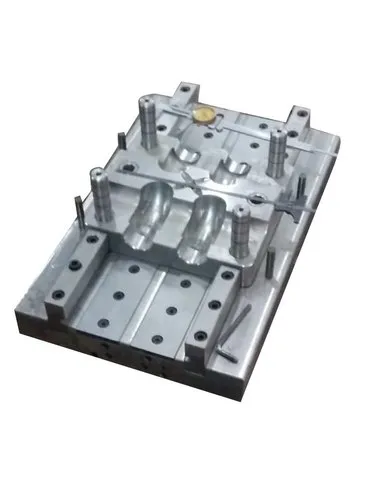
Additive Manufacturing (AM), commonly known as 3D printing, is revolutionizing the design and fabrication of die components in the tooling industry. Traditionally, die components—used in stamping, forging, injection molding, and die casting—are produced through subtractive methods like CNC machining, EDM (electrical discharge machining), and grinding. However, AM offers a powerful alternative by enabling layer-by-layer fabrication directly from a digital model, allowing greater design freedom, reduced lead times, and functional optimization.
Key Additive Manufacturing Technologies for Die Components
Selective Laser Melting (SLM) / Laser Powder Bed Fusion (LPBF):
Fuses metal powder using a high-power laser.
Ideal for complex geometries and internal cooling channels.
Common materials: Tool steels (H13, maraging steel), Inconel, stainless steel.
Direct Energy Deposition (DED):
Uses focused thermal energy (laser, electron beam, or plasma arc) to melt materials as they are deposited.
Suitable for repair, modification, or adding features to existing die components.
Binder Jetting (BJ):
Uses a liquid binder to glue powder particles layer by layer.
Post-processing includes sintering and infiltration.
Suitable for large parts and lower cost production.
Advantages of AM in Die Manufacturing
Design Flexibility:
Complex geometries like conformal cooling channels, undercuts, and lattice structures.
Topology optimization for weight and stress distribution.
Shorter Lead Times:
Rapid prototyping and production reduce tool development cycles.
Enables faster iteration in design.
Cost Efficiency:
Less material waste compared to subtractive manufacturing.
Lower tooling and setup costs, especially for low-volume production.
Enhanced Tool Performance:
Improved thermal management with conformal cooling channels in injection molds, leading to faster cycle times and better part quality.
Potential to reduce wear and extend tool life with optimized materials and geometries.
Applications of AM in Die Components
Injection Molding Dies:
Integrated cooling channels for thermal control.
Lightweight inserts and cores.
Forging Dies:
Functionally graded materials to withstand high thermal and mechanical loads.
Surface hardening post-printing to improve durability.
Die Casting Tools:
Improved thermal conductivity with conformal cooling.
High-performance alloys resistant to thermal fatigue.
Stamping Dies:
Rapid prototyping of forming tools.
Additive repair and refurbishment of worn areas.
Challenges and Considerations
Material Limitations:
Limited range of tool-grade materials compatible with AM.
Properties can differ from conventionally processed materials.
Surface Finish and Accuracy:
AM parts often require post-processing like machining, polishing, or heat treatment.
Tolerances may not meet requirements without secondary operations.
Cost of Equipment and Materials:
High initial investment in AM systems and metal powders.
Economical mainly for complex, high-value, or low-volume components.
Qualification and Standards:
Need for industry standards for quality assurance and repeatability.
Testing and validation critical for production parts.
Future Trends
Hybrid Manufacturing:
Integration of AM with CNC machining to combine best of both worlds—design freedom and precision.
Material Development:
New tool steels and alloys optimized for AM processes.
AI and Simulation:
AI-driven design and thermal simulations to optimize die performance.
Predictive modeling for stress, fatigue, and deformation.
Sustainability:
AM reduces material waste and energy use, supporting eco-friendly manufacturing.
Conclusion
Additive Manufacturing is transforming the landscape of die component production by enabling innovative designs, reducing development times, and enhancing tool performance. While challenges remain in material capabilities, post-processing, and standardization, the benefits are driving increasing adoption in tooling industries. As technology advances, AM is expected to play a critical role in the future of high-performance, cost-effective, and sustainable die manufacturing.