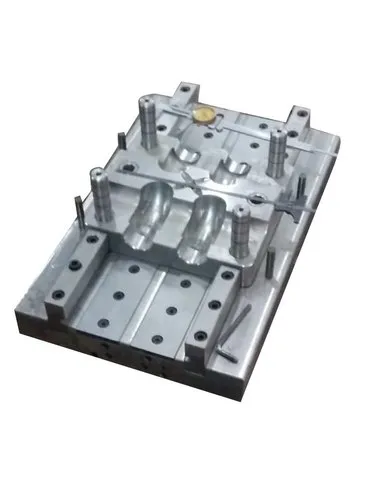
Molding thin-wall products from Polyvinyl Chloride (PVC) presents a unique set of technical and material challenges. Thin-wall molding refers to the process of producing plastic parts with wall thicknesses typically less than 1 mm, which demands precise control over material behavior, mold design, and processing parameters. Below are some of the major challenges encountered when using PVC for thin-wall applications:
1. Thermal Sensitivity of PVC
PVC is highly sensitive to heat. It has a narrow processing window between its melting point and degradation temperature. In thin-wall molding, higher injection speeds and pressures are required, which can generate excessive heat through shear. This increases the risk of:
Thermal degradation
Discoloration
Release of HCl gas, which can corrode machinery and pose health hazards.
2. High Injection Pressure and Speed Requirements
Filling a thin cavity quickly and uniformly demands high injection speeds and pressures. However, PVC’s high melt viscosity makes it difficult to flow into such fine geometries without risking degradation. The need for balance between flowability and thermal stability complicates processing.
3. Mold Design Complexity
Thin-wall PVC parts require extremely precise and robust mold designs. Challenges include:
Uniform venting to prevent air traps and burn marks
High-precision tolerances due to the tight dimensions
Efficient cooling systems to manage cycle time without causing thermal stress
4. Material Brittleness
PVC is inherently more brittle than many other thermoplastics. In thin-wall sections, the brittleness is amplified, increasing the risk of:
Cracking during demolding
Fracture under stress or during post-processing
Low impact resistance, especially in cold environments
5. Limited Flow Length-to-Thickness Ratio
Thin-wall molding requires materials that can flow long distances in narrow channels. PVC has a relatively low flow length-to-thickness ratio, making it harder to achieve consistent fills in thin-wall designs without flow defects like short shots or weld lines.
6. Cooling and Cycle Time
Due to the low thermal conductivity of PVC and the thin-wall nature of the parts, uneven cooling can result in:
Warping
Internal stress
Dimensional inaccuracies
Maintaining short cycle times without sacrificing quality requires sophisticated cooling designs and temperature control.
7. Tooling Wear and Maintenance
The corrosive nature of degraded PVC and the high pressures used in thin-wall molding can cause rapid wear and tear on molds, especially if not made from corrosion-resistant materials. This increases maintenance frequency and tooling costs.
8. Additive Compatibility
To enhance processability and performance, additives such as heat stabilizers, lubricants, and plasticizers are used. However, in thin-wall molding:
The effect of additives becomes more pronounced
Incompatible formulations may lead to surface defects, uneven flow, or weakening of mechanical properties
9. Environmental and Regulatory Constraints
As PVC contains chlorine, environmental regulations regarding its use, disposal, and recycling are more stringent. For thin-wall applications, which often involve single-use or short-lifespan products, compliance with environmental standards becomes more critical.
Conclusion
PVC thin-wall molding is a high-precision process fraught with technical difficulties due to the material’s inherent properties and the stringent requirements of thin-wall designs. Success in this area depends on careful selection of processing parameters, mold design, material formulation, and machinery capability. Advances in PVC compounding and process automation continue to push the limits, but overcoming these challenges requires a holistic and expert approach.