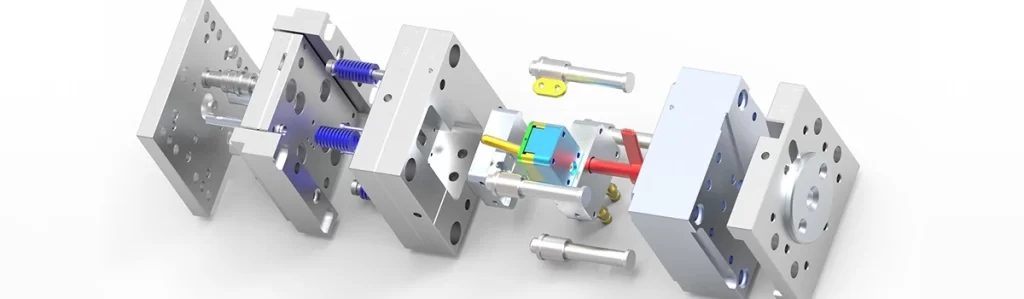
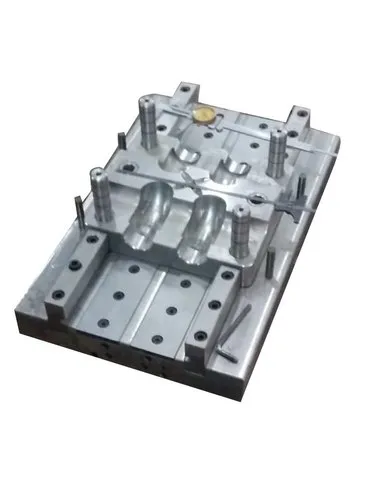
Design for Manufacturability (DFM) is a set of principles aimed at designing products in a way that facilitates their easy and cost-effective manufacturing. In the context of injection molding, DFM helps optimize the design to ensure that it can be efficiently and economically produced using injection molding processes.
Injection molding is a widely used manufacturing process, where molten material (usually plastic) is injected into a mold cavity under high pressure, cooling and solidifying into the desired part. By applying DFM principles to injection molding, manufacturers can improve production efficiency, reduce material waste, and minimize production costs.
Key DFM Principles for Injection Molding
Material Selection
The choice of material is critical in the design of injection molded parts. Some materials are easier to process than others, and their flow characteristics (like viscosity) affect how they fill the mold cavity.
DFM encourages choosing materials that suit the part’s application and are optimized for the injection molding process, balancing cost, performance, and ease of manufacturing.
Materials like ABS, polycarbonate, and polypropylene are commonly used, but their compatibility with the mold design must be considered for cost and production efficiency.
Part Geometry and Design
Wall Thickness: Uniform wall thickness is one of the most critical factors in injection molding. Variations in wall thickness can cause warping, uneven cooling, and stresses in the molded part. DFM recommends maintaining a consistent wall thickness across the entire part.
Radii and Fillets: Sharp corners in part designs can cause stress concentrations, increasing the risk of failure. Rounded corners or fillets can help distribute stress more evenly, improving the part’s strength and reducing the likelihood of defects.
Tapered Surfaces: Slight draft angles (typically 1–2 degrees) on vertical walls facilitate the part’s removal from the mold. Without drafts, parts may stick to the mold, causing defects or requiring additional labor to remove them.
Undercuts and Complex Features: While undercuts can be part of a design, they require additional tooling or slides in the mold, adding complexity and cost. Where possible, parts should be designed without undercuts or with features that can be easily molded without complex machinery.
Mold Design
Ease of Ejection: The ejection system must be designed so that parts can be easily removed from the mold without damage. Proper venting and ejection mechanisms are essential to avoid warping and ensure smooth part removal.
Mold Flow Simulation: Modern injection molding software can simulate how the material flows through the mold during the injection process. These simulations help detect potential issues with part design, such as air traps, weld lines, or flow imbalances. Incorporating these insights into the design phase reduces the need for expensive mold modifications later on.
Cooling Channels: Efficient cooling of the mold is crucial to reduce cycle time and prevent defects like warping or uneven cooling. Mold design should incorporate strategically placed cooling channels to optimize the cooling process.
Minimizing Part Complexity
Simplified Part Design: Overly complex designs can lead to higher manufacturing costs, longer cycle times, and increased likelihood of defects. DFM advocates for minimizing the number of features and simplifying the design where possible. This not only reduces the mold complexity but also ensures a more efficient manufacturing process.
Modular Design: For certain products, designing parts that can be manufactured with fewer complex molds or that use common mold components can help minimize costs and increase manufacturing efficiency.
Tolerance and Fit
Tighter tolerances in injection molded parts generally increase production costs and the likelihood of defects, especially in complex geometries. DFM emphasizes designing parts with realistic and necessary tolerances, avoiding excessively tight tolerances unless absolutely needed for the part’s function.
Minimizing Secondary Operations
Secondary operations such as trimming, drilling, and painting can increase manufacturing costs. DFM focuses on designing parts in such a way that the need for post-processing or additional operations is minimized. This can be achieved by designing features directly into the part or using molding techniques like in-mold labeling or insert molding.
Advantages of DFM in Injection Molding
Cost Reduction: By focusing on design elements that make manufacturing more efficient, DFM can reduce tooling, material, and labor costs.
Faster Time to Market: A design optimized for manufacturability can reduce the number of prototypes, test iterations, and modifications, leading to faster production timelines.
Improved Part Quality: By minimizing potential sources of defects, such as inconsistent cooling or difficult mold removal, DFM helps ensure that parts meet quality standards with minimal waste.
Sustainability: DFM helps reduce material waste and improve process efficiency, making it an environmentally friendly approach to manufacturing.
Challenges in Applying DFM to Injection Molding
While DFM principles can lead to numerous benefits, it is important to note the challenges that may arise during the design and manufacturing stages:
Balancing Performance and Manufacturability: Some complex, high-performance features may be necessary for the part’s function but may be challenging to manufacture. A balance must be struck between performance requirements and manufacturability.
Material Limitations: While many materials are suitable for injection molding, their behavior under different conditions (e.g., temperature or pressure) must be thoroughly understood. Designers need to work closely with material suppliers to select the right materials for the design.
Tooling Costs: Complex molds or molds with inserts can increase the initial tooling costs. DFM aims to minimize these costs by simplifying the mold design while still ensuring the product meets its functional requirements.
Conclusion
Design for Manufacturability (DFM) in injection molding is essential for creating parts that are not only functional but also efficient and cost-effective to produce. By incorporating DFM principles early in the design process, manufacturers can avoid costly revisions, reduce production times, and improve the overall quality of the molded part. By considering material choices, part geometry, mold design, and manufacturing constraints, DFM helps create a seamless link between design and manufacturing, ultimately leading to a more successful product launch.