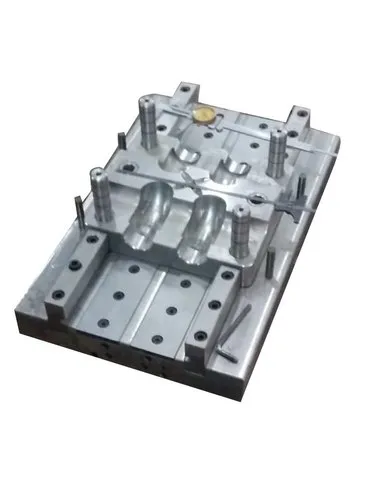
Injection pressure plays a crucial role in the injection molding process of Polyvinyl Chloride (PVC). As a thermoplastic with specific flow characteristics and thermal sensitivity, PVC requires precise control of injection parameters to achieve high-quality molded products. Among these parameters, injection pressure directly affects material flow, mold filling, and final product quality.
1. What Is Injection Pressure?
Injection pressure is the force used to push the molten PVC material from the injection unit into the mold cavity. It is typically measured in megapascals (MPa) or bars. This pressure must be high enough to overcome resistance within the flow path, including the runner system, gates, and cavity resistance.
2. Role of Injection Pressure in PVC Molding
Filling the Mold Completely: Adequate injection pressure ensures that the mold is fully filled, especially in complex or thin-walled parts.
Maintaining Flowability: PVC has a narrow processing temperature range. High enough pressure helps keep the material flowing without overheating or degrading.
Compactness and Dimensional Stability: Correct pressure helps achieve consistent part density, minimizing shrinkage and warping.
Surface Finish: Higher pressure can improve surface detail and finish, reducing cosmetic defects like flow lines or weld marks.
3. Effects of Injection Pressure on PVC Molded Parts
| Injection Pressure | Effect on PVC Mold Quality |
|---|---|
| Too Low | – Incomplete filling (short shots) – Poor surface finish – Weak weld lines – Air traps and voids |
| Optimal | – Proper mold filling – Uniform density – Good dimensional accuracy – Strong weld lines and minimal flash |
| Too High | – Flash at parting lines – Excessive stress in part – Mold damage risk – Thermal degradation of PVC, leading to discoloration or brittleness |
4. Special Considerations for PVC
PVC is particularly sensitive to high shear and temperature due to the risk of thermal degradation, which can release toxic gases like HCl. Therefore:
Moderate pressure combined with correct melt temperature (typically around 160–200°C for rigid PVC) is essential.
Screw speed and back pressure must be controlled to prevent excessive shear.
Venting and degassing in the mold are important to avoid burning marks caused by trapped air.
5. Best Practices
Begin with lower injection pressure and increase gradually during process optimization.
Monitor part weight, appearance, and dimensional stability to find the best pressure setting.
Regularly check mold seals and vents to avoid issues caused by high pressure.
Use PVC-compatible barrel and screw materials to withstand corrosive effects, especially under higher pressures.
Conclusion
Injection pressure is a key variable in achieving high-quality PVC molded parts. While too little pressure leads to poor filling and weak mechanical properties, too much can degrade the material or damage the mold. A carefully balanced pressure, aligned with PVC’s processing characteristics, ensures optimal flow, part quality, and durability.