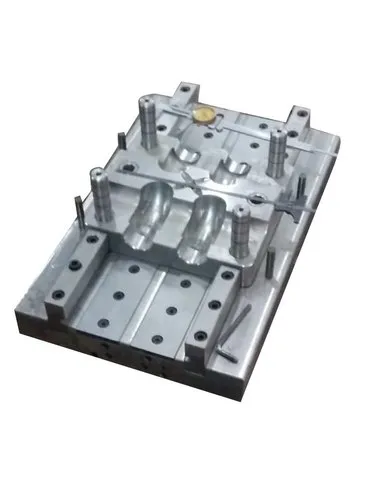
Ensuring the quality of a die is critical to achieving dimensional accuracy, surface finish, and product consistency in manufacturing processes such as stamping, forging, extrusion, and injection molding. Effective die inspection involves a combination of tools and techniques tailored to detect defects, ensure conformance to specifications, and prolong tool life.
1. Visual Inspection
Visual inspection is the first line of defense in die quality control. It helps identify surface-level defects such as:
Cracks
Surface wear
Corrosion
Pitting
Flash or burrs
Tools Used:
Magnifying glass
LED inspection lamps
Portable microscopes
Borescopes (for internal cavity inspection)
2. Dimensional Inspection
Dimensional accuracy is critical for die performance. Measuring die dimensions ensures it conforms to the design tolerances.
Tools Used:
Vernier calipers
Micrometers
Height gauges
Coordinate Measuring Machine (CMM)
Optical comparators
Laser scanners (non-contact)
Techniques:
Direct comparison with master gauges
3D scanning and CAD overlay
Geometric Dimensioning and Tolerancing (GD&T) verification
3. Surface Finish Inspection
The surface finish of a die influences part quality and tool wear. Surface roughness is measured to ensure proper texture and finish.
Tools Used:
Surface roughness tester (profilometer)
Optical profilometer (non-contact)
Replica tape (for indirect measurement in inaccessible areas)
4. Hardness Testing
Die material hardness must be within specified limits for wear resistance and longevity.
Common Methods:
Rockwell hardness test
Vickers hardness test
Brinell hardness test
Portable hardness testers (e.g., Leeb rebound testers)
5. Non-Destructive Testing (NDT)
NDT is used to detect subsurface flaws or cracks that are not visible to the naked eye.
Techniques:
Ultrasonic Testing (UT): For internal defects like inclusions or voids
Dye Penetrant Testing (DPT): For detecting surface cracks (common in tool steels)
Magnetic Particle Inspection (MPI): For surface and near-surface flaws in ferromagnetic dies
X-ray/CT Scanning: For complex internal defect detection (especially in high-precision dies)
6. Thermal Imaging (Infrared Thermography)
Used to detect uneven heat distribution or thermal fatigue cracks during or after operation, especially in hot-working dies.
7. Wear and Life Monitoring
Monitoring wear helps plan maintenance and predict end-of-life for the die.
Tools & Techniques:
Digital microscopy for wear pattern analysis
Mold flow simulation software for predictive wear zones
Manual or digital templates to track dimensional changes over cycles
8. Functional Testing (Trial Runs)
In some cases, actual trial runs are performed to check:
Part ejection and fill quality
Deflection and deformation under load
Repeatability over cycles
This functional testing complements inspection tools and validates overall die integrity.
Best Practices in Die Quality Inspection
Regular inspection schedules (after X number of cycles)
Use of inspection checklists tailored to the die type
Calibration of all inspection equipment
Data logging and digital inspection reports
Integration with CAD/CAM systems for digital verification
Conclusion
The choice of inspection tools and techniques depends on the die type, application, and tolerance requirements. A combination of visual checks, dimensional measurement, surface analysis, and non-destructive testing offers a comprehensive approach to ensuring die quality, reducing downtime, and maintaining product consistency.