1. Introduction
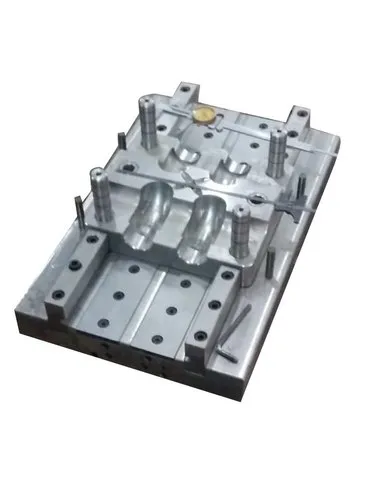
Dies are critical tooling components used in various manufacturing processes such as stamping, forging, extrusion, and die casting. The performance and longevity of dies directly affect product quality, production efficiency, and maintenance costs. Therefore, effective lubrication and wear monitoring of dies are essential for ensuring optimal performance, reducing downtime, and extending tool life.
2. Importance of Lubrication
Lubrication in die operations serves multiple purposes:
Reduces friction between the die and the workpiece or moving parts.
Minimizes wear and prevents surface damage.
Controls temperature by dissipating heat generated during forming.
Improves surface finish of the workpiece.
Prevents material sticking or galling on the die surface.
Types of Lubricants Used:
Oil-based lubricants: Common in metal stamping and forming operations.
Graphite-based lubricants: Often used in high-temperature forging.
Synthetic lubricants: Offer better thermal stability and environmental compatibility.
Dry film lubricants: Useful where traditional lubricants are not viable.
3. Lubrication Techniques
Manual Application: Applied by hand or brush; suitable for small-scale operations.
Spray Systems: Automated spray nozzles apply lubricant consistently during each cycle.
Roll Coating: Lubricant is applied uniformly using rollers.
Electrostatic Application: Ensures uniform coating with minimal waste.
Proper application technique is crucial—too little lubricant leads to excessive wear, while too much can cause slippage or quality issues.
4. Wear Monitoring of Dies
Die wear occurs due to mechanical, thermal, and chemical interactions during operation. Common types of die wear include:
Adhesive wear (galling)
Abrasive wear
Thermal fatigue
Corrosive wear
Methods of Wear Monitoring:
A. Visual Inspection
Periodic inspection for surface cracks, galling, or erosion.
Requires trained personnel and may not detect subsurface damage.
B. Dimensional Measurement
Use of Coordinate Measuring Machines (CMM) or laser scanning to detect dimensional deviations.
Helps track progressive wear over time.
C. Acoustic Emission Monitoring
Sensors detect high-frequency signals generated by crack initiation or material deformation.
Useful for real-time monitoring in high-speed operations.
D. Vibration Analysis
Changes in vibration signatures can indicate tool wear or misalignment.
E. Force and Power Monitoring
An increase in forming force or energy consumption can be correlated with tool degradation.
F. Surface Roughness Monitoring
Evaluates wear based on changes in surface texture of the workpiece or die.
G. Thermal Imaging
Identifies hot spots due to friction or material build-up.
5. Predictive and Preventive Maintenance
Combining wear monitoring data with predictive analytics enables:
Early detection of failure modes.
Optimal timing for die maintenance or replacement.
Reduction of unplanned downtime.
Preventive measures may include:
Scheduled regrinding or polishing.
Surface treatments (e.g., nitriding, PVD coatings).
Use of harder die materials or inserts.
6. Smart Tooling and Industry 4.0 Integration
Modern die systems are increasingly incorporating sensors and IoT technologies for real-time data collection and remote monitoring. These systems allow for:
Automated lubrication control.
Cloud-based wear analysis.
Integration with manufacturing execution systems (MES) for holistic tool management.
7. Conclusion
Effective lubrication and wear monitoring are essential to ensure the longevity and performance of dies. By employing appropriate lubricants, application methods, and wear detection techniques, manufacturers can minimize tool-related failures, improve product quality, and enhance operational efficiency. The integration of smart monitoring tools further empowers predictive maintenance strategies, aligning with the goals of Industry 4.0.