1. Introduction
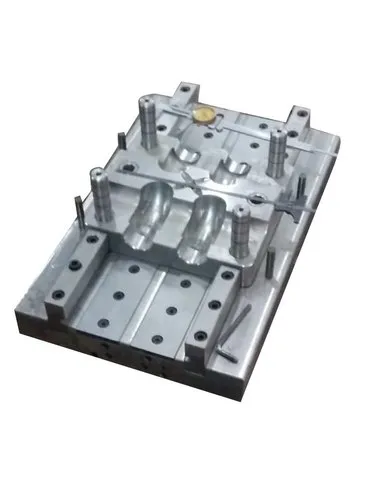
In injection molding, proper alignment and tolerancing of mold components are critical for ensuring high part quality, minimizing wear, and extending mold life. Misalignment or incorrect tolerances can lead to defects such as flash, mismatched parts, or poor dimensional control. This section outlines the techniques used to achieve and maintain precise mold alignment and how tolerancing principles are applied in mold design and manufacturing.
2. Mold Alignment Techniques
Proper mold alignment ensures that the two halves of the mold (A-side and B-side) close accurately without mismatch. Key techniques include:
2.1. Guide Pins and Bushings
Purpose: Provide primary alignment between core and cavity halves.
Design: Hardened steel pins and bushings with tight tolerances (typically H7/g6).
Placement: Typically 4 pins, placed symmetrically around the mold base.
2.2. Interlocks (Taper Locks and Straight Locks)
Function: Supplement guide pins by providing additional precision alignment at parting line.
Types:
Taper Locks: Ensure self-centering due to angular contact; used for higher precision.
Straight Locks: Prevent lateral movement; used in larger molds.
2.3. Cavity Interlocks
Precision-ground features (e.g., keyways or blocks) embedded near the cavity to ensure accurate core-cavity alignment.
2.4. Leader Pins with Preload
These pins are slightly oversized and designed to enter bushings with preload, ensuring tighter alignment before full mold closure.
2.5. Wear Plates
Installed to reduce wear on guiding elements and maintain alignment over long production runs.
3. Mold Tolerancing Techniques
Tolerancing ensures that mold components fit and function as intended, accounting for manufacturing variability.
3.1. General Tolerance Principles
Follow Geometric Dimensioning and Tolerancing (GD&T) principles.
Define clear datums to control alignment and dimensional accuracy.
Use bilateral tolerances where possible for balanced fit.
3.2. Tolerancing for Interchangeable Inserts
Inserts should be manufactured with tight tolerances to allow easy replacement without reworking the entire mold.
Typical tolerances: ±0.005 mm to ±0.01 mm for insert interfaces.
3.3. Shrinkage Compensation
Account for material shrinkage in the cavity size tolerancing.
Depends on material type, part geometry, and molding conditions.
3.4. Parting Line Tolerancing
Critical for controlling flash and mismatch.
Tolerance stack-up analysis should be done to ensure parting surfaces align within acceptable limits.
3.5. Critical Feature Tolerances
Dimensions affecting part functionality (e.g., mating features, snap fits) must be tightly controlled.
Use tolerance analysis tools (e.g., worst-case or statistical analysis) to predict final part variability.
4. Advanced Techniques
4.1. High-Precision Alignment Systems
Use of conical seating, precision dowels, or zero-clearance guide systems for ultra-precision molds (e.g., optical or medical components).
4.2. 3D Tolerancing Simulation
CAD-based simulations to visualize how tolerances impact mold fit and part performance.
4.3. Real-Time Alignment Monitoring
Sensors embedded in the mold to detect misalignment or wear over time.
5. Best Practices
Always use standardized mold bases where possible.
Design mold with maintainability in mind – make alignment components replaceable.
Perform initial mold validation and regular inspections to ensure alignment integrity.
Document all tolerances in detailed 2D/3D drawings and mold build specifications.
6. Conclusion
Mold alignment and tolerancing are foundational to achieving high-quality, repeatable, and cost-effective molded parts. By applying precise alignment mechanisms and robust tolerancing techniques, manufacturers can reduce defects, minimize downtime, and ensure product consistency across large production volumes.