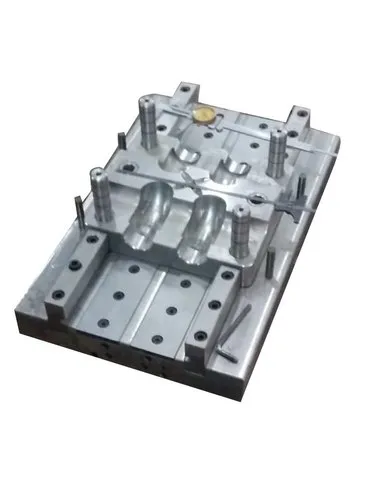
In the highly competitive cosmetics industry, efficiency, consistency, and scalability are key factors in manufacturing processes. Multi-cavity moulds play a pivotal role in meeting these demands. These moulds are widely used in the production of cosmetic packaging components such as lipstick cases, compact cases, caps, jars, and bottles. By allowing multiple identical parts to be formed simultaneously, they significantly enhance productivity and cost-efficiency.
What Are Multi-Cavity Moulds?
Multi-cavity moulds are injection moulding tools designed to produce multiple parts in a single production cycle. Unlike single-cavity moulds that form one part per cycle, multi-cavity moulds can produce anywhere from two to several dozen parts at once.
There are two common configurations:
Identical Cavity Moulds: All cavities produce the same part (e.g., 8 identical lipstick caps).
Family Moulds: Each cavity produces a different component of the same assembly (e.g., a jar and its matching cap).
Benefits in Cosmetic Production
Increased Production Efficiency
Multiple components are produced in one cycle, drastically reducing manufacturing time and boosting output rates.
Cost Savings
Higher productivity leads to lower per-unit manufacturing costs.
Reduced labor and energy costs over time.
Consistency and Quality Control
Uniform cavity design ensures that all produced parts have consistent dimensions and appearance.
Enhances brand image through uniform product presentation.
Material Optimization
Efficient material flow in well-designed moulds minimizes waste.
Compatible with recyclable and biodegradable plastics, aligning with sustainable cosmetic packaging trends.
Scalability
Ideal for high-volume production runs common in the cosmetics industry.
Applications in Cosmetics
Multi-cavity moulds are used to manufacture a wide range of packaging components, including:
Lipstick Cases
Mascara Tubes
Foundation Bottle Caps
Compact Cases for Powders
Cream and Lotion Jars
Airless Pump Components
These moulds help meet the industry’s need for aesthetic appeal, precision fit, and durability of cosmetic containers.
Design Considerations
Cavity Balance: Uniform flow to each cavity is essential to prevent dimensional differences.
Cooling System: Adequate cooling ensures consistent cycle times and quality.
Material Choice: Common mould materials include hardened steel or aluminum, selected based on expected volume and wear resistance.
Maintenance: Regular cleaning and inspection prevent defects and prolong tool life.
Challenges
Initial Investment: Multi-cavity moulds are more expensive to design and manufacture than single-cavity moulds.
Complexity in Tool Design: Requires precise engineering to ensure balance and consistent quality.
Higher Maintenance Needs: With more parts being formed, the mould is subjected to greater wear and tear.
Conclusion
Multi-cavity moulds are indispensable in the mass production of cosmetic packaging. They combine speed, uniformity, and cost-efficiency, making them ideal for meeting the growing consumer demand for high-quality, well-packaged cosmetic products. With advancements in mould design and materials, they continue to evolve and support innovative packaging trends in the beauty industry.