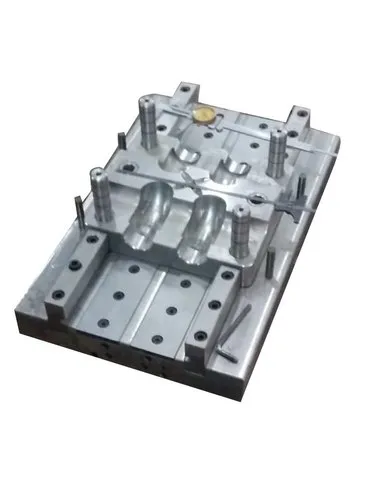
With the rapid evolution of electronics, especially in sectors like consumer devices, automotive, medical, and IoT (Internet of Things), the trend towards miniaturization has accelerated. This trend affects not only the design of the components themselves but also the packaging technologies that protect, interconnect, and enable the functionality of these components. One of the critical aspects affected by this shift is moulding, particularly in the semiconductor and electronic component packaging process.
1. What is Packaging Miniaturization?
Packaging miniaturization refers to the reduction in the physical size of an electronic package while maintaining or improving its performance, reliability, and thermal efficiency. This process often includes:
Shrinking die sizes
Reducing package height and footprint
Using finer pitch interconnections
Integrating more functionality (e.g., System-in-Package or SiP)
This trend is largely driven by market demands for smaller, lighter, and more efficient devices.
2. Drivers of Miniaturization
Consumer demand: Wearables, smartphones, and portable electronics require smaller and thinner packages.
Functionality increase: More I/O and features in smaller spaces.
Cost and energy efficiency: Smaller components often lead to material savings and lower energy consumption.
Performance improvement: Reduced parasitic elements improve electrical performance.
3. Moulding in Packaging
Moulding is a crucial process in semiconductor packaging, where a mould compound (usually epoxy-based) encapsulates the semiconductor die and interconnects to protect it from mechanical, thermal, and chemical damage.
Common moulding techniques:
Transfer Moulding
Compression Moulding
Injection Moulding
4. Moulding Challenges Due to Miniaturization
As packaging becomes smaller and more complex, traditional moulding methods face several technical challenges:
A. Thin Die and Substrate Warpage
Ultra-thin dies and substrates are more prone to warpage under heat and pressure during moulding.
This can cause delamination, cracks, or misalignment.
B. Fine Pitch Wire Bonding Damage
Reduced pitch and spacing of wire bonds make them more susceptible to mechanical stress during encapsulation.
High flow pressures in transfer moulding can deform or break wire bonds.
C. Voids and Incomplete Fill
Smaller cavities and features make air entrapment and voids more common.
These voids can reduce reliability and lead to electrical failure or moisture ingress.
D. Material Challenges
The need for low-stress, low-CTE (coefficient of thermal expansion), and high-flow mould compounds.
Compatibility with advanced substrates (e.g., organic, ceramic) is critical.
E. Heat Dissipation
Smaller packages have less surface area for heat dissipation.
Mould compounds must often aid in thermal management, which may limit material choices.
F. Mold Flash and Bleed
Miniaturized designs with fine gaps and small clearances are more prone to mould flash (unwanted thin layers of compound) and bleed, requiring tighter process controls.
5. Solutions and Innovations
A. Advanced Moulding Techniques
Compression moulding is preferred for ultra-thin packages due to its lower pressure and stress.
Moulded Underfill (MUF) and Fan-Out Wafer-Level Packaging (FOWLP) minimize the need for separate underfill and encapsulation steps.
B. Improved Mould Compounds
Development of low-viscosity, low-stress, and thermally conductive mould compounds.
Materials with low ionic content to reduce corrosion.
C. Simulation and Modeling
Finite Element Analysis (FEA) to simulate warpage, stress, and thermal behavior.
Design for Manufacturability (DfM) tools to optimize moulding parameters.
D. Cleaner Processing Environments
High cleanliness reduces contamination that can cause voids or delamination.
Better control of humidity and temperature during processing.
6. Future Outlook
As packaging technologies evolve toward 3D integration, chiplet architectures, and heterogeneous integration, the demands on moulding precision and reliability will increase. Emerging technologies such as:
Laser-assisted moulding
Localized overmoulding
Smart mould compounds with embedded sensors
…may play a key role in overcoming future challenges in packaging miniaturization.
Conclusion
Packaging miniaturization is a key enabler for the next generation of compact, high-performance electronics. However, it introduces significant moulding challenges that require innovation in materials, processes, and design. Addressing these challenges is essential for maintaining the reliability and manufacturability of miniaturized electronic systems.