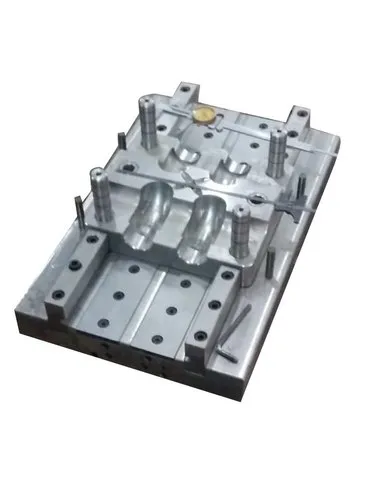
PVC (Polyvinyl Chloride) extrusion molds are critical tools used in the manufacturing of various plastic profiles. The extrusion process involves melting raw PVC and forcing it through a mold (also called a die) to form continuous shapes like pipes, window profiles, cable trays, or decorative trims. The mold determines the final shape and dimensions of the product, making its design an essential aspect of the overall manufacturing process.
1. Design of PVC Extrusion Molds
Designing a PVC extrusion mold requires precision and a deep understanding of the material’s behavior under heat and pressure. Several factors influence mold design:
a. Profile Geometry
The complexity of the final product shape dictates the mold’s internal structure.
Cross-sectional design must allow for even material flow and smooth surface finish.
b. Material Flow Considerations
PVC has unique flow characteristics; the mold must be designed to accommodate proper flow rates and pressure distribution.
Uniform heating and minimal shear stress are essential to avoid degradation.
c. Die Land and Calibrator Design
The die land is the final shaping zone, requiring precise tolerances to ensure dimensional accuracy.
Calibrators (often cooled with water or air) follow the die to help solidify and maintain the product’s shape.
d. Thermal Control
Extrusion molds include internal heaters to maintain optimal PVC processing temperature (usually between 160°C and 210°C).
Uniform temperature across the mold prevents warping and material inconsistencies.
e. Material Shrinkage
Mold design compensates for PVC shrinkage that occurs during cooling.
2. Types of PVC Extrusion Molds
Pipe and Tube Dies: Round dies used for producing rigid or flexible PVC piping.
Profile Dies: Used for custom shapes like window frames, door seals, cable ducts, and edge trims.
Sheet and Film Dies: Flat dies that extrude PVC sheets for packaging or industrial use.
Co-extrusion Dies: Combine multiple layers or materials in a single extrusion (e.g., for dual-color or foamed PVC products).
3. Applications of PVC Extrusion Molds
PVC extrusion molds are widely used in a variety of industries, thanks to PVC’s versatility:
a. Construction
Window and door profiles, rainwater systems, cladding, conduits.
Custom profiles for insulation and weather sealing.
b. Electrical
Cable trunking, protective covers, and wire insulation sleeves.
c. Automotive
Seals, trims, and flexible tubing for air and fluid management.
d. Consumer Goods
Curtain tracks, furniture edge bands, toys, and flexible packaging films.
e. Industrial
Chemical-resistant piping, protective barriers, and ducting systems.
4. Advantages of Using Extrusion Molds in PVC Production
Cost-Efficiency: Once designed and manufactured, molds allow high-volume, continuous production with minimal waste.
Customization: Molds can be tailored for highly specific shapes and profiles.
Consistency: High dimensional accuracy and surface quality across long production runs.
Material Efficiency: Optimized mold designs reduce material loss and energy consumption.
Conclusion
PVC extrusion molds are an indispensable component of modern plastic manufacturing, enabling the production of a wide range of functional and decorative items. With advances in CAD/CAM technology and precision machining, mold design continues to evolve, allowing for more complex profiles, improved efficiency, and higher product quality. A well-designed extrusion mold not only ensures the final product meets exact specifications but also contributes to the economic viability of the manufacturing process.