Injection molding is a widely used manufacturing process for producing parts in large quantities. To ensure that the final products meet the required specifications and are free from defects, quality control (QC) plays a crucial role throughout the injection molding process. QC in injection molding involves various testing and inspection procedures to monitor and verify the consistency, accuracy, and performance of the molded parts.
1. Importance of Quality Control in Injection Molding
Quality control ensures that the molded parts meet the desired specifications for dimensions, material properties, and surface finishes. It helps detect potential issues early in the manufacturing process, reduces waste, and minimizes costly production delays. Effective quality control helps maintain customer satisfaction, ensures product safety, and enhances the overall efficiency of the injection molding operation.
2. Key Quality Control Techniques in Injection Molding
a. Visual Inspection
One of the simplest and most effective methods of quality control in injection molding is visual inspection. It involves examining the molded parts for any visible defects such as:
Surface defects: Scratches, burns, and color variations.
Dimensional errors: Misalignments or warping.
Flash: Excess material around the edges of the molded part.
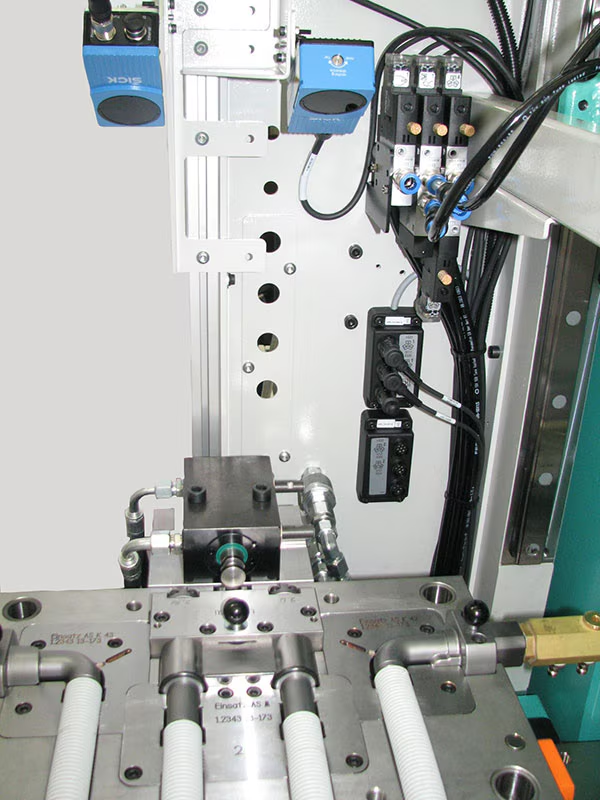
This inspection is typically done manually, although automated vision systems are increasingly used for high-precision and high-volume production.
b. Dimensional Inspection
Accurate measurements are critical to ensure that the molded parts meet the required tolerances. This involves the use of measuring tools like:
Calipers: For measuring smaller dimensions.
Micrometers: For more precise measurements of thickness.
CMM (Coordinate Measuring Machines): For high-precision, three-dimensional measurements.
Dimensional inspection checks for any variations that could impact the functionality or assembly of the final product.
c. Material Testing
Material testing ensures that the raw materials used in the injection molding process meet the required properties and specifications. Some common material tests include:
Melt Flow Index (MFI): Determines the ease with which the material flows through the mold. A high MFI can lead to overfilling, while a low MFI can cause difficulty in molding.
Tensile Strength Testing: Assesses the material’s ability to withstand pulling forces before breaking.
Hardness Testing: Measures the material’s resistance to deformation under stress.
Testing the material properties ensures consistency in part quality and performance.
d. Functionality Testing
Functionality testing assesses the operational performance of the molded parts, particularly in applications where the parts need to fit or interact with other components. This testing includes:
Assembly tests: Verifying whether the part fits into its intended assembly and functions correctly.
Load testing: Ensuring the part can withstand the intended load or pressure during its service life.
e. Stress and Durability Testing
Some molded parts may be subjected to harsh environmental conditions, so durability testing is essential to confirm that the product can withstand:
Thermal cycling: Exposure to fluctuating temperatures.
Environmental stress cracking: Resistance to chemicals or UV degradation.
Fatigue testing: Assessing how parts perform under repeated use or stress over time.
These tests ensure the product’s longevity and reliability, especially for critical components used in automotive, medical, and aerospace industries.
3. In-Process Inspections
a. Monitoring the Injection Molding Machine
Continuous monitoring of the injection molding machine’s performance is a critical part of quality control. Operators check for deviations in key parameters, including:
Injection pressure: Ensures the material flows properly into the mold.
Injection time: The time it takes for the material to fill the mold.
Cooling time: Ensures the part cools adequately to prevent warping.
Mold temperature: High or low temperatures can affect the material’s flow and the final part quality.
By keeping these parameters within specified ranges, operators can avoid defects such as shrinkage, voids, or cracks in the parts.
b. Cycle Time Optimization
Quality control includes the optimization of cycle times to ensure consistency in the production process. An efficient cycle time leads to lower costs and higher productivity while maintaining product quality. Cycle time is affected by factors like mold design, cooling rates, and material properties, all of which need to be closely monitored.
c. End-of-Arm Tooling (EOAT) Inspection
EOATs are used to manipulate the molded parts during production. Ensuring that EOATs function properly is vital to prevent part damage and inaccuracies. Routine checks include verifying the alignment and condition of the tooling and ensuring there are no contaminants that could affect part quality.
4. Final Product Inspections
Once the parts are fully molded, quality control inspectors perform detailed inspections before they are released for shipping. This typically involves:
Sorting: Identifying parts that meet specifications and separating defective units.
Final Dimensional Inspection: Double-checking measurements to confirm accuracy.
Visual Inspection for Cosmetic Defects: Ensuring that the parts are free from scratches, discolorations, or any cosmetic issues.
Functional Testing: Ensuring the parts meet all functional requirements.
5. Statistical Process Control (SPC)
SPC is a data-driven method used to monitor and control the injection molding process. By collecting data on key process variables (e.g., injection pressure, temperature, cycle time), manufacturers can identify trends and detect abnormalities before they lead to defects. This allows for continuous improvement and ensures that parts stay within quality specifications.
6. Common Injection Molding Defects and Their Causes
Common defects in injection molding include:
Warping: Caused by uneven cooling or mold design.
Sink Marks: Caused by insufficient cooling time or improper packing pressure.
Short Shots: Occur when the mold cavity is not completely filled due to insufficient material injection or pressure.
Bubbles and Voids: Caused by trapped air or gas during the injection process.
Understanding the causes of these defects helps in fine-tuning the molding process and adjusting parameters to prevent them.
7. Conclusion
Quality control in injection molding is critical to ensuring that molded parts are free of defects and meet all required specifications. Through a combination of testing and inspections, including visual checks, dimensional analysis, material testing, and functionality testing, manufacturers can detect issues early in the process and take corrective action to maintain high product quality. By leveraging advanced technologies like statistical process control and automated inspection systems, companies can further improve the efficiency and consistency of their quality control efforts, leading to better products and satisfied customers.