1. Introduction
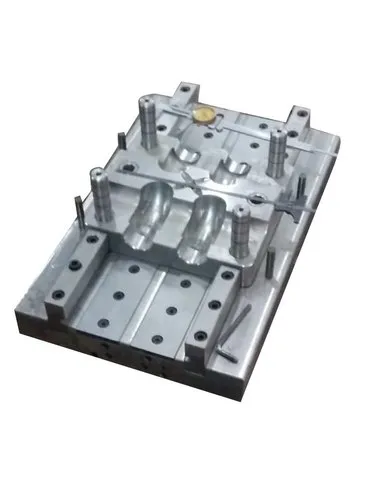
Thermal analysis of moulds is a critical aspect of the mould design and manufacturing process, particularly in casting, injection moulding, and other thermal-based forming techniques. The performance, dimensional accuracy, surface finish, and cycle time of the final product are significantly influenced by the temperature distribution and heat transfer within the mould. A thorough understanding and analysis of thermal behavior help in optimizing the mould design for better productivity and product quality.
2. Importance of Thermal Analysis
Thermal analysis is essential due to the following reasons:
Controlling solidification rates in casting to avoid defects like porosity, shrinkage, and incomplete filling.
Reducing cycle time in injection moulding by optimizing cooling systems.
Preventing thermal fatigue and cracking of mould materials.
Improving dimensional stability and surface finish of the product.
Enhancing mould life by maintaining temperature within safe limits.
3. Key Parameters in Thermal Analysis
Several thermal properties and parameters play a critical role in thermal analysis of moulds:
Thermal conductivity of the mould material.
Heat transfer coefficients at the interface between the mould and molten material or plastic.
Mould wall thickness and geometry.
Cooling channel design and placement.
Mould surface temperature.
Thermal diffusivity and specific heat capacity.
4. Methods of Thermal Analysis
4.1 Analytical Methods
Analytical equations derived from heat conduction theory (Fourier’s law) are used for simple geometries. These include:
One-dimensional transient heat conduction models.
Lumped capacitance models for rapid approximation.
However, these are limited in practical use due to geometric and boundary condition complexity.
4.2 Numerical Simulation (Finite Element / Finite Volume Analysis)
The most widely used method today, particularly for complex mould geometries and materials:
Finite Element Analysis (FEA): Used to model temperature distribution, heat flux, and thermal gradients.
Computational Fluid Dynamics (CFD): Used when analyzing mould filling and cooling simultaneously, especially in injection moulding.
Software Tools: ANSYS, Moldflow, ProCAST, SolidWorks Simulation, etc.
These simulations help in visualizing hot spots, optimizing cooling channels, and selecting appropriate materials.
5. Heat Transfer Mechanisms in Moulds
5.1 Conduction
The dominant mode of heat transfer within the mould material. The mould’s ability to conduct heat determines how quickly heat is removed from the molten material.
5.2 Convection
Occurs in the cooling channels, where water or other coolants absorb heat from the mould walls. The effectiveness of convective cooling directly affects cycle time.
5.3 Radiation
Usually negligible compared to conduction and convection but may be considered in high-temperature applications like die casting.
6. Cooling System Design
Efficient cooling system design is crucial for thermal management:
Channel layout: Straight, spiral, conformal, or baffle types.
Flow rate and coolant temperature: Optimized for uniform cooling.
Conformal Cooling: Made possible via additive manufacturing, allowing cooling channels to follow the part contour closely for better heat extraction.
7. Case Studies / Applications
Injection Moulding: Fast cycle time demands effective cooling. Thermal analysis ensures uniform temperature distribution to prevent warping and sink marks.
Die Casting: Moulds are exposed to high temperatures and rapid cooling. Thermal analysis helps in thermal stress prediction and crack prevention.
Sand Casting: Control of solidification path is essential to avoid defects; thermal simulations guide riser and chill placement.
8. Challenges and Considerations
Material selection: Balancing thermal conductivity, wear resistance, and cost.
Accuracy of input data: Thermal properties of materials must be precise.
Mesh quality in simulation: Affects result accuracy in numerical analysis.
Time constraints: Simulation can be time-consuming for large mould assemblies.
9. Conclusion
Thermal analysis of moulds is an indispensable tool in modern manufacturing processes involving thermal shaping. By understanding heat flow and temperature distribution within the mould, engineers can design more efficient, reliable, and durable moulds. Leveraging modern simulation tools and thermal analysis techniques not only improves product quality but also reduces production costs and cycle times.