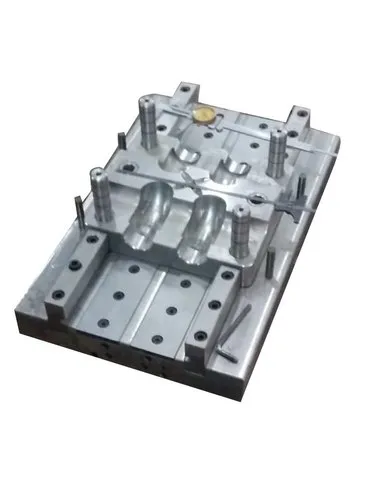
1. Introduction
In the mould-making industry, precision and accuracy are critical. Mould components must fit together flawlessly to ensure proper functioning, minimize wear, and maintain part quality during production. Tolerances define the permissible limits of variation in a physical dimension, while precision machining ensures components are manufactured within these defined limits. Together, they are vital for achieving high-quality, reliable, and long-lasting mould tools.
2. Importance of Tolerances in Mould Components
Tolerances directly affect the performance, life span, and manufacturing cost of moulds. The tighter the tolerance, the more accurate the part must be — often requiring advanced machining techniques and quality control systems.
Why Tolerances Matter:
Interchangeability: Allows standardized parts to be replaced or assembled without additional fitting.
Functionality: Ensures proper alignment, movement, and sealing within mould assemblies.
Wear Reduction: Precise mating of components reduces friction and wear.
Product Quality: Prevents defects such as flash, sink marks, or parting line mismatches.
Cost Efficiency: Proper tolerancing reduces the need for rework or scrap.
3. Types of Tolerances Used in Mould Making
a. Dimensional Tolerance
Specifies the allowable variation in a linear or angular dimension (e.g., ±0.01 mm).
b. Geometric Tolerance
Controls the shape, orientation, position, and runout of features (e.g., flatness, parallelism, concentricity).
c. Surface Finish Tolerance
Specifies the required surface roughness, often measured in Ra (µm), which impacts part release and appearance.
4. Precision Machining in Mould Manufacturing
Precision machining involves the use of advanced tools and techniques to create components with very tight tolerances. It is essential in mould making due to the complexity and exacting standards required.
Common Machining Techniques:
CNC Milling and Turning
EDM (Electrical Discharge Machining)
Grinding (Surface, Cylindrical, and Profile)
High-Speed Machining (HSM)
Wire Cut EDM
Typical Machining Tolerances:
| Process | Typical Tolerance Range |
|---|---|
| CNC Milling | ±0.01 to ±0.02 mm |
| Grinding | ±0.002 to ±0.005 mm |
| EDM | ±0.005 to ±0.01 mm |
| Wire EDM | ±0.002 to ±0.005 mm |
| Surface Finish (Ra) | 0.2 to 0.8 µm (fine finishes) |