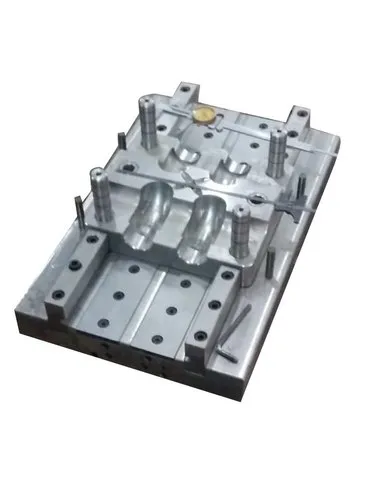
In the manufacturing and tooling industry, especially in mold making and precision engineering, standardized components play a crucial role in ensuring compatibility, efficiency, and interchangeability. Tooling standards refer to predefined specifications and dimensions for mold bases, components, and accessories provided by global standard suppliers such as DME, HASCO, MISUMI, and others.
These standards simplify the design and manufacturing process, reduce lead times, and ensure global compatibility across tooling systems.
Key Tooling Standard Providers
1. DME (Detroit Mold Engineering)
Origin: USA
Specialization: Mold bases, mold components, hot runner systems, and die sets.
Key Features:
One of the pioneers in mold standardization.
Offers modular mold bases for injection molding.
Broad catalog of ejector pins, guide pins, bushings, etc.
Commonly used in North American markets.
Applications: Injection molds, die casting, stamping dies.
2. HASCO (Hasenclever GmbH + Co KG)
Origin: Germany
Specialization: Standard mold bases, mold units, hot runners, and accessories.
Key Features:
Known for precision and high-quality steel grades.
Metric-based standards widely adopted in Europe and Asia.
Comprehensive CAD support and configuration tools.
Offers fully compatible mold bases for automated tooling setups.
Applications: High-precision injection molds, modular tooling systems.
3. MISUMI
Origin: Japan
Specialization: Custom-configurable mechanical components, including mold and die components.
Key Features:
Provides configurable parts with micrometer-level customization.
Supports both JIS (Japanese Industrial Standards) and ISO norms.
Short lead time with global logistics support.
Widely used in automation, robotics, and precision tooling.
Applications: Injection molds, progressive dies, factory automation systems.
Importance of Tooling Standards
| Benefit | Description |
|---|---|
| Interchangeability | Standard components can be replaced or reused without customization. |
| Reduced Lead Time | Off-the-shelf availability accelerates design and manufacturing cycles. |
| Cost Efficiency | Eliminates the need for custom parts, reducing material and machining costs. |
| Global Compatibility | Makes it easier to collaborate across regions using common specifications. |
| Improved Quality | Standards ensure consistent performance and tolerance control. |