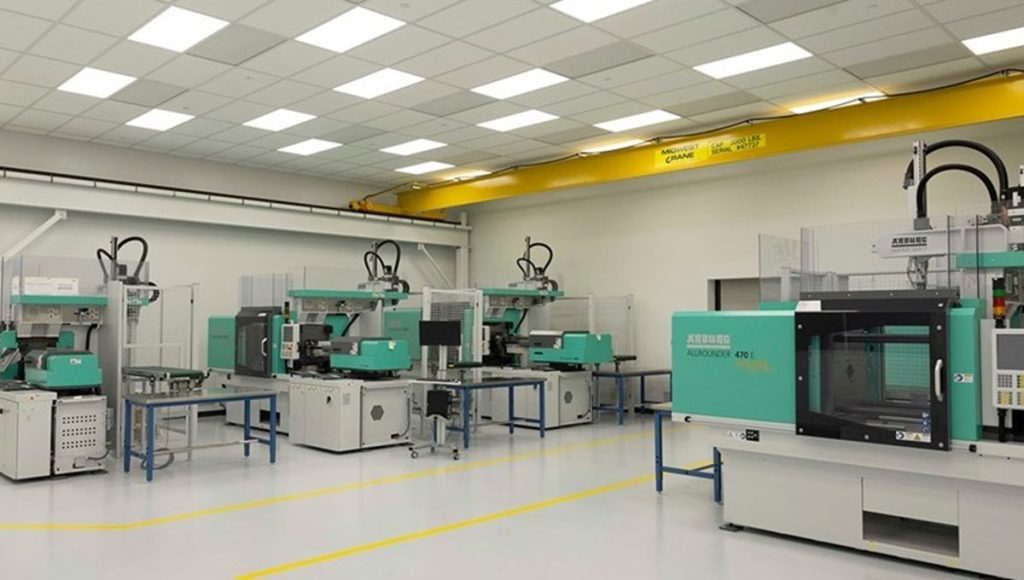
Cleanrooms play a crucial role in electronic mould production, where even microscopic dust, temperature fluctuations, or static charges can affect mould quality and the performance of electronic components. Ensuring a controlled production environment helps manufacturers achieve higher precision, reliability, and consistency.
1. Importance of Cleanrooms in Electronic Mould Production
Prevents contamination: Dust, fibres, and airborne particles can cause defects in micro-cavities and electronic features of moulds.
Enhances precision: Sensitive moulds used in devices such as sensors, PCBs, or medical electronics require contamination-free surfaces.
Improves yield: A controlled environment reduces product failures, rework, and scrap rates.
Ensures component longevity: Clean production minimizes impurities that may lead to electrical faults, corrosion, or performance issues.
2. Cleanroom Classification and Standards
Electronic mould production typically adheres to ISO standards such as:
ISO Class 5–7: For high-precision electronic moulds and micro-moulding operations.
ISO Class 8: For general assembly and packaging activities.
These classifications define limits for particles per cubic meter, airflow rates, and filtration requirements.
3. Key Environmental Controls in Cleanrooms
a. Air Filtration (HEPA/ULPA)
High-Efficiency Particulate Air (HEPA) and Ultra-Low Penetration Air (ULPA) filters remove 99.97–99.999% of particles.
Regular filter validation ensures continuous cleanliness.
b. Temperature and Humidity Control
In electronic moulding, temperature stability is vital for dimensional accuracy.
Controlled humidity (40–60%) reduces static electricity, preventing damage to sensitive electronic components.
c. Positive Air Pressure
Maintains outward airflow to prevent unfiltered air from entering critical areas.
d. Electrostatic Discharge (ESD) Protection
Anti-static flooring, mats, ionizers, and wrist straps help prevent static buildup.
ESD-safe tools and workstations are essential for handling microelectronic moulds.
4. Material and Equipment Considerations
a. Cleanroom-Compatible Materials
Stainless steel, non-shedding plastics, and BPA-free polymers reduce contamination.
Mould bases and tools are vacuum-sealed or cleaned before entering the cleanroom.
b. Cleanroom-Ready Machinery
Injection moulding machines designed with sealed systems and low-particle emission components.
Lubricants and coolants must be cleanroom certified.
c. Automation and Robotics
Automated handling reduces human contamination, improves consistency, and speeds up production.
5. Personnel Protocols
a. Gowning and Hygiene
Operators must wear gloves, masks, gowns, hairnets, and shoe covers.
Training ensures proper handling of mould components.
b. Restricted Movement
Minimized human activity lowers contamination risks.
Dedicated entry/exit zones prevent cross-contamination.
c. Regular Training
Staff should be trained in ESD safety, contamination control, and mould handling procedures.
6. Cleanroom Layout and Design
Zoning: Separates high-criticality moulding areas from support zones like packing or storage.
Smooth, non-porous surfaces: Walls, floors, and ceilings designed for easy cleaning.
Airlocks and pass-through chambers: Ensure controlled movement of materials.
Laminar flow hoods: Provide ultra-clean environments for micro-feature inspections.
7. Quality Control Measures
a. Particle Monitoring
Continuous tracking of airborne particles ensures compliance with ISO standards.
b. Mould Surface Inspection
Microscopic inspection prevents defects caused by contamination.
c. Environmental Data Logging
Temperature, humidity, pressure, and airflow data are recorded for process validation.
d. Cleaning Schedules
Strict cleaning protocols for floors, surfaces, tools, and equipment.
8. Benefits of Cleanroom Implementation in Electronic Mould Production
Higher product reliability and fewer defects
Improved micro-precision for advanced electronics
Longer lifespan of moulds and components
Compliance with global standards (ISO, CE, FDA for medical electronics)
Competitive advantage in high-tech industries like automotive electronics, medical devices, and aerospace