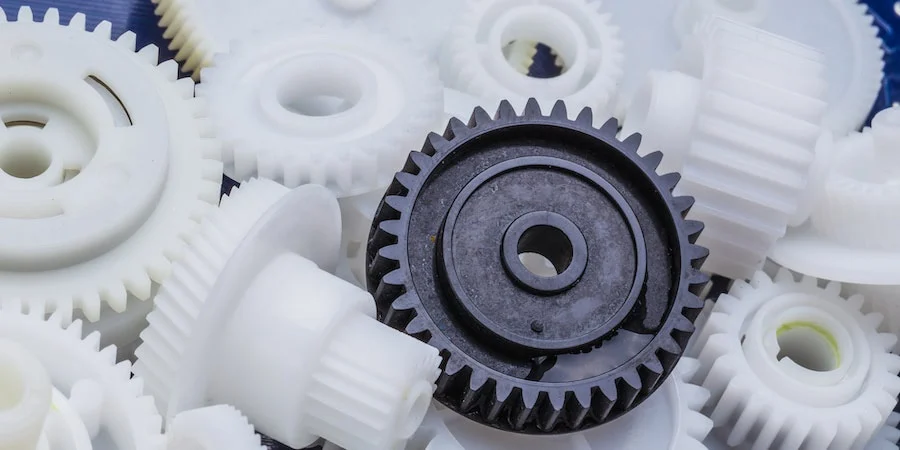
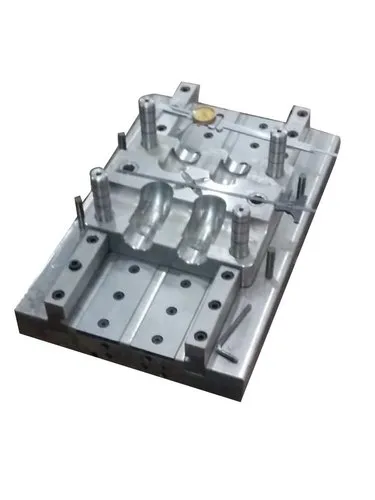
Warping and shrinkage are among the most common quality issues in plastic moulding, affecting dimensional accuracy, appearance, and functional performance of moulded parts. These defects arise due to uneven cooling, improper material selection, and suboptimal process parameters. Understanding their causes and implementing effective corrective measures is essential for consistent and high-quality production.
1. Understanding Warping and Shrinkage
Shrinkage refers to the reduction in part dimensions as molten plastic cools and solidifies. It is a natural behavior of thermoplastics but becomes problematic when it is excessive or uneven.
Warping occurs when different areas of the part shrink at different rates, causing bending, twisting, or distortion after ejection.
Both defects are interrelated and often influenced by material properties, mould design, and processing conditions.
2. Material-Related Causes and Solutions
Causes
High-crystallinity materials (e.g., PP, PE, Nylon) exhibit higher shrinkage.
Inconsistent or contaminated raw materials.
Incorrect moisture content, especially in hygroscopic plastics.
Solutions
Select materials with lower and more predictable shrinkage rates.
Use glass-filled or mineral-filled grades to reduce shrinkage and improve dimensional stability.
Ensure proper material drying as per supplier recommendations.
Maintain consistent material batches during production.
3. Mould Design Considerations
Causes
Uneven wall thickness leading to differential cooling.
Poor gate location or insufficient number of gates.
Inadequate cooling channel design.
Solutions
Design uniform wall thickness wherever possible.
Optimize gate size and location to ensure balanced flow and packing.
Use conformal cooling or optimized cooling layouts for uniform heat removal.
Provide adequate venting to avoid air traps that affect packing pressure.
4. Processing Parameter Optimization
Causes
Low packing or holding pressure.
Insufficient holding time.
Uneven or excessive mould temperature.
High melt temperature causing excessive material contraction.
Solutions
Increase holding pressure and holding time to compensate for material shrinkage.
Optimize mould temperature to achieve uniform cooling.
Maintain recommended melt temperature to avoid thermal stress.
Use scientific moulding techniques to establish a stable process window.
5. Cooling and Ejection Practices
Causes
Premature ejection of parts.
Non-uniform cooling across the mould.
Improper ejection force or pin placement.
Solutions
Allow sufficient cooling time before ejection.
Balance cooling circuits on both core and cavity sides.
Optimize ejection system design to avoid localized stress.
Use stripper plates or air ejection for large, flat components.
6. Part Geometry and Structural Design
Causes
Large flat surfaces without reinforcement.
Thick ribs or bosses causing sink marks and differential shrinkage.
Asymmetrical part design.
Solutions
Add ribs or gussets to improve stiffness without increasing wall thickness.
Maintain rib thickness at 40–60% of the nominal wall thickness.
Ensure symmetrical design to balance shrinkage forces.
Avoid sudden thickness transitions.
7. Use of Simulation and Process Control
Employ mould flow analysis to predict shrinkage and warpage before tool manufacturing.
Use real-time cavity pressure and temperature sensors for better process control.
Implement SPC (Statistical Process Control) to monitor dimensional consistency.
8. Post-Moulding and Secondary Measures
Controlled annealing can relieve internal stresses in critical components.
Allow sufficient conditioning time before final dimensional inspection.
Use fixtures during cooling for parts prone to distortion.
9. Continuous Improvement and Quality Monitoring
Conduct regular mould maintenance to ensure effective cooling and venting.
Review defect data to identify recurring patterns.
Train operators on material behavior and process sensitivity.
Conclusion
Overcoming warping and shrinkage in moulded parts requires a holistic approach involving material selection, intelligent mould design, precise process control, and continuous monitoring. By addressing these factors collectively, manufacturers can significantly improve part quality, reduce rejection rates, and enhance overall production efficiency.