1. Introduction
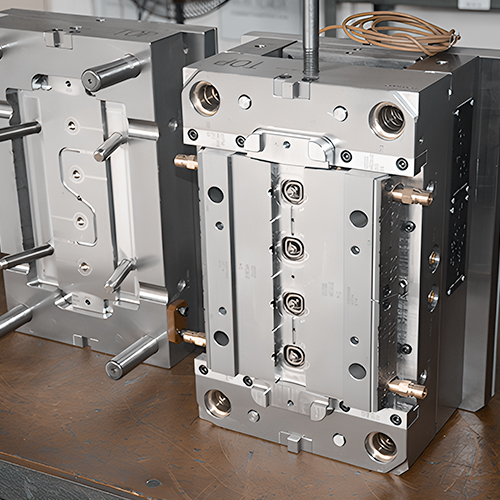
The mould life cycle refers to the complete operational lifespan of a mould, from initial design and fabrication to production use, maintenance, refurbishment, and eventual retirement. Durability determines how long a mould can consistently produce quality parts within specified tolerances. Effective life cycle management is critical for cost control, production efficiency, and product quality in plastic moulding industries.
2. Stages of the Mould Life Cycle
a) Design and Engineering
Product design analysis and mould feasibility study
Material selection (tool steel, aluminum, coatings)
Flow simulation and cooling system design
Consideration of part geometry, draft angles, and wall thickness
Impact on durability: Poor design leads to stress concentration, uneven cooling, and premature wear.
b) Mould Manufacturing and Assembly
CNC machining, EDM, grinding, and polishing
Heat treatment for hardness and wear resistance
Assembly and fitting of moving components
Impact on durability: Precision machining and proper heat treatment significantly enhance mould life.
c) Trial and Validation
First article inspection (FAI)
Mold flow validation and process optimization
Dimensional and functional testing of moulded parts
Impact on durability: Early detection of design or machining errors prevents long-term damage.
d) Production Phase
Regular moulding operations under defined process parameters
Monitoring of cycle time, temperature, and pressure
Inspection of produced parts for consistency
Impact on durability: Stable processing conditions reduce mechanical and thermal stress on the mould.
e) Maintenance and Repair
Preventive maintenance (cleaning, lubrication, inspection)
Corrective maintenance (replacement of worn inserts, ejector pins)
Surface re-polishing and coating renewal
Impact on durability: Preventive maintenance can extend mould life by 30–50%.
f) Refurbishment and Upgradation
Re-machining worn cavities
Upgrading cooling channels or venting
Retrofitting for new materials or design changes
Impact on durability: Refurbishment restores performance and delays capital investment in new moulds.
g) End of Life (EOL)
Mould retirement after exceeding economic repair limits
Component recycling or reuse
Documentation for future mould development
Impact on durability: Proper EOL management reduces waste and improves future designs.
3. Factors Affecting Mould Durability
Tool Material Quality: High-grade steels (P20, H13, S136) offer superior wear and corrosion resistance
Plastic Material Processed: Filled plastics (glass-filled, mineral-filled) accelerate wear
Surface Treatments: Nitriding, hard chrome plating, PVD coatings enhance life
Cooling Efficiency: Uniform cooling prevents thermal fatigue and cracking
Maintenance Practices: Regular inspection prevents minor wear from becoming major failures
4. Common Durability Issues
Abrasion and erosion of cavities
Corrosion due to moisture or aggressive polymers
Fatigue cracking from cyclic stresses
Ejector system wear and misalignment
5. Strategies to Improve Mould Life
Use mould flow analysis during design
Select appropriate steel grades and coatings
Implement predictive and preventive maintenance schedules
Maintain detailed mould history and life cycle records
Train operators on correct mould handling and storage
6. Benefits of Effective Mould Life Cycle Management
Reduced downtime and maintenance costs
Consistent product quality
Higher return on investment (ROI)
Extended mould service life
Improved production planning
7. Conclusion
Mould life cycle and durability are directly influenced by design quality, material selection, processing conditions, and maintenance discipline. A systematic approach to life cycle management ensures longer mould life, stable production, and reduced operational costs, making it a key success factor in modern moulding operations.