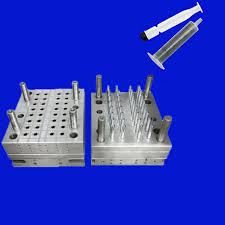
Disposable medical products play a vital role in modern healthcare by ensuring hygiene, preventing cross-contamination, and supporting efficient patient care. Plastic injection moulds designed for these products must meet extremely high standards of precision, cleanliness, and regulatory compliance.
1. Importance of Moulds in Disposable Medical Products
Moulds are essential for producing large volumes of single-use medical components such as syringes, IV connectors, test tubes, specimen containers, catheters, and diagnostic housings. These moulds enable consistent part quality, accurate dimensions, and reliable performance, which are critical in medical applications where patient safety is paramount.
2. Design Requirements
Moulds for disposable medical products are designed with strict tolerances to ensure proper fit and function. Key design considerations include:
High precision and repeatability to maintain uniformity across millions of parts
Smooth surface finishes to minimize bacterial adhesion and facilitate sterilization
Optimized gate and runner systems to reduce material waste and cycle time
Flash-free moulding to avoid sharp edges or loose particles
3. Materials Used for Mould Construction
Tool steels such as stainless steel (e.g., 420, 1.2083) are commonly used due to their corrosion resistance and suitability for cleanroom environments. These materials withstand frequent cleaning, sterilization, and high-cycle production without compromising mould integrity.
4. Cleanroom Compatibility
Disposable medical moulds are often operated in cleanroom injection moulding environments. The mould design must support low-particle generation, easy maintenance, and compatibility with cleanroom standards such as ISO Class 7 or 8. Special attention is given to venting, lubrication, and component sealing to prevent contamination.
5. High-Cavity and Automation-Friendly Designs
To meet high demand, moulds are frequently designed with multiple cavities and integrated with automation systems. Robotic part removal, in-mould labeling, and automated inspection help maintain cleanliness while increasing productivity and reducing human handling.
6. Compliance with Medical Standards
Moulds used for disposable medical products must support compliance with international medical regulations and quality systems, such as ISO 13485 and FDA requirements. Proper mould validation, documentation, and traceability are integral to the manufacturing process.
7. Cost Efficiency and Sustainability
Since disposable medical products are produced in large volumes, moulds must balance high precision with cost efficiency. Durable mould construction reduces downtime and maintenance costs, while optimized designs help minimize material usage and cycle times. Increasingly, moulds are also being adapted for recyclable and bio-based medical-grade plastics to support sustainability goals.
8. Quality Assurance and Validation
Rigorous testing and validation of moulds are essential before mass production. This includes dimensional inspection, process capability studies, and repeatability tests to ensure consistent quality throughout the mould’s lifespan.
Conclusion
Moulds for disposable medical products are a cornerstone of healthcare manufacturing. Their design and construction demand exceptional precision, cleanliness, and reliability to meet strict medical standards. Well-engineered moulds enable the safe, cost-effective, and high-volume production of disposable medical components that support infection control and improve patient outcomes worldwide.