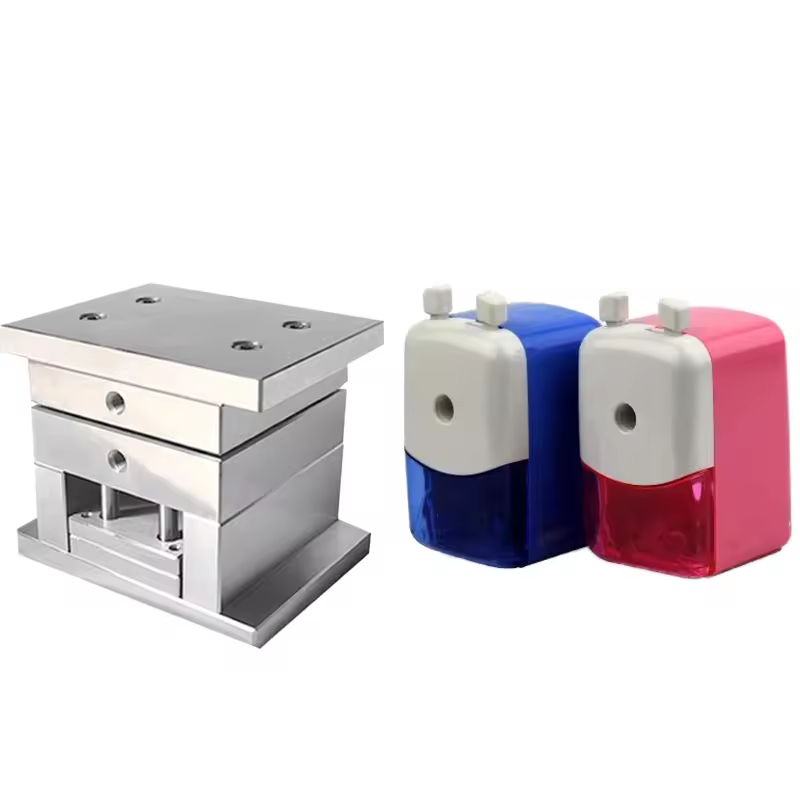
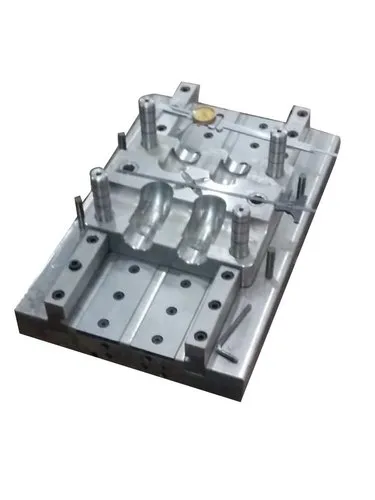
Erasers and sharpeners are widely used stationery products that require well-engineered mould designs to ensure durability, safety, consistent performance, and cost-effective mass production. Although these products appear simple, their mould design involves several technical considerations related to material behavior, part geometry, surface finish, and high-volume manufacturing.
1. Product Design Requirements
Erasers must be soft enough to remove pencil marks effectively without damaging paper, while sharpeners must maintain precise blade alignment for smooth and consistent sharpening. Mould design must support accurate dimensions, smooth edges, and user-safe features such as rounded corners and ergonomic shapes.
2. Material Selection and Its Impact on Mould Design
Erasers: Typically made from PVC, TPR, rubber compounds, or non-toxic elastomers. These materials require moulds designed to handle shrinkage, flexibility, and easy demoulding.
Sharpeners: Commonly produced using ABS, polystyrene (PS), or polypropylene (PP), which demand rigid, dimensionally stable mould cavities.
Material properties influence gate design, cooling layout, draft angles, and ejection systems.
3. Mould Type and Cavity Configuration
Single-cavity moulds are used for low-volume or customized designs, while multi-cavity moulds are preferred for large-scale production to increase output and reduce unit cost. Family moulds may be used for sharpeners that consist of multiple plastic components, such as the body and cover.
4. Gate and Runner Design
Proper gate placement ensures uniform flow, minimizes weld lines, and avoids surface defects.
Submarine or pin gates are commonly used for erasers to preserve surface quality.
Edge or tunnel gates are often used for sharpener bodies to allow smooth filling and easy gate trimming.
Balanced runner systems are essential for multi-cavity moulds to ensure consistent part quality.
5. Cooling System Design
Efficient cooling is critical for maintaining cycle time and dimensional accuracy. Cooling channels must be evenly distributed around the cavity, especially for thicker sharpener bodies, to prevent warpage and sink marks. Erasers, being softer materials, require controlled cooling to maintain flexibility and shape.
6. Draft Angles and Ejection System
Adequate draft angles are essential for easy part release:
Erasers typically require higher draft angles due to their soft and elastic nature.
Sharpeners need precise yet sufficient draft to maintain dimensional accuracy.
Ejection systems may include ejector pins, stripper plates, or air ejection, carefully positioned to avoid marks on visible surfaces.
7. Surface Finish and Texture
Surface finish plays a functional and aesthetic role. Eraser moulds often have fine textures or matte finishes for better grip, while sharpener moulds may use polished or lightly textured surfaces for a clean appearance and easy cleaning. Texture selection also helps mask minor flow marks or scratches.
8. Safety and Quality Considerations
Moulds must ensure smooth edges, no sharp corners, and consistent wall thickness to meet child-safety standards. For sharpeners, precise moulding is essential to ensure correct blade seating and secure assembly. Dimensional consistency reduces the risk of loose blades or poor sharpening performance.
9. Production Efficiency and Cost Optimization
High-precision machining, hardened mould steels, and optimized cooling systems improve mould life and reduce maintenance. Designing moulds for easy part ejection and minimal post-processing helps lower production costs and supports high-volume manufacturing.
10. Sustainability and Compliance
Modern eraser and sharpener mould designs increasingly consider recyclable materials, reduced material usage, and compliance with safety and environmental regulations. Efficient mould design helps minimize scrap and energy consumption during production.
Conclusion
Eraser and sharpener mould design combines precision engineering, material science, and high-volume manufacturing principles. A well-designed mould ensures product safety, consistent quality, efficient production, and long service life, making it a critical factor in the successful manufacturing of everyday stationery products.