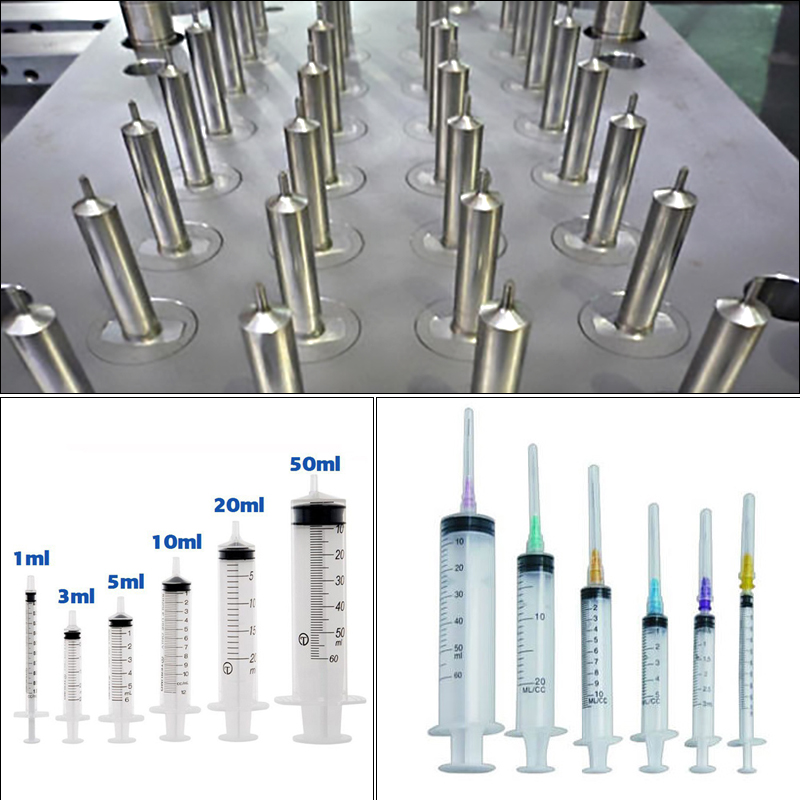
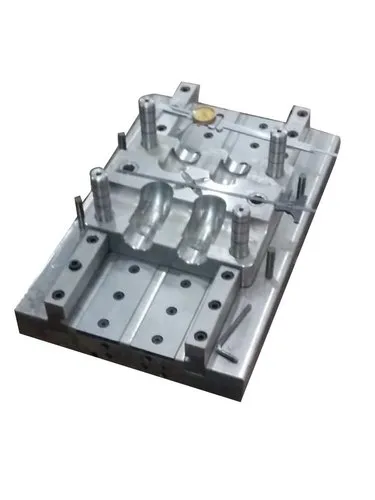
Syringes and intravenous (IV) components are critical disposable medical products that demand extremely high precision, consistency, and hygiene. The mould design for these components plays a vital role in ensuring patient safety, regulatory compliance, and efficient mass production. Due to their direct contact with drugs and the human body, syringe and IV moulds must meet stringent medical standards while maintaining high productivity.
1. Key Components Covered in Mould Design
Syringe and IV moulds are designed to manufacture various parts, including:
Syringe barrel
Plunger and plunger rod
Gasket and stopper
Needle hub
IV drip chamber
IV connector, luer lock, and luer slip fittings
Flow regulators and caps
Each component has unique design requirements related to sealing, transparency, and dimensional accuracy.
2. Material Selection Considerations
Medical-grade plastics are selected based on biocompatibility, chemical resistance, and sterilization compatibility:
Polypropylene (PP): Commonly used for syringe barrels and plungers due to clarity and flexibility
Polyethylene (PE): Used for IV tubing connectors and caps
Polycarbonate (PC): Used where high transparency and strength are required
Thermoplastic Elastomers (TPE): Used for gaskets and seals
Mould design must accommodate material flow behavior, shrinkage, and sensitivity to heat.
3. Precision and Dimensional Accuracy
High dimensional accuracy is critical for:
Smooth plunger movement
Leak-free sealing between barrel and gasket
Standardized luer connections (ISO 80369)
Moulds typically require micron-level tolerances, especially for internal diameters and sealing surfaces.
4. Multi-Cavity and High-Volume Production
Syringe and IV components are produced in very high volumes. Mould design often includes:
High-cavity layouts (16, 32, 64 cavities or more)
Balanced runner systems to ensure uniform filling
Tight cavity-to-cavity consistency to maintain part interchangeability
Uniform cooling and precise cavity machining are essential to avoid dimensional variation.
5. Hot Runner and Gating Design
Hot runner systems are widely used to:
Eliminate material waste
Improve cycle times
Maintain melt consistency
Gate design considerations include:
Pin or valve gates for cosmetic and functional surfaces
Central gating for barrels to ensure uniform wall thickness
Submarine or tunnel gates for smaller IV components
Gate placement must avoid flow marks, weld lines, and contamination risks.
6. Surface Finish and Polishing
Surface quality directly affects functionality:
Mirror-polished barrel interiors ensure smooth plunger movement
High-polish cavities improve transparency for visual inspection of fluids
Low-roughness surfaces reduce particle generation
Diamond polishing and fine lapping are commonly applied to critical mould areas.
7. Venting and Air Management
Proper venting is essential to prevent:
Short shots
Burn marks
Trapped air in thin-wall sections
Micro-vents are carefully placed without compromising sterility or part integrity.
8. Cooling System Design
Efficient cooling is crucial for dimensional stability and short cycle times:
Conformal or optimized cooling channels
Uniform temperature distribution across cavities
Prevention of warpage and sink marks
For transparent parts, cooling design must avoid stress and birefringence.
9. Cleanroom and Sterility Requirements
Many syringe and IV components are moulded in cleanroom environments:
Moulds must be designed to minimize particle generation
Use of corrosion-resistant steels (e.g., stainless steel, medical-grade tool steel)
Easy maintenance and cleaning without contamination risk
10. Compliance and Quality Standards
Mould design must support compliance with:
ISO 13485 (medical device quality management)
ISO 7886 (syringes)
FDA and CE regulatory requirements
Validation of mould performance, including IQ, OQ, and PQ, is a standard requirement.
11. Durability and Maintenance
Given the high production volumes:
Moulds are designed for long tool life
Wear-resistant coatings may be applied
Quick-change inserts enable efficient maintenance and reduced downtime
Conclusion
Syringe and IV component mould design is a highly specialized area of medical mould manufacturing that demands precision, reliability, and strict adherence to regulatory standards. By focusing on material behavior, high-precision tooling, optimized gating and cooling, and cleanroom compatibility, manufacturers can achieve consistent quality, high productivity, and safe medical products essential for modern healthcare.