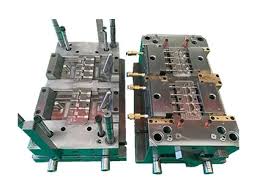
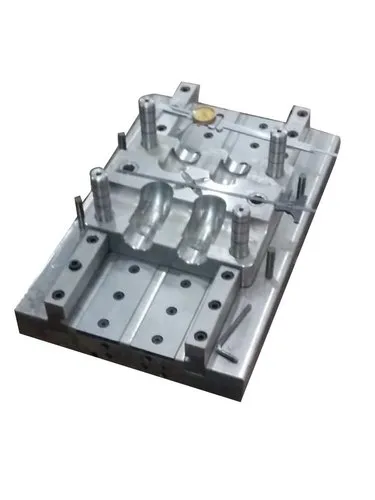
Catheter and cannula mould manufacturing requires extreme precision, strict dimensional control, and compliance with global medical standards. These components are critical for fluid delivery, drainage, and vascular access, making mould accuracy, surface finish, and material compatibility essential for patient safety and product performance.
Precision Requirements in Catheter and Cannula Moulds
Catheters and cannulas feature thin walls, micro-diameters, and long flow paths. Moulds must ensure:
Tight tolerances for internal and external diameters
Concentricity and straightness over extended lengths
Burr-free edges to prevent tissue damage
Consistent wall thickness for controlled flow rates
High-precision CNC machining and EDM processes are used to achieve micron-level accuracy.
Medical-Grade Materials Used
Catheter and cannula moulds are designed for processing medical-grade polymers such as:
Polyurethane (PU)
Polyethylene (HDPE, LDPE)
Polypropylene (PP)
Nylon (PA)
PTFE and Pebax (for specialty catheters)
All materials comply with ISO 10993 and USP Class VI biocompatibility requirements.
Mould Design Considerations
Effective catheter and cannula mould design focuses on:
Core pin stability for long, slender cavities
Optimized gate locations to prevent flow marks and weld lines
Balanced runner systems for multi-cavity moulds
Precision venting to avoid air traps and burn marks
Special attention is given to parting line control to eliminate flash on critical surfaces.
Surface Finish and Polishing
Ultra-smooth internal and external surfaces are vital for:
Reduced friction during insertion
Improved patient comfort
Prevention of bacterial adhesion
Mirror polishing and specialized coating techniques are applied to core pins and cavities to achieve superior surface quality.
Multi-Cavity and High-Volume Production
For large-scale medical manufacturing, catheter and cannula moulds are often designed as:
High-cavity moulds for mass production
Hot runner systems to reduce material waste
Automated demoulding solutions to maintain part integrity
These features ensure consistent output and cost-effective production.
Cleanroom Compatibility
Moulds are engineered for cleanroom injection moulding environments, supporting:
Class 7 and Class 8 cleanroom standards
Minimal particle generation
Easy cleaning and maintenance
This ensures compliance with medical device manufacturing regulations.
Quality Control and Validation
Each catheter and cannula mould undergoes:
Dimensional inspection using CMM and optical systems
Flow and pressure testing
Tool qualification (IQ, OQ, PQ)
Repeatability and endurance testing
This guarantees consistent performance throughout the mould’s lifecycle.
Applications
Catheter and cannula moulds are used in manufacturing:
IV cannulas
Urinary catheters
Central venous catheters
Dialysis catheters
Blood collection and infusion devices
Conclusion
Catheter and cannula mould manufacturing demands advanced tooling expertise, strict quality control, and adherence to medical standards. Precision-engineered moulds ensure safe, reliable, and high-performance medical components that meet the evolving needs of healthcare providers and patients worldwide.