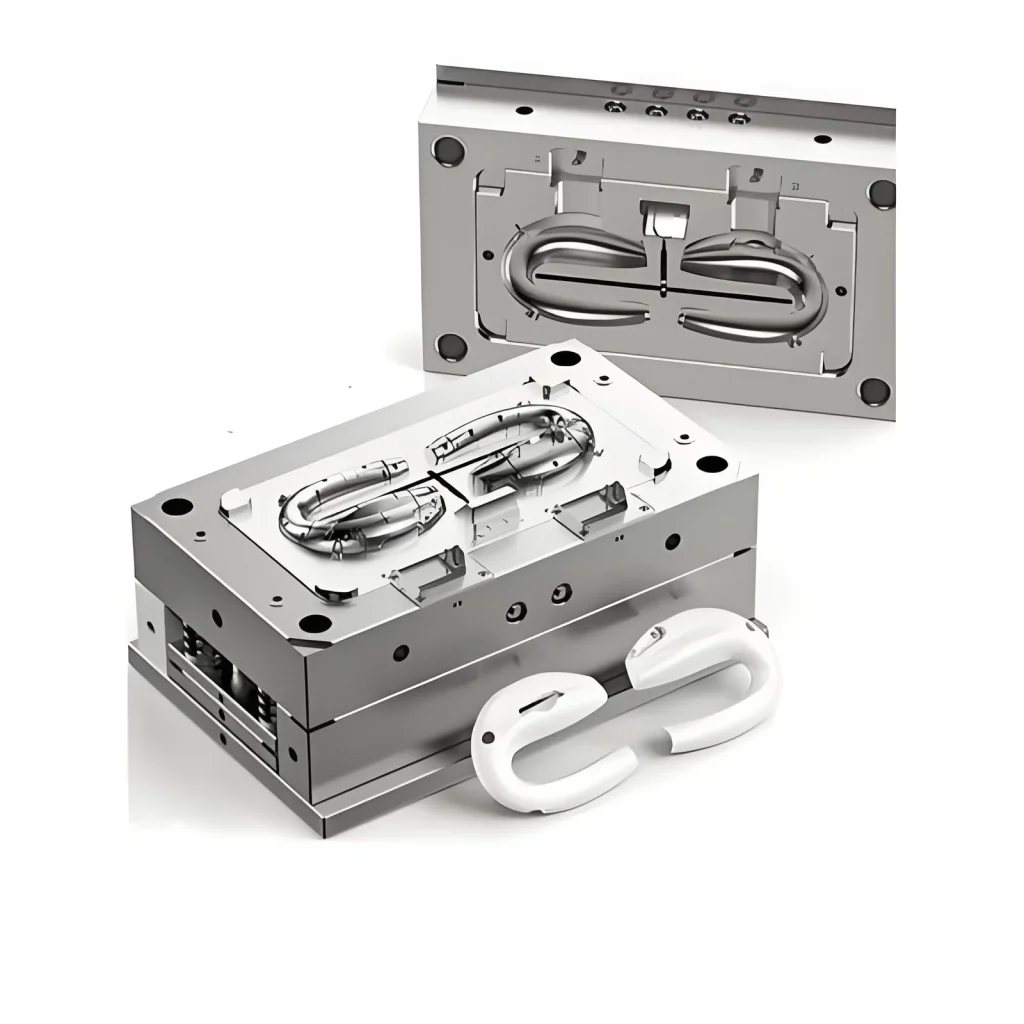
Implantable medical devices require extremely precise, contamination-free, and biocompatible components. Mould design for implantable devices plays a critical role in ensuring product safety, regulatory compliance, and long-term performance inside the human body. Unlike disposable medical products, implantable components demand ultra-high accuracy, superior surface finishes, and validated manufacturing processes.
Key Requirements in Implantable Device Mould Design
Implantable moulds must meet stringent medical and regulatory standards. Every design element focuses on consistency, precision, and patient safety.
Micron-level dimensional accuracy
Excellent surface integrity to prevent tissue irritation
Zero contamination risk
Repeatability over long production cycles
Compliance with ISO 13485, FDA, and GMP guidelines
Material Considerations
Both mould steel and plastic material selection are critical in implantable device moulding.
Mould Steel Selection
Stainless steels (420, 440C) for corrosion resistance
Medical-grade tool steels with high polishability
Non-reactive materials suitable for cleanroom environments
Implantable Plastic Materials
PEEK (Polyether ether ketone)
Medical-grade silicone
Polycarbonate (implant-approved grades)
UHMWPE (Ultra-High-Molecular-Weight Polyethylene)
All materials must meet biocompatibility standards such as ISO 10993.
Precision and Tolerance Control
Implantable components often require tolerances within ±0.005 mm or tighter. Mould design must account for:
Controlled shrinkage behavior
Uniform wall thickness
Precise cavity machining using CNC and EDM
Compensation for material flow and cooling effects
Mold flow simulation is commonly used to predict and control dimensional variation.
Gate, Runner, and Vent Design
Proper gating and venting are essential to avoid defects that could compromise implant safety.
Micro-gates for minimal gate marks
Hot runner systems for material purity and waste reduction
Balanced runner layouts for consistent filling
Precision venting to prevent gas traps and burn marks
Gate locations are selected to ensure smooth flow without weld lines in critical areas.
Surface Finish and Polishing
Surface quality directly affects implant performance and patient comfort.
Mirror polishing for tissue-contact areas
Controlled surface textures where required
No machining marks or micro-scratches
Electropolishing for stainless steel mould components
High-grade polishing also improves part release and reduces contamination risk.
Cleanroom-Compatible Mould Design
Implantable device moulds are typically used in Class 7 or Class 8 cleanrooms.
Design features include:
Enclosed ejector systems
Minimal grease or lubrication points
Corrosion-resistant components
Easy-to-clean mould construction
Moulds must support cleanroom handling, assembly, and maintenance.
Ejection System Design
Ejection must be smooth and stress-free to avoid part deformation.
Sleeve ejectors or stripper plates for delicate parts
Polished ejector pins to prevent marks
Uniform ejection force distribution
Controlled ejection speed
Poor ejection design can cause micro-cracks or dimensional distortion.
Validation and Quality Assurance
Implantable device moulds undergo extensive validation before production.
IQ (Installation Qualification)
OQ (Operational Qualification)
PQ (Performance Qualification)
Dimensional and functional testing
Process capability studies (Cp, Cpk)
Documentation and traceability are mandatory throughout the mould life cycle.
Challenges in Implantable Device Mould Design
Ultra-small and complex geometries
High material costs and scrap sensitivity
Stringent regulatory audits
Tight tolerances with long-term repeatability
Contamination control during mould operation
Addressing these challenges requires expertise in medical mould engineering and process validation.
Conclusion
Implantable device mould design demands the highest standards of precision, cleanliness, and material compatibility. From steel selection and cavity design to surface finishing and validation, every aspect of the mould directly impacts patient safety and device performance. Partnering with experienced medical mould manufacturers ensures reliable, compliant, and high-quality implantable components.