1. Introduction
Thin-wall moulding is a specialized injection moulding process used to manufacture lightweight, high-volume plastic products with wall thicknesses typically below 1.0 mm. In the stationery industry, this technology is widely applied to items such as pen barrels, rulers, file covers, geometry boxes, notebook covers, and pencil cases. Thin-wall moulding enables material savings, faster cycle times, and cost-effective mass production while maintaining functional strength and aesthetic quality.
2. Key Characteristics of Thin-Wall Stationery Products
Wall thickness: 0.4–1.0 mm depending on part size and material
High flow length-to-thickness ratio
Lightweight yet rigid structure
Smooth surface finish and uniform appearance
High dimensional consistency for stackable or interlocking parts
3. Material Selection for Thin-Wall Stationery
Material choice is critical due to high shear rates and fast filling requirements.
Commonly used materials include:
Polypropylene (PP): Excellent flowability, flexibility, and cost efficiency
High Impact Polystyrene (HIPS): Good surface finish and stiffness
ABS (Thin-wall grades): Improved strength and premium appearance
PET / Recycled PET: Used for eco-friendly stationery products
Key material properties required:
High melt flow index (MFI)
Good thermal stability
Low shrinkage variation
Color consistency for aesthetic products
4. Mould Design Considerations
Thin-wall mould design demands precision and optimized flow behavior.
Critical design aspects include:
Uniform wall thickness: Prevents warpage and short shots
Balanced runner system: Ensures even cavity filling
Optimized gate location: Typically edge or fan gates for thin sections
High-polish cavity surfaces: Reduces flow resistance
High-speed injection compatibility: Moulds must withstand high pressures
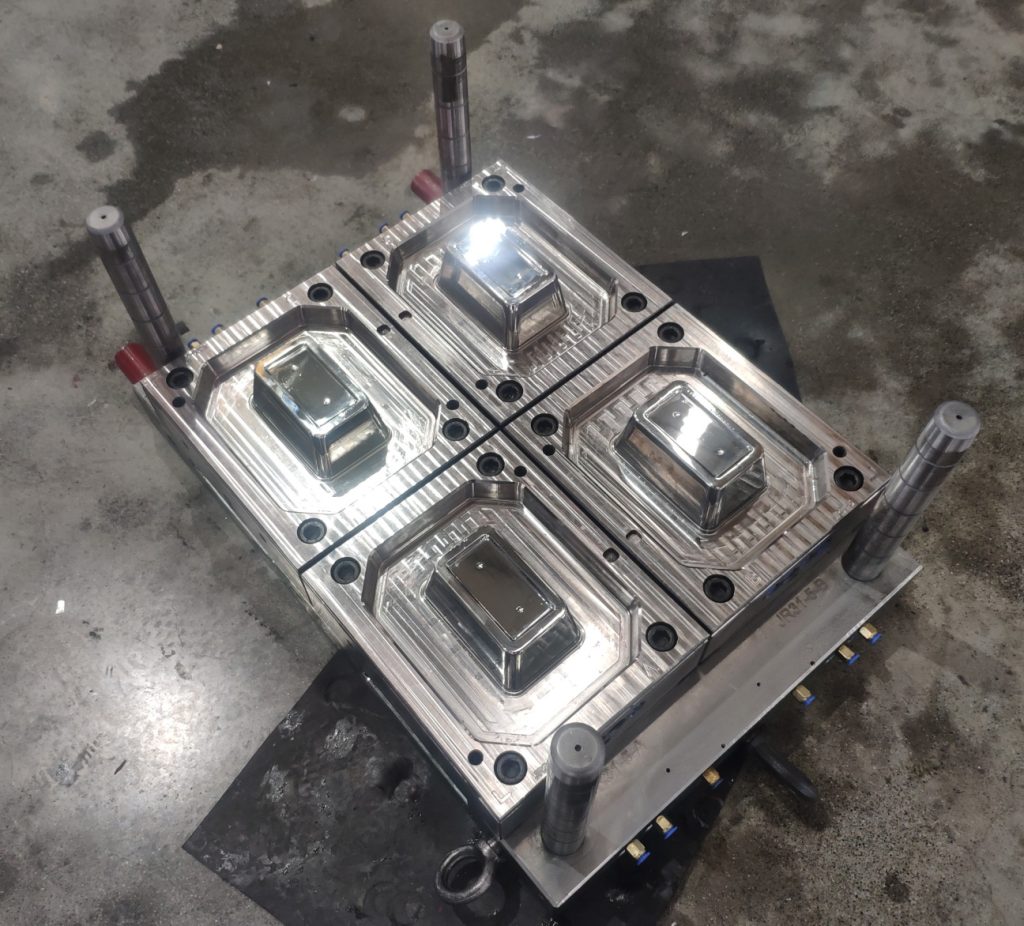
Multi-cavity moulds are often used to meet high production volumes for stationery items.
5. Injection Moulding Process Parameters
Thin-wall moulding requires precise process control:
High injection speed: Ensures complete cavity filling
Elevated injection pressure: Compensates for thin flow paths
Controlled melt temperature: Prevents material degradation
Efficient cooling time: Achieved through optimized cooling channels
Short cycle times: Improves productivity and lowers cost per part
Modern high-speed injection moulding machines are typically used for thin-wall stationery moulds.
6. Cooling System and Cycle Time Optimization
Efficient cooling is essential due to thin sections and high production rates.
Use of conformal or closely spaced cooling channels
Uniform heat extraction to prevent part distortion
Reduced cycle times (often under 10 seconds)
Consistent mould temperature control for repeatable quality
Proper cooling design directly impacts productivity and part flatness.
7. Quality Challenges and Defect Control
Common defects in thin-wall stationery moulding include:
Short shots
Warpage and deformation
Flow lines and weld marks
Sink marks at ribs or logos
Preventive measures:
Mold flow analysis during design
Optimized gate and runner sizing
Consistent material drying and handling
Regular mould maintenance and polishing
8. Advantages of Thin-Wall Moulding for Stationery
Significant material cost reduction
Lightweight and eco-friendly products
High-speed mass production capability
Improved product aesthetics
Competitive pricing for large-volume markets
9. Applications in Stationery Products
Thin-wall moulding is commonly used for:
Pen and marker barrels
Plastic rulers and scales
Notebook and file covers
Geometry boxes and pencil cases
Folder clips and document holders
10. Conclusion
Thin-wall moulding plays a vital role in the production of modern lightweight stationery items. By combining optimized mould design, high-flow materials, and advanced injection moulding technology, manufacturers can achieve high-quality, cost-effective, and sustainable stationery products. As demand for lightweight and eco-friendly stationery continues to grow, thin-wall moulding will remain a key manufacturing solution.