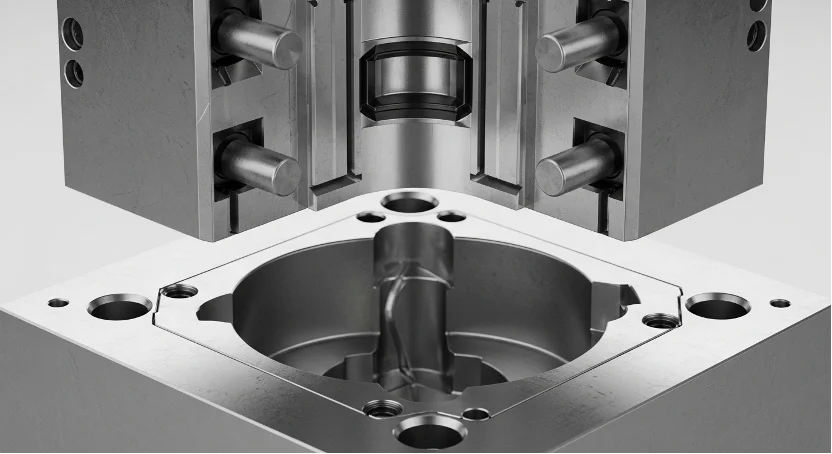
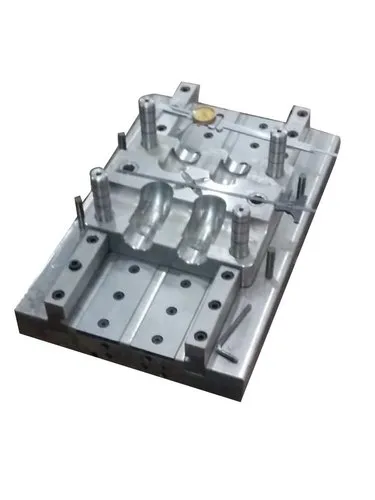
Precision tolerances play a critical role in the performance, appearance, and reliability of cosmetic mould components. Cosmetic packaging products such as lipstick cases, compact powder containers, bottles, caps, and closures demand high aesthetic quality, smooth functionality, and consistent assembly—making tight dimensional control essential throughout mould design and manufacturing.
Importance of Precision Tolerances in Cosmetic Moulds
Cosmetic products are consumer-facing items where visual appeal and tactile feel directly influence brand perception. Even minor dimensional deviations can cause visible defects, poor fit, leakage, or malfunction. Precision tolerances ensure:
Smooth opening and closing of caps and closures
Uniform wall thickness for consistent gloss and transparency
Accurate alignment of multi-part assemblies
Reliable snap-fit, thread, and hinge performance
Reduced post-moulding adjustments and rejection rates
Typical Tolerance Requirements
Cosmetic mould components often require tighter tolerances compared to general consumer products. Common tolerance ranges include:
Critical functional dimensions: ±0.005 to ±0.02 mm
Snap-fit and thread features: ±0.01 to ±0.03 mm
Aesthetic surfaces: ±0.02 to ±0.05 mm
Non-critical features: ±0.05 mm or higher
These tolerances depend on part geometry, material selection, mould complexity, and production volume.
Key Mould Components Requiring High Precision
Several mould components directly affect dimensional accuracy:
Core and cavity inserts: Must be machined and polished to exact dimensions to maintain part geometry and surface finish
Slider and lifter mechanisms: Require precise tolerances to prevent flash, drag marks, or wear
Ejector pins and sleeves: Tight fits are essential to avoid witness marks and part distortion
Thread and snap-fit inserts: High accuracy ensures proper engagement and repeatability
Material Selection and Its Impact on Tolerances
Plastic material choice significantly influences achievable tolerances:
ABS, SAN: Offer good dimensional stability and surface finish
PMMA: Requires tight control due to brittleness and shrinkage sensitivity
PP and PE: Higher shrinkage and flexibility require compensation in mould design
PET and PETG: Demand precise temperature and cooling control to maintain tolerances
Understanding material shrinkage behavior is critical when defining mould dimensions.
Machining and Manufacturing Techniques
Advanced manufacturing processes are essential to achieve tight tolerances:
High-speed CNC machining with precision tool paths
EDM (Electrical Discharge Machining) for intricate details
Jig grinding for ultra-precise features
Optical and coordinate measuring machines (CMM) for verification
Consistent tool maintenance and calibration further support dimensional accuracy.
Role of Mould Assembly and Alignment
Accurate mould assembly is as important as machining precision. Proper alignment of guide pillars, bushes, and parting surfaces prevents mismatch, flash, and uneven wear. Precision ground plates and controlled assembly procedures help maintain tolerance integrity over long production runs.
Process Control and Moulding Parameters
Injection moulding conditions directly affect final part dimensions. Stable process parameters such as melt temperature, injection pressure, cooling time, and mould temperature are essential for maintaining tolerances. Scientific moulding and regular process monitoring reduce dimensional variation.
Quality Control and Inspection
Effective quality control ensures tolerance compliance:
First article inspection (FAI)
In-process dimensional checks
CMM and optical measurement systems
SPC (Statistical Process Control) for high-volume production
Regular inspection helps identify wear, drift, or process deviations early.
Challenges in Maintaining Tight Tolerances
Common challenges include:
Thermal expansion of mould components
Tool wear over long production cycles
Material batch variations
Complex part geometries with thin walls
These challenges require robust mould design, proper steel selection, and preventive maintenance.
Conclusion
Precision tolerances are fundamental to the success of cosmetic mould components, directly influencing product quality, functionality, and brand value. Through careful mould design, appropriate material selection, advanced machining, and strict process control, manufacturers can consistently achieve the tight tolerances demanded by the cosmetic industry. Investing in precision not only improves product aesthetics but also reduces waste, improves assembly efficiency, and ensures long-term mould performance.