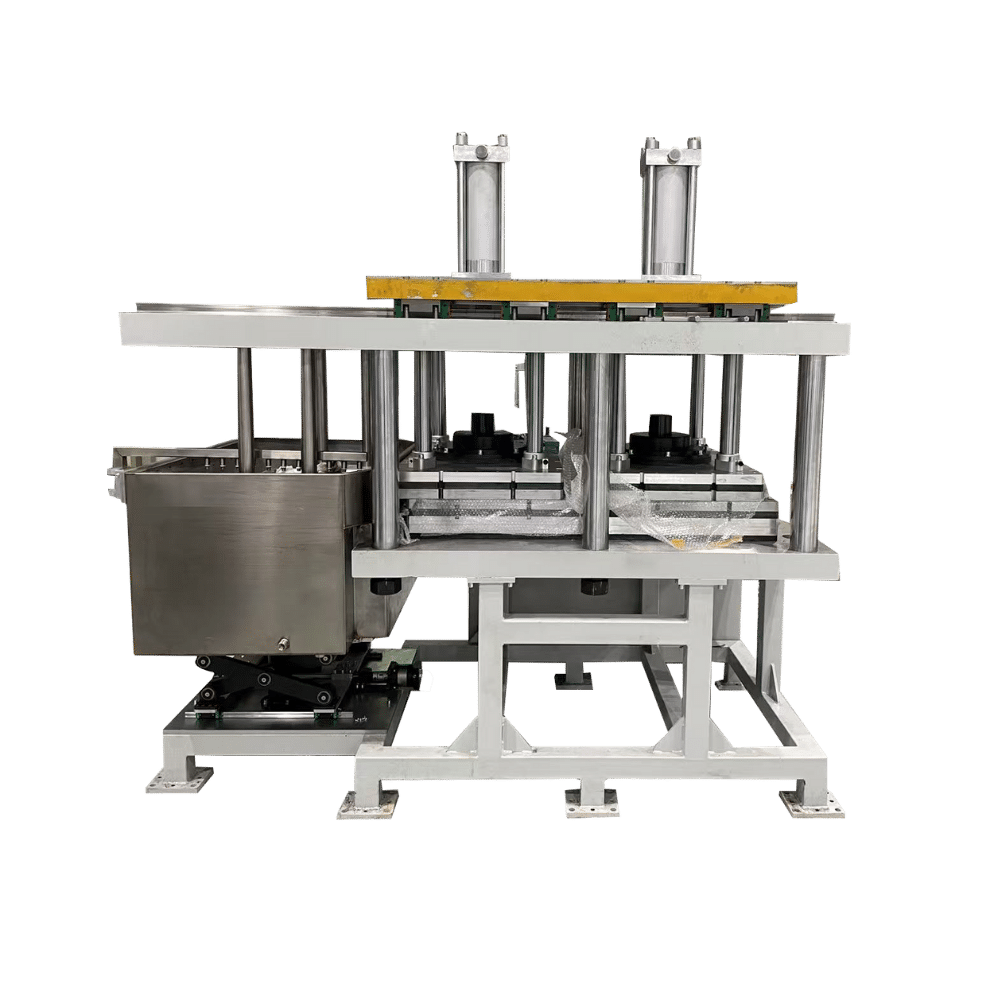
Automation plays a vital role in modern stationery moulding production by improving efficiency, consistency, and cost-effectiveness. With growing demand for high-volume products such as pens, rulers, files, folders, and school accessories, automated injection moulding systems have become essential for competitive manufacturing.
1. Role of Automation in Stationery Manufacturing
Stationery products typically require large production volumes with tight dimensional control and uniform appearance. Automation reduces manual intervention, ensuring repeatability, minimizing defects, and enabling continuous operation across long production cycles.
2. Automated Injection Moulding Machines
Modern servo-driven injection moulding machines are widely used in stationery production. These machines offer:
Precise control over injection speed, pressure, and clamping force
Faster cycle times for thin-wall stationery components
Energy efficiency through optimized motor control
Stable processing for materials such as PP, PS, ABS, and PET
3. Robotic Part Handling and Demoulding
Robots are commonly integrated for part removal and handling, especially in multi-cavity moulds. Key benefits include:
Damage-free demoulding of delicate or thin parts
Consistent handling of high-gloss or transparent components
Reduced labor dependency and improved workplace safety
Seamless transfer of parts to downstream processes
4. Automated Runner and Gate Separation
For stationery items produced with cold runner systems, automation enables:
Automatic separation of runners and sprues
Reduced manual trimming and rework
Improved cycle efficiency and cleaner parts
Hot runner systems further enhance automation by eliminating runner waste entirely.
5. In-Line Inspection and Quality Control
Automation supports real-time quality monitoring through:
Vision inspection systems for dimensional accuracy and cosmetic defects
Automated weight checking to ensure material consistency
Statistical process control (SPC) for stable, repeatable production
These systems are particularly important for branded stationery products where appearance is critical.
6. Automated Assembly for Multi-Part Stationery Items
Complex stationery products such as pens, markers, compasses, and geometry boxes benefit from automated assembly lines. Automation ensures:
Accurate alignment and fit of multiple components
High-speed assembly with minimal variation
Integration of moulding, assembly, and packaging in a single workflow
7. Packaging and Post-Processing Automation
Automation extends beyond moulding to include:
Automatic counting and stacking of moulded parts
Robotic packaging into bags, blisters, or boxes
Integration with labeling and barcode systems
This reduces handling time and supports high-volume dispatch requirements.
8. Data Integration and Smart Manufacturing
Advanced automated stationery moulding facilities use digital systems to:
Monitor machine performance and cycle data
Track mould life and maintenance schedules
Enable predictive maintenance and reduce downtime
Support Industry 4.0 and smart factory initiatives
9. Benefits of Automation in Stationery Moulding
Key advantages include:
Higher productivity and shorter cycle times
Consistent product quality and reduced rejection rates
Lower labor costs and improved safety
Better material utilization and reduced waste
Scalability for seasonal or bulk demand
10. Future Trends in Automated Stationery Production
Future developments include:
AI-driven process optimization
Fully lights-out manufacturing cells
Greater use of collaborative robots (cobots)
Sustainable automation focusing on energy efficiency and recyclability
Conclusion
Automation has become a cornerstone of stationery moulding production, enabling manufacturers to meet high-volume demands while maintaining quality, efficiency, and cost control. By integrating automated moulding, handling, inspection, and packaging systems, stationery manufacturers can achieve reliable, scalable, and future-ready production operations.