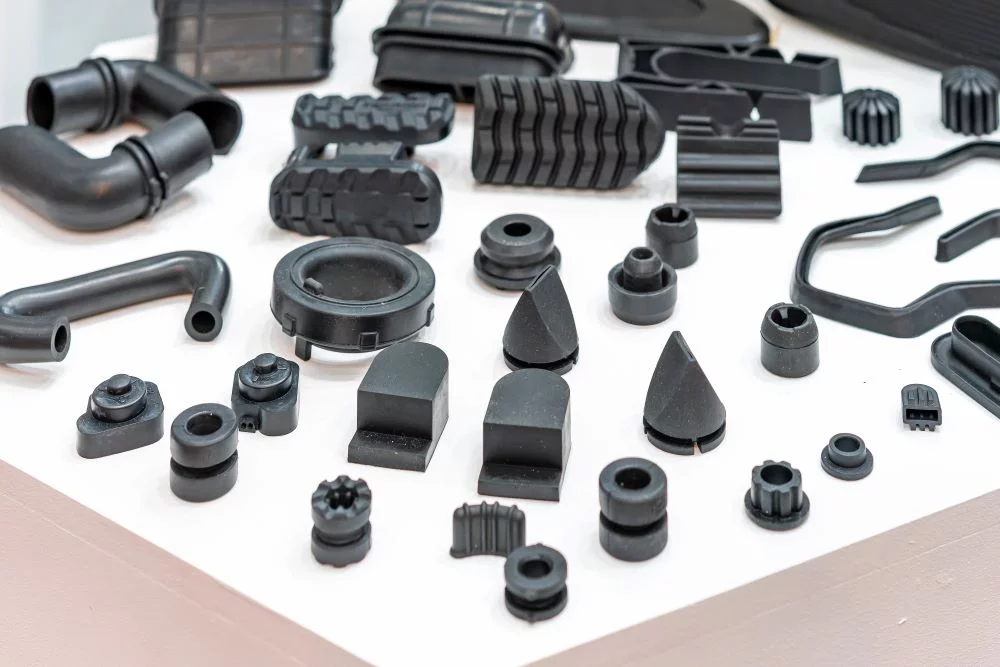
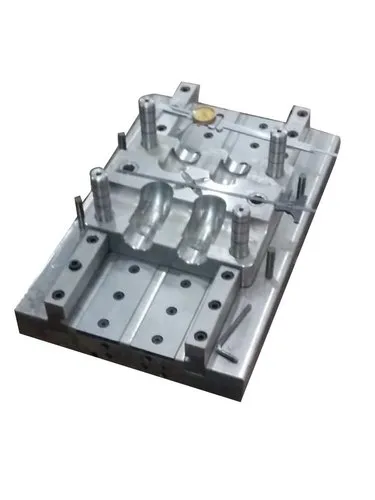
High-volume automotive moulding plays a critical role in mass production of interior, exterior, and under-the-hood components. While it enables cost efficiency and consistency, it also presents several technical, operational, and quality-related challenges that manufacturers must continuously address.
1. Tooling Durability and Wear
Automotive moulds operate under extreme production cycles, often exceeding millions of shots. Continuous exposure to high pressures, temperatures, and abrasive materials (such as glass-filled polymers) leads to:
Cavity erosion and surface wear
Dimensional inaccuracies over time
Increased maintenance frequency and downtime
Ensuring mould longevity requires premium tool steels, surface coatings, and predictive maintenance strategies.
2. Consistent Part Quality
Maintaining uniform quality across large production volumes is challenging due to:
Variations in raw material batches
Process parameter drift over long runs
Thermal imbalance across multi-cavity moulds
Even minor inconsistencies can result in defects such as warpage, sink marks, flash, or short shots, leading to rework or rejection.
3. Cycle Time Optimization
High-volume automotive moulding demands extremely short cycle times to meet production targets. Challenges include:
Balancing fast cooling with dimensional stability
Avoiding premature ejection that causes deformation
Managing high-speed injection without inducing stress
Optimizing cycle time without compromising quality requires advanced cooling designs and precise process control.
4. Complex Part Geometry
Modern automotive components often feature:
Thin walls and ribs
Integrated clips and fasteners
Overmoulded inserts or multi-material designs
These complexities increase the risk of flow hesitation, weld lines, and incomplete filling, especially in high-speed production environments.
5. Material Processing Challenges
Automotive applications use a wide range of engineering plastics and composites. High-volume moulding must handle:
High-temperature polymers (PA, PBT, PPS)
Fiber-filled materials causing mould wear
Recycled or sustainable materials with variable flow properties
Each material introduces unique processing and durability challenges.
6. Thermal Management and Cooling Efficiency
Efficient heat removal is essential for maintaining short cycle times and dimensional stability. Challenges include:
Uneven cooling in large or thick components
Hot spots causing internal stresses and warpage
Scaling cooling performance across multi-cavity moulds
Poor thermal management directly affects productivity and part quality.
7. Automation and Handling Integration
High-volume automotive moulding relies heavily on automation for part removal, inspection, and packaging. Common challenges are:
Synchronization between moulding machines and robots
Preventing part damage during high-speed handling
Managing downtime caused by automation failures
Reliable integration is critical to uninterrupted production.
8. Quality Compliance and Traceability
Automotive components must meet strict OEM and regulatory standards. High-volume production increases the difficulty of:
Ensuring full traceability of parts and materials
Conducting real-time quality monitoring
Managing recalls or corrective actions efficiently
Any lapse in quality control can have significant financial and reputational consequences.
9. Tool Changeover and Flexibility
Automotive manufacturers frequently update designs or variants. High-volume moulding systems struggle with:
Long changeover times
High costs of mould modifications
Reduced flexibility in dedicated production lines
Balancing volume efficiency with production agility remains a key challenge.
10. Cost Pressures and Margin Control
Despite high output, manufacturers face constant pressure to reduce costs while maintaining performance. Challenges include:
Rising raw material and energy costs
High initial investment in tooling and automation
Maintenance and spare part expenses over mould life
Achieving cost efficiency without sacrificing quality or reliability is a continuous effort.
Conclusion
High-volume automotive moulding is a complex, high-stakes manufacturing process that demands precision, durability, and efficiency. Overcoming its challenges requires advanced mould design, robust materials, intelligent automation, and continuous process optimization. Manufacturers who successfully address these challenges gain a competitive edge in quality, cost, and delivery performance.