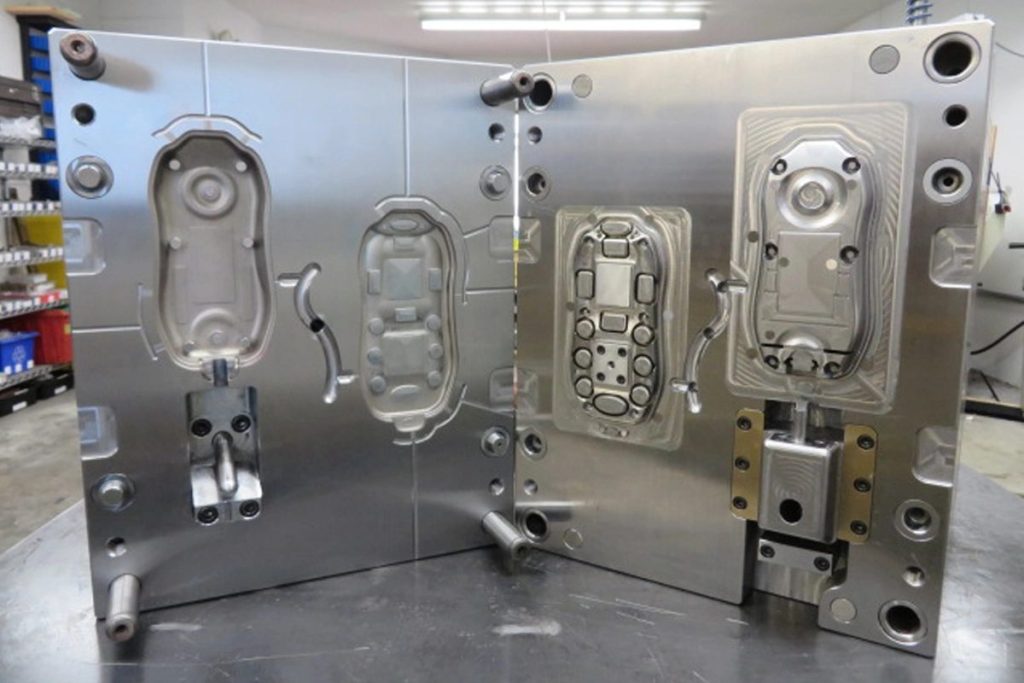
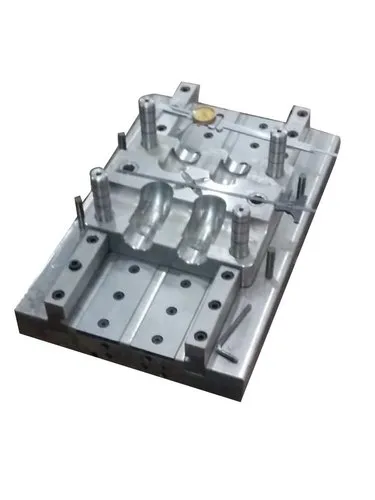
Compact powder cases are precision cosmetic packaging components that combine aesthetics, functionality, and durability. Designing moulds for these products presents several technical and manufacturing challenges due to their intricate structures, tight tolerances, and high surface-finish requirements.
1. Complex Multi-Component Structure
Compact powder cases typically consist of multiple parts such as the top cover, base, hinge mechanism, mirror holder, and inner tray. Designing moulds for these components requires:
Accurate alignment between parts
Consistent wall thickness across mating surfaces
Proper fit for smooth opening and closing
Any dimensional mismatch can lead to functional issues or poor user experience.
2. High Aesthetic and Surface Finish Requirements
Cosmetic packaging demands premium appearance. Mould challenges include:
Achieving high-gloss, matte, textured, or patterned finishes
Avoiding flow lines, weld marks, sink marks, and surface defects
Ensuring uniform color distribution and no blemishes
Polishing and texturing processes must be precisely controlled, increasing mould complexity and cost.
3. Hinge and Locking Mechanism Precision
Many compact cases use snap-fit closures or integrated living hinges. Key challenges are:
Designing hinges that withstand repeated opening and closing
Preventing stress cracking or fatigue failure
Maintaining consistent snap force without breakage
This requires precise gate placement, controlled cooling, and material-specific hinge design.
4. Thin-Wall Moulding Constraints
To reduce weight and material consumption, compact cases often have thin walls. This creates challenges such as:
Short shots due to insufficient flow
Warpage caused by uneven cooling
Higher injection pressures and faster cycle times
Optimized runner design and balanced filling are essential to overcome these issues.
5. Mirror and Insert Accommodation
Many compact powder cases include mirrors or metal decorations. Mould design must address:
Secure mirror placement without distortion
Insert moulding or post-assembly alignment
Avoidance of stress marks around insert areas
Insert handling increases cycle time and demands precise mould engineering.
6. Gate Location and Ejection Challenges
Gate placement must be carefully selected to avoid visible marks on cosmetic surfaces. Common challenges include:
Concealing gate vestiges in non-visible areas
Preventing deformation during ejection
Designing ejector systems that do not leave marks
Stripper plates or air ejection are often preferred over conventional ejector pins.
7. Material Selection and Shrinkage Control
Compact powder cases are typically moulded using ABS, SAN, PP, or acrylic blends. Each material presents:
Different shrinkage rates
Varying flow characteristics
Sensitivity to temperature and cooling variations
Mould designers must account for these factors to ensure dimensional stability and part consistency.
8. Tight Tolerance and Assembly Fit
Perfect fit between the lid and base is critical for functionality and premium feel. Challenges include:
Maintaining uniform gap and alignment
Avoiding rattling or excessive friction
Controlling tolerance stack-up across multiple cavities
High-precision machining and robust quality control are essential.
9. High-Cavity Production Demands
To meet mass-production requirements, compact powder case moulds often use multi-cavity designs. This introduces challenges such as:
Balanced runner systems
Uniform cooling across all cavities
Consistent part quality at high output rates
Poor balancing can lead to weight variation and cosmetic defects.
10. Tool Maintenance and Wear
Frequent production cycles and high polish surfaces lead to:
Faster wear of mould cavities
Risk of surface damage during maintenance
Increased downtime for polishing and repairs
Using hardened steel and proper mould care strategies helps extend tool life.
Conclusion
Compact powder case mould design is a specialized area that demands precision engineering, advanced tooling techniques, and close coordination between design, material selection, and manufacturing. Successfully overcoming these challenges ensures high-quality cosmetic packaging that meets both functional and aesthetic expectations in a competitive market.