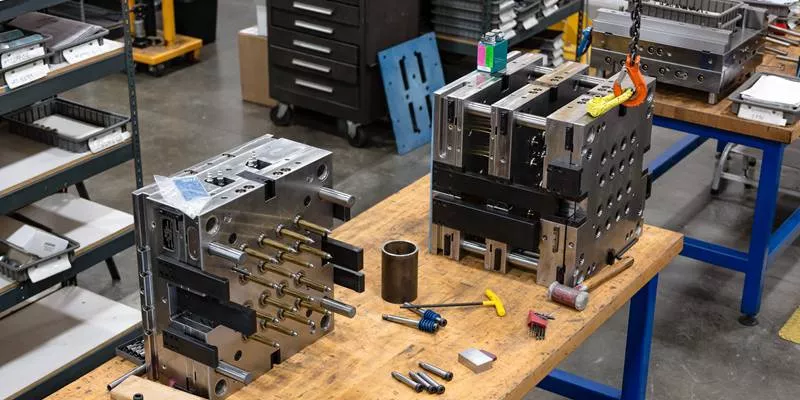
Medical device moulds require exceptional precision, reliability, and compliance with strict regulatory standards. The quality of the mould directly impacts patient safety, product performance, and regulatory approval. Below are the key design considerations involved in developing moulds for medical device applications.
1. Regulatory Compliance and Standards
Medical moulds must comply with international healthcare regulations such as ISO 13485, ISO 10993, FDA guidelines, and GMP requirements. Mould design should support validated processes, traceability, and repeatability to meet audit and documentation demands.
2. Material Selection
Medical devices often use biocompatible, medical-grade polymers such as PP, PE, PVC, ABS, PC, PEEK, and silicone. The mould design must account for:
Material flow behavior
Shrinkage rates
Chemical resistance
Sterilization compatibility (EtO, gamma, autoclave)
3. High Precision and Tight Tolerances
Medical components typically require micron-level tolerances to ensure proper function and fit. Mould designs must incorporate:
Precision machining
Stable mould bases
Consistent cavity dimensions
Minimal part variation across production cycles
4. Cleanroom Compatibility
Many medical devices are manufactured in cleanroom environments. Moulds should be designed to:
Minimize particle generation
Use corrosion-resistant steels
Allow easy cleaning and maintenance
Prevent lubricant or contamination leakage
5. Tool Steel and Surface Finish
Selection of mould steel is critical for durability and hygiene. Common choices include stainless steels such as DIN 1.2083, DIN 1.2316, and hardened tool steels. Polished mirror finishes or textured surfaces are often required to:
Reduce bacterial adhesion
Improve product aesthetics
Enable easy part release
6. Parting Line and Gate Design
Gate location and parting line placement must be optimized to:
Avoid cosmetic defects
Prevent weak weld lines
Ensure uniform filling
Facilitate easy trimming and automation
7. Venting and Cooling Efficiency
Proper venting prevents air traps, burn marks, and incomplete filling. Efficient cooling channels are essential to:
Reduce cycle time
Maintain dimensional stability
Improve part consistency
Advanced cooling techniques such as conformal cooling may be used for complex parts.
8. Ejection System Design
Medical components are often delicate and thin-walled. Ejection systems should:
Avoid part deformation
Use stripper plates or air ejection where required
Ensure smooth, mark-free release
9. Multi-Cavity and Family Mould Design
High-volume medical disposables require multi-cavity moulds with balanced runner systems to ensure uniform part quality. Family moulds may be used for related components, but require careful flow and cooling balance.
10. Validation and Process Capability
Mould design must support IQ, OQ, and PQ validation processes. This includes:
Consistent cycle performance
Repeatable part dimensions
Long-term production stability
11. Maintenance and Longevity
Medical moulds often run high production volumes. Design should allow:
Easy disassembly
Replaceable wear parts
Corrosion protection
Long service life with minimal downtime
12. Traceability and Identification
Moulds may include cavity identification, date stamps, or part marking features to support traceability and quality control in medical manufacturing.
Conclusion
Designing moulds for medical devices demands a combination of engineering precision, material science expertise, and regulatory awareness. A well-designed medical mould ensures consistent product quality, regulatory compliance, and safe, efficient production—making it a critical component in the healthcare manufacturing ecosystem.