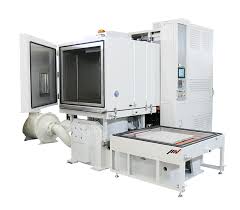
Environmental testing is a critical process used to evaluate how products, components, and materials perform under real-world environmental conditions. For industries such as automotive, electronics, aerospace, defence, and consumer goods, these tests ensure that products remain safe, reliable, and durable throughout their lifecycle. The three most common environmental tests are thermal testing, humidity testing, and vibration testing.
1. Thermal Testing
Thermal testing determines a product’s performance when exposed to extreme temperature conditions. It helps identify failures caused by expansion, contraction, overheating, or thermal fatigue.
Types of Thermal Tests
High Temperature Test: Evaluates heat resistance at elevated temperatures.
Low Temperature Test: Checks performance in extreme cold.
Thermal Shock Test: Rapidly alternates between high and low temperatures to reveal stress-induced failures.
Thermal Cycling: Repeated temperature cycling to test long-term durability.
Purpose
Assess material stability and deformation.
Identify temperature-sensitive components.
Verify performance under storage, transport, and operating conditions.
2. Humidity Testing
Humidity testing examines how moisture affects product performance. High humidity can cause corrosion, swelling, electrical leakage, and microbial growth.
Types of Humidity Tests
Damp Heat (Steady State): Constant high temperature and humidity over long durations.
Damp Heat (Cyclic): Alternating humidity levels to simulate natural environmental conditions.
Condensation Tests: Assess corrosion and moisture absorption.
Purpose
Evaluate corrosion resistance (especially for metals and coatings).
Test insulation and electrical reliability in wet conditions.
Identify susceptibility to moisture-induced failures such as delamination or short circuits.
3. Vibration Testing
Vibration testing replicates the mechanical stresses products face during transportation, assembly, and real-world operation.
Types of Vibration Tests
Sinusoidal Vibration: Single-frequency oscillations to detect resonance weaknesses.
Random Vibration: Broad-spectrum vibrations representing road, flight, or industrial environments.
Shock Testing: Sudden impacts or jolts mimicking drops, collisions, or explosions.
Purpose
Evaluate structural integrity and durability.
Identify loose components or weak joints.
Ensure reliability during shipping and operational use.
Importance Across Industries
Automotive: Ensures components withstand engine heat, road vibrations, and varying climates.
Electronics: Protects against moisture-induced failures and thermal stress on circuits.
Aerospace & Defence: Validates performance in extreme temperatures, pressures, and dynamic loads.
Consumer Products: Helps maintain quality and safety under everyday environmental conditions.
Benefits of Environmental Testing
Improves product lifespan and reliability.
Prevents premature failures and warranty claims.
Ensures compliance with international standards such as MIL-STD, ISO, ASTM, IEC, and JEDEC.
Enhances customer confidence and product credibility.