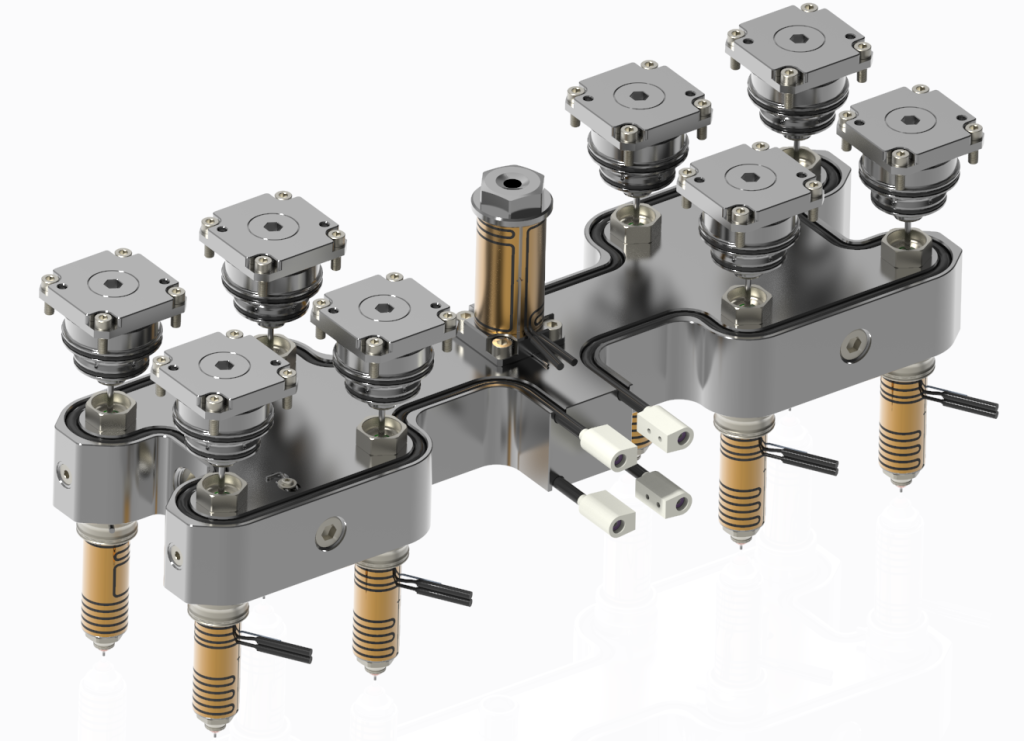
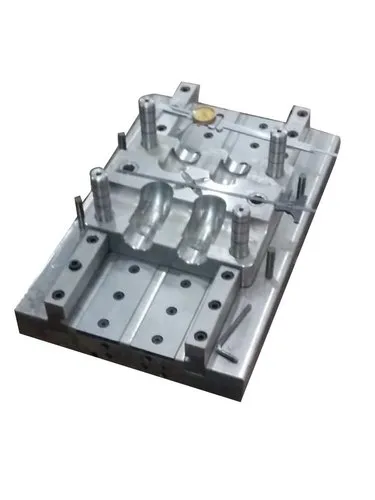
Hot runner systems play a vital role in the efficient mass production of stationery products such as pens, caps, rulers, geometry boxes, markers, files, and classroom accessories. Given the high-volume, cost-sensitive, and aesthetic-driven nature of the stationery industry, hot runner technology helps manufacturers achieve consistent quality, faster cycles, and reduced material waste.
What Is a Hot Runner System?
A hot runner system is an injection moulding setup where molten plastic is maintained at a controlled temperature inside heated manifolds and nozzles. Unlike cold runner systems, the plastic remains molten up to the gate, eliminating solidified runners and allowing direct injection into each cavity.
Importance of Hot Runner Systems in Stationery Moulds
1. Material Savings and Cost Efficiency
Stationery parts are typically produced in very high volumes using materials such as PP, ABS, PS, and SAN. Hot runner systems eliminate runner scrap, leading to:
Significant raw material savings
Lower regrind usage
Reduced post-moulding handling
This is especially important for thin-wall and lightweight stationery items.
2. High-Volume Production Capability
Multi-cavity stationery moulds (8, 16, 32 cavities or more) benefit greatly from hot runners by:
Ensuring balanced melt flow to all cavities
Maintaining uniform part weight and dimensions
Supporting continuous, high-speed production
This consistency is critical for interchangeable parts like pen components and caps.
3. Improved Part Quality and Aesthetics
Stationery products often require smooth surfaces, sharp edges, and attractive finishes. Hot runner systems help by:
Reducing flow marks and weld lines
Providing consistent colour distribution
Allowing smaller, cleaner gate marks
This improves the visual appeal of consumer-facing products.
Types of Hot Runner Systems Used in Stationery Moulds
Open Gate Hot Runner Systems
Simple design and cost-effective
Suitable for basic stationery items like rulers, clips, and trays
Best for non-cosmetic or hidden gate areas
Valve Gate (Needle Valve) Systems
Precise gate control with pin opening and closing
Ideal for cosmetic stationery parts such as pen barrels and marker bodies
Minimises gate blush and stringing
Design Considerations for Stationery Hot Runner Moulds
Balanced Flow Design
Uniform runner lengths and manifold layouts are essential to ensure equal filling of all cavities, preventing short shots and weight variation.
Temperature Control
Accurate temperature regulation is crucial, especially for thin-wall stationery components, to avoid degradation, burn marks, or warpage.
Gate Location and Size
Proper gate positioning ensures:
Smooth filling of long, slender parts
Minimal visible gate marks
Reduced internal stress in parts
Materials Commonly Used with Hot Runner Stationery Moulds
Polypropylene (PP) – flexible and cost-effective
Acrylonitrile Butadiene Styrene (ABS) – durable and aesthetic
Polystyrene (PS) – clear and rigid
SAN – glossy finish for premium stationery
Hot runner systems must be compatible with the chosen material’s processing temperature and flow characteristics.
Advantages Over Cold Runner Systems
Zero runner waste
Faster cycle times
Better dimensional consistency
Lower long-term production cost
Improved automation compatibility
Challenges and Mitigation
While hot runner systems offer many benefits, they require:
Higher initial investment
Skilled maintenance and setup
Proper insulation and thermal balance
These challenges are offset by long-term productivity gains in high-volume stationery manufacturing.
Conclusion
Hot runner systems are an essential technology for modern stationery moulds, enabling high-speed, cost-efficient, and high-quality production. By eliminating material waste, improving part consistency, and enhancing surface aesthetics, hot runner moulds help stationery manufacturers remain competitive in a demanding global market. For large-scale stationery production, hot runner systems are not just an option—they are a strategic advantage.