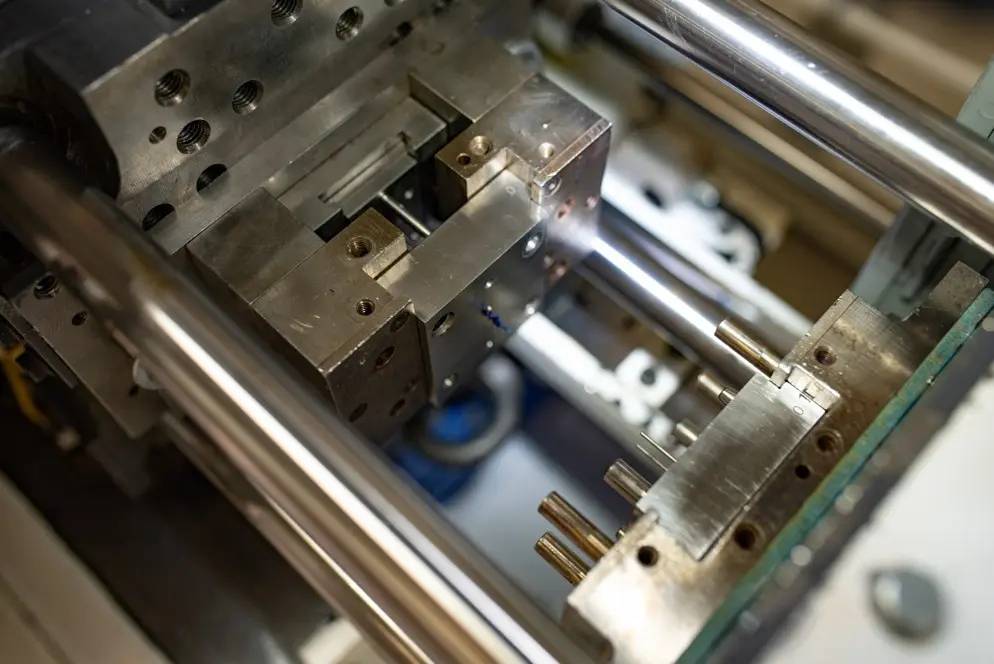
Insert moulding is a specialized injection moulding process widely used in medical applications to integrate metal or non-plastic components directly into moulded plastic parts. This technique enhances product functionality, strength, and reliability while reducing assembly steps—making it ideal for precision-driven healthcare products.
What Is Insert Moulding?
In insert moulding, pre-manufactured components such as metal pins, contacts, shafts, or threaded inserts are placed into a mould cavity before molten plastic is injected. Once the plastic cools and solidifies, the insert becomes permanently encapsulated within the component, forming a single, robust unit.
Key Benefits in Medical Applications
Improved Structural Strength: Creates a strong mechanical bond between plastic and insert, ensuring durability under repeated use.
Reduced Assembly & Labor Costs: Eliminates secondary assembly operations like welding or fastening.
High Precision & Consistency: Essential for medical devices requiring tight tolerances and repeatability.
Enhanced Safety & Reliability: Minimizes the risk of loose parts in critical medical environments.
Design Flexibility: Allows integration of electrical conductivity, threading, or reinforcement within plastic parts.
Common Medical Applications
Surgical Instruments: Handles with embedded metal shafts or threaded inserts
Diagnostic Devices: Sensor housings and connector components
Implantable & Non-Implantable Devices: Components requiring mechanical reinforcement
Medical Electronics: Enclosures with integrated contacts or terminals
Drug Delivery Devices: Precision components for inhalers and injectors
Materials Used
Medical-Grade Plastics: Polycarbonate (PC), Polypropylene (PP), PEEK, ABS, Nylon
Insert Materials: Stainless steel, brass, aluminum, copper alloys
All materials are selected to meet biocompatibility, sterilization, and regulatory requirements.
Design & Manufacturing Considerations
Accurate insert positioning to prevent shifting during moulding
Controlled mould temperatures to avoid stress or deformation
Compatibility between plastic resin and insert material
Smooth transitions to avoid stress concentration points
Compliance & Quality Standards
Insert moulding for medical applications follows stringent quality and regulatory standards such as:
ISO 13485 (Medical Devices Quality Management)
FDA regulations
Cleanroom manufacturing requirements (where applicable)
Why Insert Moulding Is Ideal for Medical Devices
Insert moulding combines precision engineering with manufacturing efficiency, enabling medical device manufacturers to produce high-performance, cost-effective, and reliable components. Its ability to integrate multiple functions into a single part makes it a preferred solution for modern medical product design.