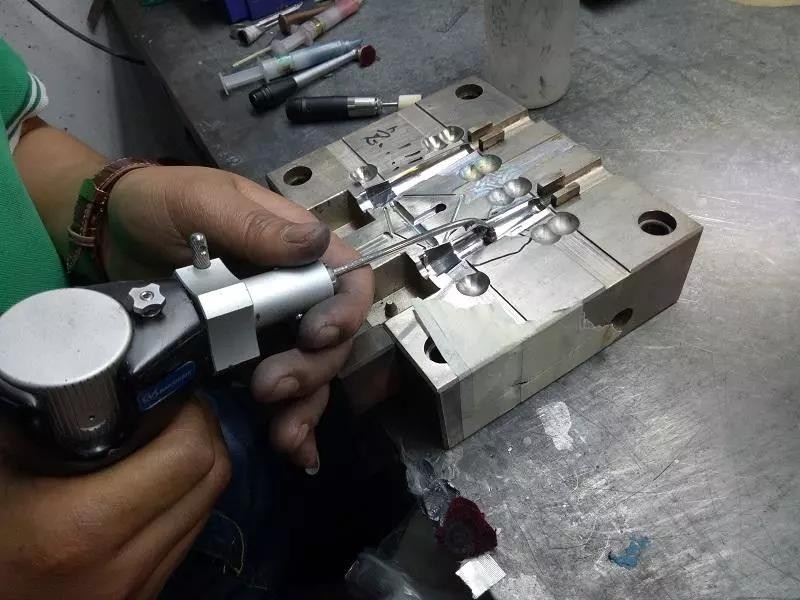
Mirror polishing is a critical finishing process in cosmetic mould manufacturing, as it directly influences product appearance, surface quality, and brand perception. Cosmetic packaging—such as lipstick cases, compact powder housings, and cream jars—demands flawless, high-gloss surfaces that enhance visual appeal while ensuring smooth mould release.
Importance of Mirror Polishing in Cosmetic Moulds
Mirror-finished mould surfaces provide several functional and aesthetic advantages:
Premium Appearance: High-gloss cosmetic containers enhance perceived product value.
Smooth Demoulding: Polished surfaces reduce friction and prevent scratches or drag marks.
Reduced Defects: Minimizes flow lines, weld marks, and surface imperfections.
Improved Hygiene: Smooth surfaces resist contamination and are easier to clean.
Longer Mould Life: Proper polishing reduces wear and corrosion risks.
Mould Steels Suitable for Mirror Polishing
The choice of mould steel significantly affects polishing quality:
Stainless Steels (e.g., S136, 420): Excellent for high-gloss finishes and corrosion resistance.
Pre-Hardened Steels (e.g., P20 variants): Suitable for moderate mirror finishes with proper treatment.
Vacuum-Melted Steels (ESR/VAR): Provide superior uniformity, reducing polishing defects.
High steel purity and uniform hardness are essential to avoid polishing marks and surface distortions.
Step-by-Step Mirror Polishing Process
1. Surface Preparation
Precision machining and fine grinding remove tool marks.
Proper heat treatment ensures uniform hardness across the mould surface.
Stress relief processes prevent distortion during polishing.
2. Progressive Polishing Stages
Polishing is performed in multiple stages, gradually refining surface roughness:
Rough Polishing: Uses diamond stones or abrasive papers to remove machining marks.
Intermediate Polishing: Finer diamond pastes smooth the surface further.
Fine Polishing: Ultra-fine diamond compounds achieve mirror-like reflectivity.
Each step must remove scratches from the previous stage before proceeding.
3. Hand Polishing Techniques
Hand polishing remains essential for cosmetic moulds due to intricate geometries:
Use controlled pressure and consistent movement.
Polish in alternating directions to avoid swirl marks.
Skilled technicians are required to achieve uniform mirror finishes.
4. Final Buffing and Inspection
Soft felt or cotton tools with micro-diamond compounds produce the final gloss.
Visual inspection under high-intensity lighting detects micro-scratches.
Surface roughness values (Ra) are measured to confirm mirror finish standards.
Common Challenges in Mirror Polishing
Orange Peel Effect: Caused by inconsistent steel hardness or improper polishing pressure.
Pinholes and Inclusions: Result from steel impurities.
Over-Polishing: Can alter part dimensions or edge sharpness.
Time-Intensive Process: Requires skilled labor and strict quality control.
Best Practices for High-Quality Mirror Finishes
Select premium-grade mould steels with low inclusion content.
Maintain clean polishing environments to prevent contamination.
Use dedicated polishing tools for each grit level.
Follow standardized polishing sequences and documentation.
Train technicians specifically for cosmetic mould polishing.
Applications in Cosmetic Packaging
Mirror polishing is essential for:
Lipstick and lip balm moulds
Compact powder cases
Mascara tubes and caps
Cream jars and bottle closures
Transparent and glossy decorative components
Conclusion
Mirror polishing is a specialized, precision-driven process that plays a vital role in cosmetic mould quality. By combining high-grade materials, skilled workmanship, and controlled polishing techniques, manufacturers can achieve flawless mirror finishes that meet the cosmetic industry’s high aesthetic and functional standards.