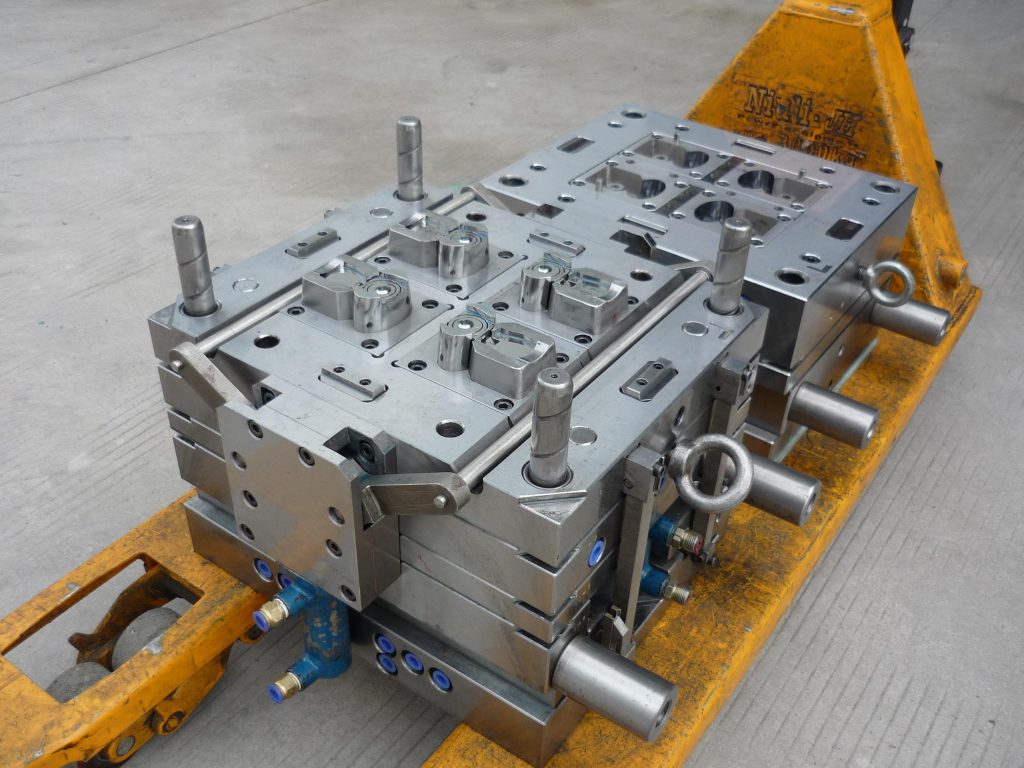
Effective mould maintenance and lifecycle management are essential to ensure consistent product quality, reduce downtime, and extend the operational lifespan of moulds used in various manufacturing industries such as plastics, automotive, electronics, and furniture. A proactive approach not only minimizes unexpected failures but also lowers overall production costs.
1. Importance of Mould Maintenance
Ensures consistent product quality: Well-maintained moulds maintain dimensional accuracy and surface finish.
Reduces production downtime: Predictive maintenance prevents sudden breakdowns.
Improves mould longevity: Proper care prolongs the working life of expensive tooling.
Minimizes repair costs: Early detection of wear reduces major refurbishing needs.
Enhances safety: Prevents malfunctioning moulds that may cause operational hazards.
2. Types of Mould Maintenance
a. Preventive Maintenance
Scheduled maintenance performed at regular intervals.
Cleaning ejector pins, cooling channels, and cavity surfaces.
Tightening bolts and checking alignment.
Lubricating moving parts.
Inspecting wear-prone areas (parting lines, inserts, sliders).
b. Predictive Maintenance
Uses data and monitoring to predict future failures.
Temperature and pressure sensors.
Wear pattern analysis.
Monitoring cycle times and injection parameters.
Vibration and acoustic monitoring for mechanical parts.
c. Corrective Maintenance
Performed after a breakdown or defect.
Repairing damaged inserts.
Polishing worn cavity surfaces.
Replacing broken components such as pins, bushings, or guides.
3. Key Elements of Mould Maintenance
1. Cleaning and Inspection
Removing residues, flashes, or material build-up.
Checking for corrosion, cracks, or deformation.
Verifying smooth operation of moving parts.
2. Cooling System Maintenance
Descaling and flushing cooling channels.
Ensuring uniform water flow.
Checking for leaks and blockages.
3. Lubrication
Applying high-temperature grease to slides, lifters, and cores.
Avoiding excess lubrication to prevent contamination.
4. Alignment Verification
Ensuring correct mould and platen alignment.
Checking parting lines and guide pillars for wear.
5. Surface Treatment
Polishing to restore finish.
Re-coating (chrome, nitriding, PVD) to reduce wear and friction.
4. Mould Lifecycle Management
Lifecycle management ensures moulds operate efficiently from design to retirement.
a. Initial Phase
Design for maintainability.
Material selection based on expected production volume.
Validation through trial runs.
b. Operational Phase
Monitoring key performance indicators (KPIs):
Cycle time.
Scrap rates.
Flash occurrence.
Cooling efficiency.
Recording maintenance history and modifications.
c. Documentation
A complete logbook should contain:
Maintenance schedules and records.
Tool repair history.
Parameter settings.
Spare parts used and their frequency of replacement.
d. Replacement and End-of-Life
Identification of severe wear or fatigue.
Cost-benefit analysis: refurbishing vs. replacement.
Recycling or reusing metal components where possible.
5. Digital Tools for Mould Lifecycle Management
IoT sensors for real-time monitoring.
MES/ERP integration for scheduling and tracking.
Digital twins for predicting mould behavior.
QR-coded maintenance logs for quick access to history.
6. Best Practices
Establish clear SOPs for operators and maintenance teams.
Conduct training to ensure proper handling and cleaning.
Use standardized checklists after each production batch.
Implement 5S in the mould storage and maintenance area.
Store moulds in controlled environments to prevent corrosion.
Conclusion
Mould maintenance and lifecycle management are critical for ensuring reliable production, improving efficiency, and reducing operational costs. With proper preventive and predictive strategies, combined with digital monitoring, manufacturers can extend mould life, maintain consistent quality, and improve overall productivity.