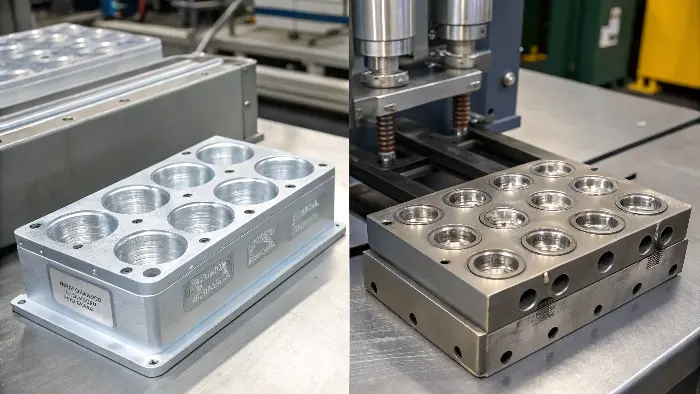
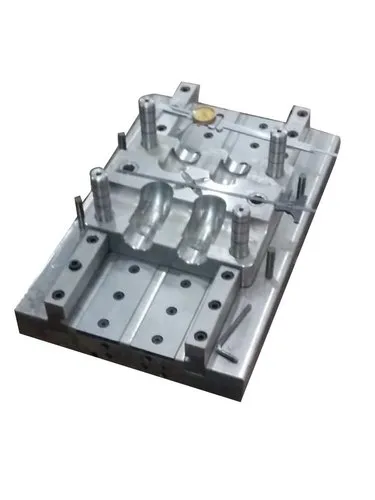
Multi-cavity moulds play a vital role in the mass production of cosmetic packaging and components, where high output, consistent quality, and cost efficiency are critical. These moulds are designed with multiple identical cavities, allowing several parts to be produced in a single injection moulding cycle, making them ideal for high-volume cosmetic applications.
1. Importance in the Cosmetic Industry
The cosmetic industry demands large quantities of uniform products such as lipstick cases, compact powder housings, mascara tubes, bottle caps, and closures. Multi-cavity moulds enable manufacturers to meet high market demand while maintaining consistent aesthetics, dimensional accuracy, and surface finish—key factors for brand image and consumer appeal.
2. Design Considerations
Designing multi-cavity moulds for cosmetic products requires careful planning to ensure balanced filling and uniform quality across all cavities. Key considerations include:
Cavity layout and symmetry to ensure equal flow length.
Balanced runner systems (hot runner or cold runner) for uniform melt distribution.
Consistent cooling channel design to minimize cycle time and prevent warpage.
Proper venting to avoid air traps and surface defects.
Uniform ejection mechanisms to prevent part damage or cosmetic blemishes.
3. Hot Runner Systems for Efficiency
Hot runner systems are widely used in multi-cavity cosmetic moulds as they eliminate runner waste, reduce material consumption, and improve cycle efficiency. They are especially beneficial for high-cavity moulds where material savings and consistent melt temperature across cavities are essential for high-quality cosmetic finishes.
4. Material Selection and Surface Finish
Cosmetic packaging often uses materials such as PP, ABS, PET, SAN, and acrylics. Multi-cavity moulds must be manufactured with high-quality tool steels and precision machining to achieve smooth, glossy, or textured surfaces. Mirror polishing and controlled texturing are critical to achieving premium cosmetic appearance across all cavities.
5. Quality Consistency and Process Control
Maintaining part-to-part consistency is more challenging in multi-cavity moulds due to the number of cavities involved. Advanced process control systems, cavity pressure sensors, and precise temperature regulation help ensure uniform filling, weight consistency, and dimensional stability in every cavity.
6. Productivity and Cost Benefits
Although multi-cavity moulds have higher initial tooling costs, they significantly reduce the cost per part by increasing output per cycle. For high-volume cosmetic production, this leads to faster return on investment, reduced labor costs, and improved production efficiency.
7. Maintenance and Longevity
Regular maintenance is essential to sustain the performance of multi-cavity moulds. Cosmetic moulds require frequent cleaning, polishing, and inspection to prevent wear-related defects that could affect surface appearance. Modular cavity inserts are often used to simplify maintenance and reduce downtime.
8. Applications in High-Volume Cosmetic Production
Common applications of multi-cavity moulds in cosmetics include:
Lipstick and lip balm containers
Compact powder cases and lids
Cosmetic bottle caps and closures
Mascara and eyeliner packaging
Cream jars and travel-size containers
Conclusion
Multi-cavity moulds are indispensable for high-volume cosmetic production, offering superior productivity, consistent quality, and cost efficiency. With precise design, advanced runner systems, and stringent process control, these moulds enable cosmetic manufacturers to meet market demands while delivering visually appealing, high-quality products at scale.