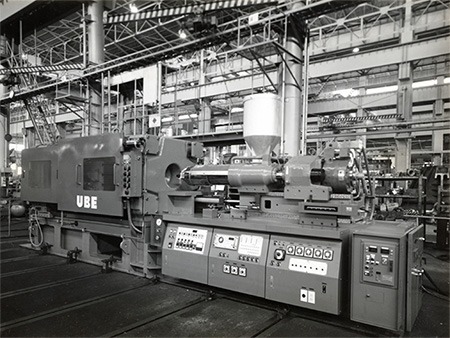
The Evolution of Injection Molding Technology

The evolution of injection molding technology reflects a remarkable journey of innovation, driven by material science advancements, industrial needs, and technological breakthroughs. Since its creation in the late 19th century, the process has grown from a simple mechanical operation to a sophisticated and indispensable manufacturing method. In the 1950s, the introduction of the reciprocating screw […]

The Evolution of Injection Molding Technology Read More »
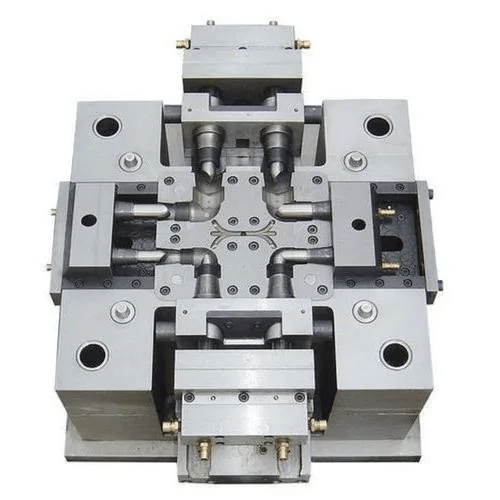
PVC Mold Design for Plumbing Applications

The design of PVC molds for plumbing applications focuses on achieving high dimensional accuracy, smooth surface finishes, and optimal flow of molten material. Mold cavities are carefully engineered to produce fittings such as elbows, tees, couplings, and valves with precise dimensions to ensure leak-free connections. Draft angles are incorporated into the design to facilitate easy

PVC Mold Design for Plumbing Applications Read More »

Types of Molds Used in Automotive Production

Injection Molds Injection molds are the most commonly used in automotive production, particularly for plastic components such as dashboards, bumpers, and trim panels. These molds are designed to shape molten plastic by injecting it into a cavity under high pressure. They allow for high precision and repeatability, making them ideal for large-scale production. Multi-cavity injection

Types of Molds Used in Automotive Production Read More »

Thermoplastics Materials Used in Injection Molding

Thermoplastics are the backbone of injection molding, prized for their versatility, durability, and recyclability. These materials soften when heated and harden upon cooling, allowing for precise molding and reshaping. Commonly used thermoplastics in injection molding include polypropylene (PP), known for its lightweight and chemical resistance, making it ideal for automotive parts and packaging. Acrylonitrile Butadiene

Thermoplastics Materials Used in Injection Molding Read More »

3D Printing and Rapid Prototyping for Automotive Molds

The automotive industry has embraced 3D printing and rapid prototyping as transformative technologies for the design and production of molds and components. These innovations allow manufacturers to accelerate the development cycle, improve design precision, and reduce costs associated with traditional mold-making processes. 3D Printing for Automotive Molds3D printing, also known as additive manufacturing, enables the

3D Printing and Rapid Prototyping for Automotive Molds Read More »

Automotive Parts Production

The production of automotive parts is a highly specialized and intricate process, involving a combination of advanced technologies and manufacturing methods to meet the stringent quality and performance requirements of the industry. Modern vehicles comprise thousands of components, each designed with precision to ensure safety, reliability, and efficiency. The production process often incorporates materials like

Automotive Parts Production Read More »

Automobile Mold Materials Steel vs Aluminum

Steel Molds Steel is a highly durable and strong material, making it a popular choice for high-volume automotive mold production. Steel molds are capable of withstanding the extreme pressures and high temperatures typically encountered in injection molding, ensuring the consistent quality of the parts over time. One of the main advantages of steel is its

Automobile Mold Materials Steel vs Aluminum Read More »

Types of Plastic Injection Molding Machines

Plastic injection molding machines are integral to manufacturing processes that produce a wide range of plastic products. These machines vary based on their design, operation, and specific capabilities, enabling manufacturers to tailor production methods to meet diverse requirements. Below are the primary types of plastic injection molding machines: Hydraulic Injection Molding Machines Hydraulic machines are

Types of Plastic Injection Molding Machines Read More »

Scroll to Top