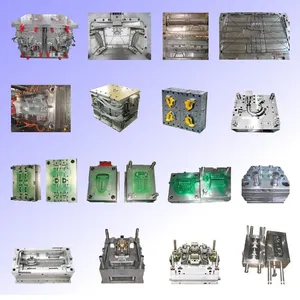
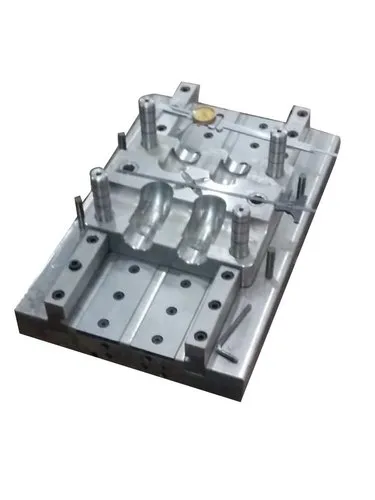
Plastic materials play a crucial role in the manufacturing of stationery and educational products due to their versatility, durability, cost-effectiveness, and ease of moulding. The selection of the right plastic material ensures product safety, long service life, and consistent quality, especially for items frequently used by children and students.
1. Polypropylene (PP)
Polypropylene is one of the most widely used plastics in stationery and educational moulds.
Key Properties:
Lightweight and flexible
High chemical resistance
Good fatigue resistance
Non-toxic and recyclable
Common Applications:
Pencil boxes
File folders and document holders
Lunch boxes and school accessories
Geometry boxes
2. Acrylonitrile Butadiene Styrene (ABS)
ABS is preferred for products that require strength, rigidity, and a good surface finish.
Key Properties:
High impact resistance
Excellent dimensional stability
Smooth, glossy appearance
Easy to color and print
Common Applications:
Scientific instrument housings
Educational kits and models
Calculator bodies
Classroom equipment parts
3. Polystyrene (PS)
Polystyrene is commonly used for lightweight and low-cost stationery items.
Key Properties:
Good clarity and surface finish
Easy to mould
Cost-effective
Common Applications:
Rulers and scale bodies
Transparent stationery items
Disposable school supplies
4. Polyethylene (PE – LDPE & HDPE)
Polyethylene is chosen for flexible and impact-resistant products.
Key Properties:
High toughness
Moisture resistance
Good flexibility (especially LDPE)
Common Applications:
Bottle caps and containers
Soft covers and sleeves
Educational toys and accessories
5. Polyvinyl Chloride (PVC)
PVC is used where flexibility and durability are required.
Key Properties:
Good abrasion resistance
Flame-retardant options available
Can be rigid or flexible
Common Applications:
Erasers
Pencil grips
Flexible folders and ID card holders
6. Polycarbonate (PC)
Polycarbonate is used for high-performance educational and laboratory products.
Key Properties:
Extremely high impact strength
Transparent and heat-resistant
Long service life
Common Applications:
Safety shields
Laboratory equipment components
High-quality rulers and scales
7. Nylon (Polyamide – PA)
Nylon is selected for parts that require mechanical strength and wear resistance.
Key Properties:
High strength and toughness
Good wear and abrasion resistance
Stable under repeated use
Common Applications:
Mechanical components in educational kits
Gears and moving parts
Precision classroom equipment
8. Thermoplastic Elastomers (TPE & TPU)
TPEs are used for soft-touch and ergonomic features.
Key Properties:
Rubber-like flexibility
Soft and comfortable grip
Non-toxic and recyclable
Common Applications:
Pencil grips
Scissor handles
Soft edges in child-safe products
9. Eco-Friendly and Recycled Plastics
With increasing focus on sustainability, recycled and bio-based plastics are gaining popularity.
Key Properties:
Reduced environmental impact
Compliant with green manufacturing standards
Safe for educational use
Common Applications:
Recycled plastic rulers
Sustainable stationery products
School accessories made from post-consumer plastics
Conclusion
The choice of plastic material for stationery and education moulds depends on factors such as product function, safety, durability, cost, and environmental considerations. Materials like PP, ABS, PS, PE, and PVC dominate the market, while advanced and eco-friendly plastics are increasingly adopted to meet modern educational and sustainability requirements. Proper material selection ensures reliable, safe, and long-lasting stationery and educational products.