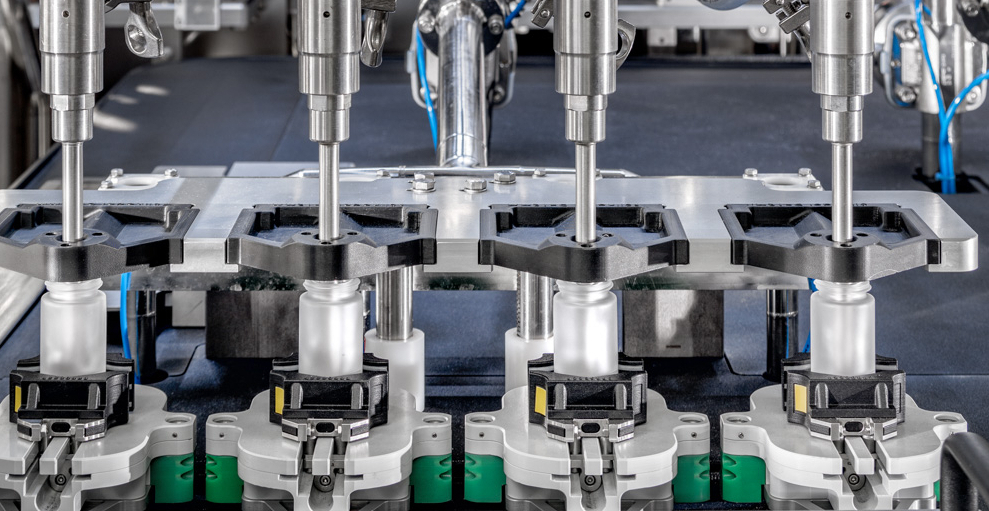
Robotics has become a critical component in modern cosmetic packaging moulding lines, enabling manufacturers to achieve high precision, efficiency, and consistency. With increasing demand for aesthetically appealing and defect-free packaging, robotic automation is transforming how moulded cosmetic products such as caps, bottles, jars, and dispensers are produced.
1. Role of Robotics in Moulding Operations
Robots are widely integrated into injection moulding and blow moulding processes to automate repetitive and high-speed tasks. Their primary roles include:
- Part Removal (Take-out Robots):
Robots extract moulded parts directly from the mould cavity, reducing cycle time and minimizing human intervention. - Insert Loading:
Automated placement of inserts such as metal components or labels into moulds before injection. - In-Mould Labeling (IML):
Robots place decorative labels inside the mould, ensuring seamless branding and high-quality finishes.
2. Types of Robots Used
Different robotic systems are used depending on the complexity and scale of production:
- Cartesian Robots:
Commonly used for simple pick-and-place tasks due to their linear movement and cost-effectiveness. - Articulated Robots (6-axis):
Highly flexible robots capable of handling complex geometries and multi-step operations. - SCARA Robots:
Ideal for high-speed assembly and precision handling tasks in packaging lines. - Collaborative Robots (Cobots):
Designed to work alongside human operators for tasks requiring flexibility and safety.
3. Key Applications in Cosmetic Packaging
Robotics enhances multiple stages of the production line:
- De-flashing and Trimming:
Automated removal of excess material ensures clean edges and consistent quality. - Assembly Operations:
Robots assemble multi-component packaging such as pumps, closures, and dispensers. - Quality Inspection:
Vision-integrated robots detect defects like short shots, warpage, or surface blemishes. - Sorting and Packaging:
Finished products are sorted, counted, and packed efficiently with minimal errors.
4. Benefits of Robotic Integration
- Improved Productivity:
Continuous operation with reduced cycle times increases output. - Enhanced Precision and Consistency:
Robots ensure uniform handling, reducing variability in product quality. - Reduced Labor Costs:
Automation minimizes dependency on manual labor. - Better Hygiene Standards:
Essential for cosmetic products, robots reduce human contact and contamination risks. - Lower Rejection Rates:
Accurate handling and inspection reduce defects and material wastage.
5. Integration with Smart Manufacturing
Robotics in cosmetic moulding lines is often integrated with Industry 4.0 technologies:
- IoT Connectivity:
Enables real-time monitoring and predictive maintenance. - Data Analytics:
Helps optimize production parameters and improve efficiency. - Machine Vision Systems:
AI-powered inspection ensures high-quality standards. - MES/ERP Integration:
Seamless communication between production and business systems.
6. Challenges and Considerations
- High Initial Investment:
Robotics systems require significant capital expenditure. - Programming and Maintenance:
Skilled personnel are needed for setup and troubleshooting. - Customization Needs:
Cosmetic packaging often involves complex designs requiring tailored robotic solutions.
7. Future Trends
- AI-Driven Robotics:
Smarter robots capable of self-learning and adaptive control. - Flexible Manufacturing Cells:
Quick changeovers for different product designs and sizes. - Sustainable Production:
Robotics helping reduce energy consumption and material waste. - Human-Robot Collaboration:
Increased use of cobots for safer and more efficient operations.
Conclusion
Robotics in cosmetic packaging moulding lines is no longer optional but essential for staying competitive. By improving efficiency, ensuring consistent quality, and enabling advanced manufacturing capabilities, robotics is driving the future of cosmetic packaging production. Manufacturers adopting robotic automation can achieve higher productivity, reduced costs, and superior product aesthetics.