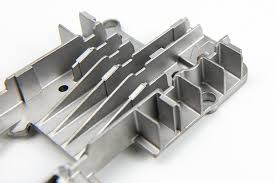
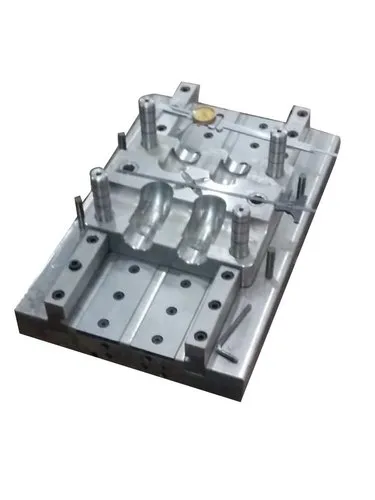
Lightweight moulding has become a key focus across automotive, aerospace, and transportation industries as manufacturers aim to improve fuel efficiency, reduce emissions, and meet stricter global regulations. By using advanced materials and innovative moulding technologies, companies can develop components that are strong, durable, and significantly lighter than traditional metal parts. Below are the major trends shaping the future of lightweight moulding.
1. Rise of High-Performance Polymer Composites
Modern polymer composites—such as carbon fibre–reinforced plastics (CFRP), glass fibre–reinforced plastics (GFRP), and hybrid composites—are seeing wide adoption.
High strength-to-weight ratio helps replace steel and aluminum parts.
Excellent impact resistance ensures safety without adding weight.
Increasing use in panels, structural supports, underbody protection, and fuel system components.
2. Increased Use of Thermoplastic Materials
Thermoplastics are gaining popularity due to:
Lower processing temperatures and faster cycle times.
Recyclability, supporting sustainability goals.
Ability to integrate complex shapes using injection moulding and thermoforming.
More OEMs are adopting engineering-grade thermoplastics such as PEEK, PA6, PPS, and PC blends to replace metal brackets, housings, and trim parts.
3. Multi-Material Moulding and Hybrid Designs
Hybrid moulding combines plastics with metals, fibres, or foams in a single part.
Metal-plastic hybrid moulding reduces weight while preserving structural stiffness.
Foam-core moulding lowers part density with minimal compromise in strength.
Ideal for energy absorbers, seat frames, door modules, and battery enclosures.
4. Microcellular Foaming (MuCell) Technology
MuCell moulding introduces inert gas into molten plastic to create microcellular structures.
Results in 10–30% lighter parts.
Reduces material usage and cycle time.
Maintains dimensional stability, making it ideal for automotive interior and exterior parts.
5. Topology Optimization and Simulation-Driven Design
Digital simulation tools help engineers remove unnecessary material while keeping components structurally sound.
Enables weight optimisation at the design stage.
Works well with 3D-printed mould inserts and complex geometries.
Growing adoption in engine covers, brackets, ducts, and structural components.
6. Use of Natural Fiber Reinforced Plastics (NFRP)
Natural fibres like hemp, sisal, flax, and kenaf are increasingly used for:
Eco-friendly lightweight components.
Good acoustic properties for interiors.
Applications include door panels, seat backs, dashboards, and storage modules.
7. Lightweighting for Electric Vehicles (EVs)
EV manufacturers are prioritizing moulded lightweight components to:
Increase driving range.
Reduce battery load and heat impact.
Improve energy efficiency.
EV-specific lightweight parts include battery housings, thermal management ducts, and structural supports.
8. Thin-Wall Injection Moulding
A major trend for manufacturing lightweight parts:
Allows production of very thin yet strong components.
Reduces both cycle time and material consumption.
Used widely in automotive interiors, electronic housings, and casings.
9. Adoption of 3D Printing for Lightweight Tooling
Additive manufacturing is enabling:
Conformal cooling channels to speed up moulding cycles.
Lightweight mould inserts with internal lattice structures.
Faster development of lightweight prototypes before mass moulding.
Conclusion
Lightweight moulding is becoming a central strategy for improving fuel efficiency across the mobility industry. With advanced materials, innovative moulding technologies, and digital design tools, manufacturers can create components that are lighter, stronger, and more sustainable. As regulations tighten and EV adoption rises, the demand for lightweight moulded components will continue to grow.