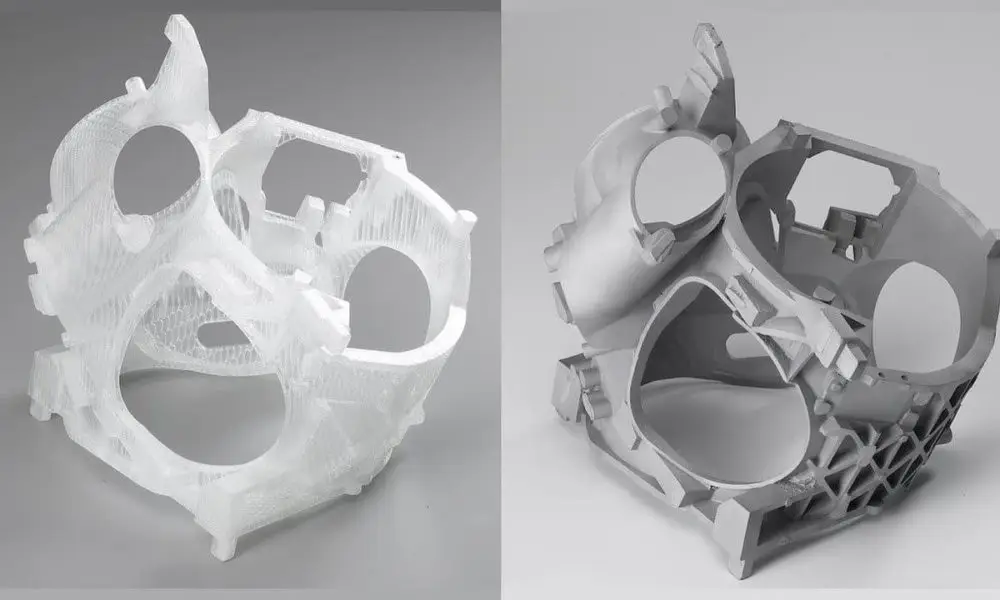
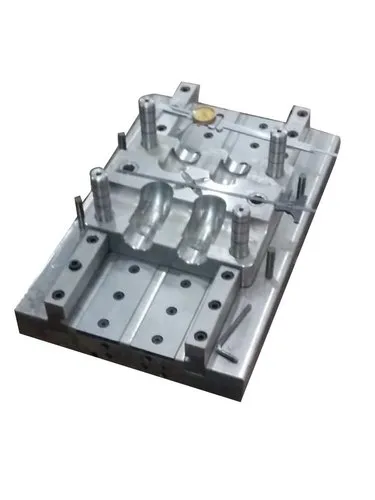
3D printing has emerged as a transformative technology in the mould manufacturing industry, enabling faster, more cost-effective, and highly flexible prototyping. Traditional mould development can take weeks or even months, involving multiple machining and iteration cycles. With additive manufacturing, mould makers can rapidly create prototype moulds, validate designs, and optimize production processes with significantly reduced lead time.
1. Accelerated Prototype Development
One of the biggest advantages of 3D printing is its ability to drastically shorten development timelines.
Designers can print mould prototypes within hours rather than days.
Faster iterations allow quick testing of different geometries, gating systems, and cooling layouts.
This rapid prototyping ensures design flaws are detected early, reducing rework in the final mould.
2. Cost Reduction in Early Design Stages
Prototyping using traditional CNC machining can be expensive, especially for complex shapes.
3D printing reduces costs by:
Eliminating the need for tooling during early stages
Reducing material waste through additive manufacturing
Allowing low-cost iterations of multiple design variations
This makes it easier for manufacturers to experiment and innovate without significant financial risks.
3. Improved Design Freedom and Complex Geometries
3D printing makes it possible to fabricate complex mould features that are difficult or impossible to machine conventionally.
Intricate internal channels
Organic shapes
Conformal cooling systems
These features improve mould performance and part quality during final production.
4. Testing of Form, Fit, and Function
Prototype moulds created through 3D printing allow manufacturers to validate:
Dimensional accuracy
Part fit and assembly
Functional behavior under real production conditions
This ensures that the final steel mould performs exactly as expected, minimizing trial-and-error during mass production.
5. Support for Conformal Cooling Design
One of the most valuable uses of additive manufacturing is in producing moulds with conformal cooling channels, which follow the contours of the part.
Benefits include:
Faster cooling cycles
More uniform temperature distribution
Improved product quality
Reduced cycle time in injection moulding
Such channels are extremely difficult to produce using traditional machining but become easy with 3D printing.
6. Material Options for Mould Prototyping
Different 3D printing technologies can be used depending on the prototype requirement:
PLA/ABS: For simple form-fit prototypes
Nylon and engineering polymers: For functional testing
Photopolymer resins (SLA/DLP): For high-precision prototypes
Metal 3D printing (SLM/DMLS): For fully functional mould inserts, conformal cooling, and pilot production
This versatility enables manufacturers to match the prototype material to the intended purpose.
7. Short-Run Production with 3D Printed Moulds
In some cases, 3D printed moulds—especially metal ones—are used for low-volume or pilot production.
Ideal for custom products
Reduces initial tooling investment
Faster market-entry for new designs
This is helpful for sectors such as medical devices, consumer goods, and automotive customization.
8. Enhanced Collaboration and Design Visualization
3D printed prototypes help stakeholders—from designers to clients—visualize and inspect mould designs before investing in expensive tooling.
Improves communication
Reduces misunderstandings
Speeds up approval processes
Conclusion
3D printing has revolutionized mould prototyping by providing unmatched speed, cost-efficiency, and design flexibility. Whether for form-fit models or functional metal inserts, additive manufacturing enables mould makers to refine designs, reduce errors, and accelerate product development. As 3D printing technologies continue to advance, their role in mould prototyping will only become more significant in driving innovation and improving manufacturing efficiency.