1. Introduction
Conductive polymers are specialized plastic materials that combine the mechanical advantages of traditional polymers with electrical conductivity. In moulding applications, these materials enable the production of components that can conduct electricity, dissipate static charges, or provide electromagnetic shielding—without the need for secondary metal coatings or inserts. Their use is rapidly expanding in automotive, electronics, medical, and industrial sectors.
2. What Are Conductive Polymers?
Conductive polymers are achieved either by:
Intrinsically conductive polymers (ICPs) such as polyaniline or polypyrrole, or
Conductive polymer composites, where standard thermoplastics (ABS, PP, PC, Nylon, PBT) are blended with conductive fillers.
Common conductive fillers include:
Carbon black
Carbon fibers
Graphene
Carbon nanotubes (CNTs)
Metal fibers or powders
3. Moulding Processes Used
Conductive polymers can be processed using conventional moulding techniques with controlled parameters:
Injection moulding – Most common for high-volume electronic and automotive parts
Compression moulding – Used for thick or high-filler-content parts
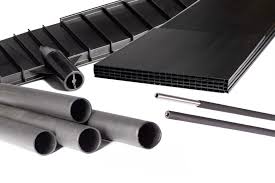
Extrusion moulding – For conductive profiles and sheets
Over-moulding – Combining conductive and non-conductive materials in one component
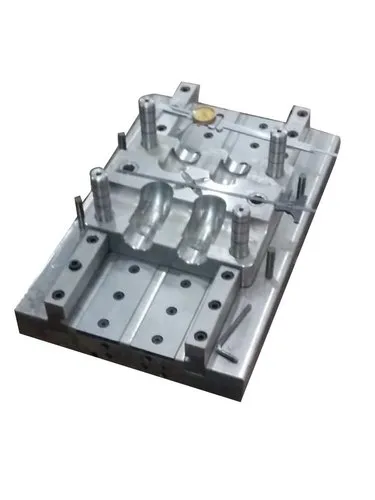
Proper mould design is critical to ensure uniform filler dispersion and consistent conductivity.
4. Key Applications
a) Electronics & Electrical
EMI/EMC shielding housings
Antistatic enclosures
Connectors and sensor housings
Embedded circuits and touch-sensitive surfaces
b) Automotive
ESD-safe interior components
Sensor brackets and housings
Battery components in EVs
EMI shielding for electronic control units (ECUs)
c) Industrial & Packaging
Antistatic trays and containers
Explosion-safe components
Conductive rollers and guides
d) Medical Devices
ESD-protected housings
Wearable health sensors
Diagnostic equipment components
5. Advantages of Conductive Polymers in Moulding
Weight reduction compared to metal parts
Design flexibility with complex geometries
Cost savings by eliminating secondary metal plating
Corrosion resistance
Integration of multiple functions (structural + electrical)
Improved recyclability in polymer-based systems
6. Design & Processing Considerations
Filler dispersion is critical for consistent conductivity
Higher viscosity due to fillers may require larger gates and higher injection pressure
Tool wear increases with abrasive fillers like carbon fiber
Flow orientation affects electrical performance
Wall thickness uniformity helps maintain stable resistance values
Simulation tools are often used to predict flow behavior and conductivity paths.
7. Challenges and Limitations
Higher material cost compared to standard polymers
Reduced surface finish in high-filler formulations
Limited conductivity compared to metals
Processing complexity at high filler loading
Balancing mechanical strength with electrical performance
8. Quality & Testing Requirements
Surface and volume resistivity testing
EMI/EMC performance validation
Thermal and environmental testing
Mechanical strength and fatigue testing
Long-term conductivity stability analysis
9. Future Trends
Increased use of graphene and CNT-based polymers
Integration with smart moulding and embedded electronics
Growth in EV and IoT applications
Development of bio-based conductive polymers
Improved simulation-driven mould design
10. Conclusion
The use of conductive polymers in moulding is transforming how electronic and functional components are designed and manufactured. By combining electrical performance with the advantages of plastic moulding, manufacturers can achieve lighter, more integrated, and cost-effective solutions—making conductive polymers a key enabler for next-generation moulded products.