1. Introduction
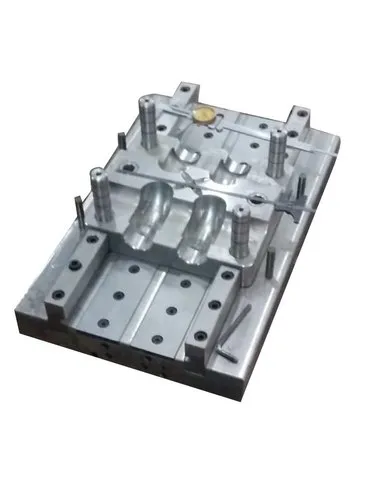
Thermoforming is a plastic manufacturing process in which a thermoplastic sheet is heated until it becomes soft and flexible. The heated sheet is then formed into a required shape using a mould and vacuum, pressure, or mechanical force.
Thermoforming is commonly used to manufacture:
- Food packaging trays
- Plastic cups
- Disposable plates
- Medical packaging
- Automotive interior components
- Refrigerator liners
- Plastic containers
- Industrial packaging products
One of the common defects in thermoforming is webbing.
Webbing can affect product appearance, dimensions, material distribution, and production efficiency. It can also increase material waste and rejection rates.
Preventing webbing requires proper control of sheet temperature, mould design, forming conditions, material distribution, and machine settings.
2. Definition of Webbing in Thermoforming
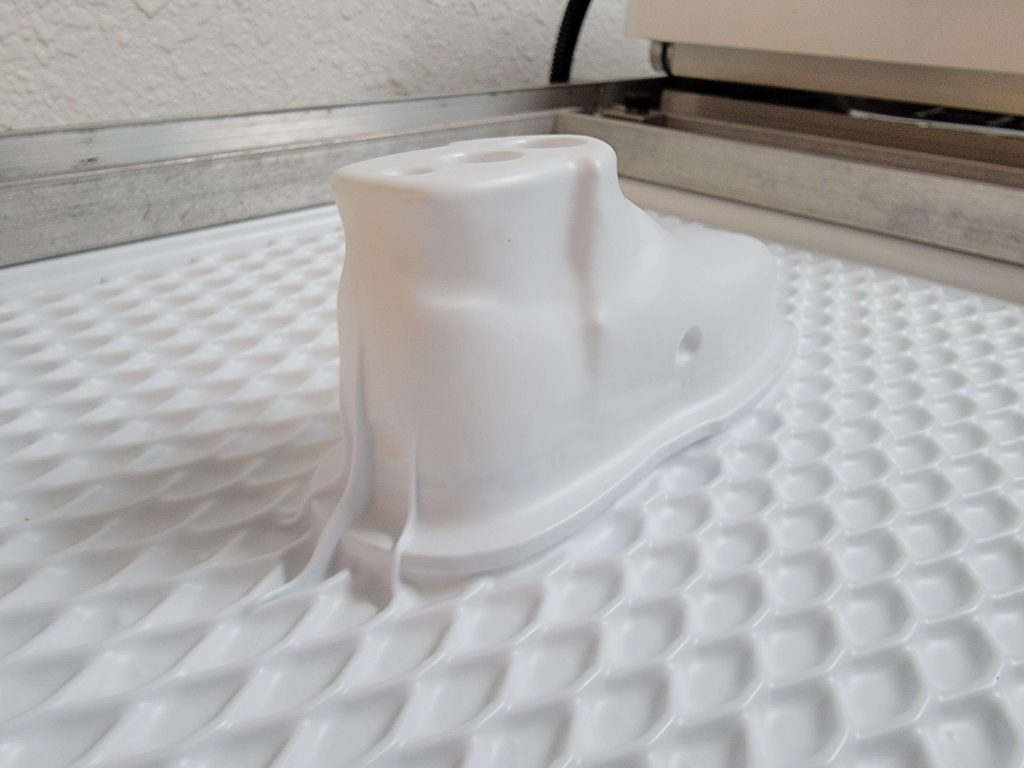
Webbing is a thermoforming defect in which unwanted thin folds, wrinkles, or stretched plastic material develop between different sections of a mould or between adjacent cavities.
It commonly occurs when the heated plastic sheet does not distribute evenly during the forming operation.
Webbing may appear as:
- Thin plastic folds
- Unwanted stretched sections
- Wrinkles between cavities
- Excessive material gathering
- Thin connecting areas between formed products
Webbing is particularly common in multi-cavity thermoforming moulds where several products are formed from one plastic sheet.
Why is webbing a problem?
Webbing can cause:
- Poor product appearance.
- Uneven material thickness.
- Reduced product strength.
- Difficulty during trimming.
- Increased material wastage.
- Inconsistent product dimensions.
- Higher rejection rates.
- Reduced production efficiency.
3. Main Causes of Webbing in Thermoforming
Understanding the causes is the first step towards preventing webbing.
3.1 Incorrect Sheet Temperature
Sheet temperature is one of the most important factors affecting webbing.
If the plastic sheet is heated unevenly, some areas become softer than others.
The softer areas may stretch excessively and gather between mould cavities.
Possible problems:
- Uneven material stretching
- Excessive sagging
- Material gathering
- Poor forming consistency
Corrective actions:
- Maintain the correct heating temperature.
- Check the upper and lower heating elements.
- Ensure uniform heat distribution.
- Monitor the sheet temperature across its surface.
- Adjust individual heater zones where necessary.
3.2 Excessive Sheet Heating
When the plastic sheet becomes too soft, it may lose sufficient stiffness to maintain controlled stretching.
This can cause the material to sag or fold during forming.
Corrective actions:
- Reduce the heating temperature where appropriate.
- Reduce heating time.
- Check heater settings.
- Monitor sheet sag before forming.
- Maintain the recommended processing temperature for the material.
3.3 Insufficient Sheet Heating
A sheet that is not heated sufficiently may resist stretching.
This can cause material to move unevenly and produce folds or wrinkles during moulding.
Corrective actions:
- Increase heating time where required.
- Adjust heater temperature.
- Check heater performance.
- Ensure the complete sheet reaches the required forming temperature.
3.4 Poor Mould Design
Mould design has a significant influence on material distribution.
Poorly designed mould cavities can cause the heated sheet to stretch unevenly.
Possible causes:
- Incorrect cavity spacing
- Sharp corners
- Poor cavity layout
- Insufficient clearance between cavities
- Inappropriate mould depth
- Poor forming geometry
Corrective actions:
- Review mould cavity spacing.
- Improve cavity geometry.
- Use suitable corner radii.
- Optimise the distance between adjacent cavities.
- Conduct mould design reviews before manufacturing.
3.5 Incorrect Mould Spacing
In multi-cavity thermoforming, insufficient spacing between cavities can cause plastic material to gather in the spaces between formed products.
This may result in webbing.
Corrective actions:
- Increase cavity spacing where practical.
- Review the mould layout.
- Check the material flow and stretching pattern.
- Optimise the forming area.
3.6 Incorrect Plug Assist Design
Plug assist is used in some thermoforming processes to help distribute the heated plastic sheet into deeper mould cavities.
An unsuitable plug assist can create uneven material movement.
Possible causes:
- Incorrect plug shape
- Incorrect plug dimensions
- Improper plug material
- Incorrect plug temperature
- Incorrect plug movement or timing
Corrective actions:
- Review plug assist geometry.
- Adjust plug movement and timing.
- Check plug temperature.
- Use suitable plug materials.
- Ensure the plug distributes material evenly.
3.7 Incorrect Vacuum Conditions
Vacuum pressure helps pull the heated sheet into the mould cavity.
If vacuum conditions are unsuitable, the material may not form evenly.
Possible causes:
- Insufficient vacuum
- Delayed vacuum application
- Blocked vacuum holes
- Vacuum leakage
- Uneven vacuum distribution
Corrective actions:
- Check the vacuum pump.
- Inspect vacuum pipes and connections.
- Clean blocked vacuum holes.
- Check vacuum pressure.
- Verify vacuum timing.
- Ensure proper sealing between the sheet and mould.
3.8 Incorrect Sheet Thickness
The initial thickness of the plastic sheet affects how the material stretches during forming.
An unsuitable sheet thickness can contribute to uneven material distribution.
Corrective actions:
- Check incoming sheet thickness.
- Maintain consistent sheet specifications.
- Review material thickness against mould design.
- Ensure proper sheet quality from the supplier.
3.9 Incorrect Material Selection
Different thermoplastic materials have different stretching and forming characteristics.
For example, PET, PP, PS, PVC, and ABS behave differently during thermoforming.
Corrective actions:
- Select a suitable thermoplastic grade.
- Follow the material supplier’s processing recommendations.
- Check material forming characteristics.
- Maintain consistent raw material quality.
4. Types of Webbing in Thermoforming
Webbing can occur in different forms depending on the mould design and processing conditions.
4.1 Corner Webbing
Corner webbing occurs when excess material gathers around the corners of formed cavities.
Main causes:
- Poor cavity geometry
- Uneven sheet heating
- Excessive material stretching
- Incorrect cavity spacing
Prevention:
- Improve corner radii.
- Adjust heater zones.
- Review mould geometry.
- Optimise sheet temperature.
4.2 Centre Webbing
Centre webbing occurs when unwanted folds or thin material sections develop between central mould cavities.
Main causes:
- Incorrect cavity layout
- Uneven material distribution
- Excessive sheet sag
- Incorrect forming sequence
Prevention:
- Improve cavity spacing.
- Adjust forming temperature.
- Review plug assist movement.
- Optimise the mould layout.
4.3 Diagonal Webbing
Diagonal webbing occurs when folds develop diagonally between cavities.
Main causes:
- Uneven sheet temperature
- Incorrect sheet positioning
- Uneven stretching
- Poor cavity arrangement
Prevention:
- Check sheet alignment.
- Adjust heater zones.
- Improve cavity symmetry.
- Optimise the forming process.
4.4 Edge Webbing
Edge webbing develops near the outer edges of the formed sheet.
Main causes:
- Improper sheet clamping
- Uneven edge heating
- Incorrect forming area
- Excessive material sag
Prevention:
- Check the clamping frame.
- Maintain uniform sheet heating.
- Verify sheet positioning.
- Adjust the forming area where necessary.
5. Important Methods for Preventing Webbing
Preventing webbing requires a combination of machine adjustments, mould improvements, and proper material control.
5.1 Maintain Uniform Sheet Heating
Uniform heating is one of the most effective ways to prevent webbing.
The heating system should provide consistent temperature distribution across the complete forming area.
Important actions include:
- Check all heating elements.
- Inspect heater reflectors.
- Verify temperature sensors.
- Check individual heating zones.
- Maintain consistent heating time.
- Monitor sheet sag.
- Calibrate temperature controllers periodically.
5.2 Optimise Heating Temperature
The heating temperature must match the thermoplastic material being processed.
Avoid excessive heating because an overly soft sheet can stretch uncontrollably.
Also avoid insufficient heating because a stiff sheet may not distribute properly.
Always follow the material supplier’s recommended processing range.
5.3 Improve Mould Cavity Design
A suitable mould design helps the heated sheet distribute evenly.
Important design considerations include:
- Appropriate cavity spacing
- Suitable corner radii
- Correct cavity depth
- Balanced cavity arrangement
- Proper mould surface finish
- Suitable vacuum hole locations
5.4 Use Proper Plug Assist
Plug assist helps control the stretching of plastic material in deeper cavities.
A properly designed plug assist can improve material distribution and reduce excessive stretching between cavities.
Important factors include:
- Plug shape
- Plug dimensions
- Plug temperature
- Plug material
- Plug movement
- Plug timing
5.5 Control Sheet Sag
Sheet sag is the downward movement of a heated plastic sheet before forming.
Excessive sag may cause the sheet to fold or gather when the mould closes.
To control sheet sag:
- Reduce excessive heating.
- Optimise heating time.
- Check sheet thickness.
- Maintain proper sheet tension.
- Adjust heating zones.
- Use suitable forming timing.
5.6 Optimise Vacuum Pressure
Vacuum conditions should be sufficient to form the sheet correctly.
Important actions include:
- Clean vacuum holes.
- Check vacuum hoses.
- Inspect vacuum seals.
- Check pump performance.
- Verify vacuum timing.
- Ensure uniform vacuum distribution.
5.7 Maintain Correct Sheet Positioning
Incorrect sheet positioning can cause uneven material distribution.
The sheet must be properly aligned and clamped before heating and forming.
Check:
- Sheet alignment
- Clamping pressure
- Sheet width
- Sheet thickness
- Feeding mechanism
- Positioning sensors
5.8 Maintain Proper Forming Speed
Forming speed influences how the heated plastic sheet moves into the mould cavity.
Incorrect forming speed can contribute to folds, wrinkles, and uneven stretching.
Adjust the forming speed according to:
- Material type
- Sheet thickness
- Mould design
- Heating conditions
- Plug assist requirements
6. Machine Parameters Affecting Webbing
Several machine parameters must be monitored during thermoforming.
| Parameter | Effect on webbing | Control method |
|---|---|---|
| Heating temperature | Affects sheet softness and stretching | Adjust heater zones |
| Heating time | Influences material flexibility | Optimise heating cycle |
| Sheet sag | Excessive sag can cause folding | Control heating and support |
| Vacuum pressure | Affects cavity forming | Check vacuum system |
| Vacuum timing | Influences material movement | Adjust forming sequence |
| Plug assist | Controls material distribution | Optimise plug design and timing |
| Sheet thickness | Influences stretching behaviour | Maintain material specifications |
| Clamping pressure | Affects sheet positioning | Check clamping system |
| Forming speed | Influences material flow | Adjust machine speed |
7. Troubleshooting Webbing in Thermoforming
When webbing occurs during production, the operator should identify the location and pattern of the defect before making machine adjustments.
| Problem observed | Possible cause | Corrective action |
|---|---|---|
| Webbing between cavities | Poor cavity spacing | Review mould layout |
| Webbing at corners | Uneven stretching | Adjust heating zones |
| Webbing after heating | Excessive sheet sag | Reduce excessive heating |
| Webbing on one side | Uneven sheet temperature | Check heater balance |
| Webbing in deep cavities | Poor material distribution | Adjust plug assist |
| Webbing near sheet edges | Incorrect clamping | Check sheet alignment |
| Webbing across several cavities | Incorrect sheet temperature | Review heating conditions |
| Webbing after mould closing | Incorrect forming sequence | Adjust forming timing |
8. Step-by-Step Procedure for Correcting Webbing
The following procedure can be used when webbing appears during thermoforming production.
Step 1: Identify the Defect Location
Determine where webbing occurs.
Check whether it appears:
- Between cavities
- At cavity corners
- In the centre of the mould
- Along the sheet edges
- On one particular side
The defect location can help identify the likely cause.
Step 2: Check Sheet Temperature
Measure or verify the sheet temperature across different areas.
Check whether:
- The centre is hotter than the edges.
- One side is hotter than the other.
- The sheet is excessively soft.
- The sheet is insufficiently heated.
Step 3: Check Sheet Sag
Observe the sheet before forming.
Excessive sag may indicate overheating or unsuitable heating conditions.
Adjust heating temperature or time as necessary.
Step 4: Inspect the Mould
Check:
- Cavity spacing
- Corner radii
- Mould alignment
- Vacuum holes
- Mould surface condition
Step 5: Check Plug Assist
If the machine uses plug assist, inspect the plug dimensions, surface condition, temperature, and movement.
Step 6: Check Vacuum System
Verify that the vacuum pump, pipes, connections, and vacuum holes are operating correctly.
Step 7: Adjust Machine Parameters
Make controlled adjustments to one parameter at a time.
This helps identify the actual cause instead of introducing additional defects.
Step 8: Produce Trial Samples
Produce a small number of trial products after adjustment.
Inspect them for:
- Webbing
- Wall thickness
- Product dimensions
- Surface appearance
- Forming consistency
Step 9: Record Approved Settings
Once the defect is corrected, record the approved production settings.
This helps maintain consistent production during future runs.
9. Preventive Maintenance for Thermoforming Machines
Preventive maintenance helps reduce webbing and other thermoforming defects.
Important maintenance activities include:
- Inspect heating elements regularly.
- Clean heater reflectors.
- Check temperature sensors.
- Calibrate temperature controllers.
- Inspect the vacuum pump.
- Clean vacuum holes.
- Check vacuum hoses and connections.
- Inspect mould surfaces.
- Check plug assist alignment.
- Inspect sheet clamping mechanisms.
- Check the sheet feeding system.
- Inspect pneumatic and hydraulic systems.
- Maintain accurate machine parameter records.
10. Quality Control to Prevent Webbing
Quality control is important for ensuring that every thermoformed product meets the required specifications.
10.1 Visual Inspection
Inspect products for:
- Folds
- Wrinkles
- Thin areas
- Uneven stretching
- Surface marks
- Incomplete forming
10.2 Thickness Measurement
Use a suitable thickness gauge to check material distribution.
Measurements should be taken at important locations, including:
- Corners
- Side walls
- Base
- Edges
- Areas between cavities, where applicable
10.3 Dimensional Inspection
Check product dimensions against the approved drawing.
10.4 First-Off Inspection
The first products produced after machine setup should be inspected carefully before mass production begins.
10.5 Process Monitoring
Monitor and record:
- Sheet temperature
- Heating time
- Vacuum pressure
- Vacuum timing
- Plug assist settings
- Forming cycle time
- Sheet thickness
11. Best Practices for Preventing Webbing
The following practices help maintain stable thermoforming production:
- Use consistent raw material.
- Maintain uniform sheet thickness.
- Keep the heating system clean.
- Ensure balanced heating across the sheet.
- Avoid excessive sheet sag.
- Maintain correct mould cavity spacing.
- Use suitable plug assist designs.
- Maintain proper vacuum conditions.
- Check sheet alignment before forming.
- Follow approved machine settings.
- Inspect the first-off product.
- Train operators to identify webbing early.
- Maintain records of defects and corrective actions.
12. Conclusion
Webbing is a common thermoforming defect caused by uneven material distribution, excessive sheet sag, incorrect heating conditions, poor mould design, unsuitable plug assist, or improper vacuum conditions.
It can be prevented by maintaining uniform sheet temperature, controlling heating time, improving mould cavity spacing, using suitable plug assist systems, and maintaining correct forming conditions.
Regular machine maintenance and product inspection are also essential for preventing webbing and reducing material waste.
The key to preventing webbing in thermoforming is to control sheet temperature, material stretching, mould design, and forming conditions so that the plastic sheet distributes evenly throughout the mould cavity.