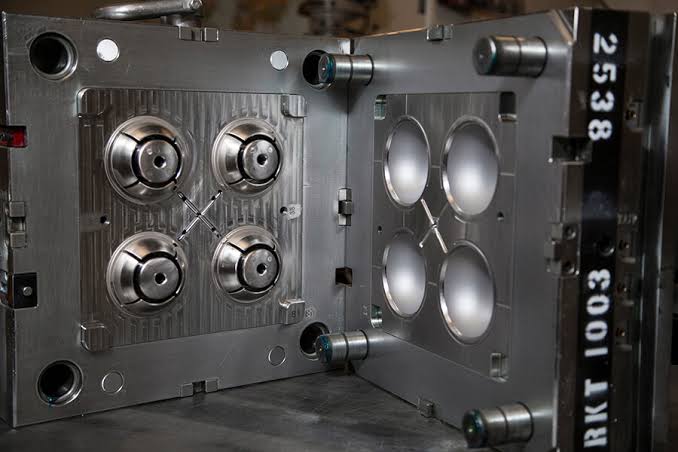
The medical device industry demands the highest levels of precision, quality, and regulatory compliance. Medical components such as syringes, diagnostic devices, surgical instruments, drug delivery systems, and implantable products often feature complex geometries and tight tolerances. Advanced simulation technologies have become an essential part of medical mould design, enabling manufacturers to optimize mould performance, reduce development costs, and ensure product reliability before physical tooling is produced.
Importance of Simulation in Medical Mould Design
Traditional mould development often relied on trial-and-error methods, resulting in longer development cycles and higher costs. Advanced simulation software allows engineers to virtually analyze and optimize mould designs before manufacturing begins.
Key Objectives:
- Improve product quality and consistency
- Reduce design iterations
- Minimize production defects
- Accelerate time-to-market
- Ensure regulatory compliance
- Lower tooling and production costs
Simulation helps manufacturers identify potential issues early in the design process, reducing costly modifications after mould fabrication.
Mould Flow Analysis
Mould flow simulation is one of the most widely used tools in medical mould design. It predicts how molten plastic flows through mould cavities during injection moulding.
Parameters Analyzed:
- Flow patterns
- Fill time
- Pressure distribution
- Temperature variations
- Weld line formation
- Air trap locations
- Material shrinkage
Benefits:
- Optimized gate placement
- Balanced cavity filling
- Reduced short shots
- Improved dimensional accuracy
- Enhanced product performance
For critical medical components, even minor flow irregularities can affect functionality and patient safety.
Cooling System Simulation
Cooling typically accounts for a significant portion of the injection moulding cycle. Advanced simulation enables engineers to design efficient cooling systems that ensure uniform temperature distribution.
Analysis Areas:
- Cooling channel performance
- Heat transfer efficiency
- Cycle time optimization
- Temperature gradients
Advantages:
- Faster production cycles
- Reduced warpage
- Improved dimensional stability
- Enhanced product consistency
Simulation is particularly valuable when designing moulds for thin-walled medical products and high-precision components.
Warp and Shrinkage Prediction
Medical devices often require extremely tight tolerances. Simulation tools can predict how materials will shrink and deform during cooling.
Common Issues Identified:
- Warpage
- Sink marks
- Dimensional distortion
- Residual stresses
Benefits:
- Improved mould compensation strategies
- Better dimensional control
- Reduced rejection rates
- Consistent product quality
Accurate prediction of shrinkage is essential for components that must fit precisely within larger medical assemblies.
Structural and Mechanical Analysis
Finite Element Analysis (FEA) is increasingly used to evaluate the structural performance of moulds and medical components.
Applications:
- Mould strength verification
- Insert and core durability assessment
- Mechanical stress evaluation
- Product load testing
Outcomes:
- Increased mould lifespan
- Reduced risk of tool failure
- Enhanced component reliability
- Lower maintenance requirements
FEA helps ensure that moulds can withstand high-volume production environments without compromising quality.
Simulation for Micro-Moulding Applications
The growing demand for miniature medical devices has increased the importance of micro-moulding technologies.
Examples:
- Catheter components
- Microfluidic devices
- Drug delivery systems
- Diagnostic cartridges
Advanced simulation enables engineers to:
- Predict micro-scale material behavior
- Optimize micro-cavity filling
- Minimize dimensional variation
- Improve manufacturing precision
Simulation is crucial because physical testing at microscopic scales can be difficult and expensive.
Multi-Material and Overmoulding Simulations
Many medical products combine multiple materials to achieve enhanced functionality, flexibility, or comfort.
Examples:
- Soft-touch medical grips
- Sealed diagnostic housings
- Multi-layer drug delivery devices
Simulation helps optimize:
- Material compatibility
- Bonding performance
- Flow interactions
- Interface integrity
This reduces risks associated with delamination and bonding failures.
Validation and Regulatory Compliance
Medical device manufacturing is highly regulated. Simulation supports validation efforts by providing documented evidence of process optimization and risk reduction.
Regulatory Benefits:
- Improved design documentation
- Enhanced traceability
- Reduced validation time
- Better risk management
- Support for quality assurance requirements
Simulation data can become part of the overall design verification and validation process.
Digital Twin Technology in Medical Moulds
Emerging digital twin technology creates a virtual representation of the mould and manufacturing process.
Capabilities:
- Real-time process monitoring
- Predictive maintenance
- Continuous optimization
- Production performance analysis
Digital twins allow manufacturers to compare actual production data with simulation models and make proactive improvements.
Integration with Artificial Intelligence
AI-powered simulation platforms are becoming increasingly sophisticated.
Future Applications:
- Automated mould optimization
- Defect prediction
- Process parameter recommendations
- Predictive quality control
By combining AI with simulation tools, manufacturers can significantly reduce development time and improve production efficiency.
Benefits of Advanced Simulation in Medical Mould Design
| Benefit | Impact |
|---|---|
| Reduced Development Time | Faster product launches |
| Improved Product Quality | Higher precision and consistency |
| Lower Tooling Costs | Fewer design modifications |
| Reduced Defects | Better production yields |
| Enhanced Compliance | Stronger validation documentation |
| Increased Productivity | Optimized manufacturing processes |
Conclusion
Advanced simulation has become a cornerstone of modern medical mould design. Technologies such as mould flow analysis, cooling simulation, shrinkage prediction, finite element analysis, digital twins, and AI-driven optimization enable manufacturers to develop highly precise, reliable, and compliant medical products. As medical devices continue to become more complex and miniaturized, advanced simulation will play an increasingly critical role in improving product quality, accelerating innovation, and ensuring manufacturing excellence in the healthcare sector.