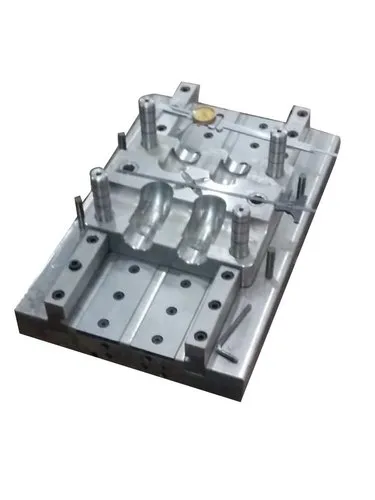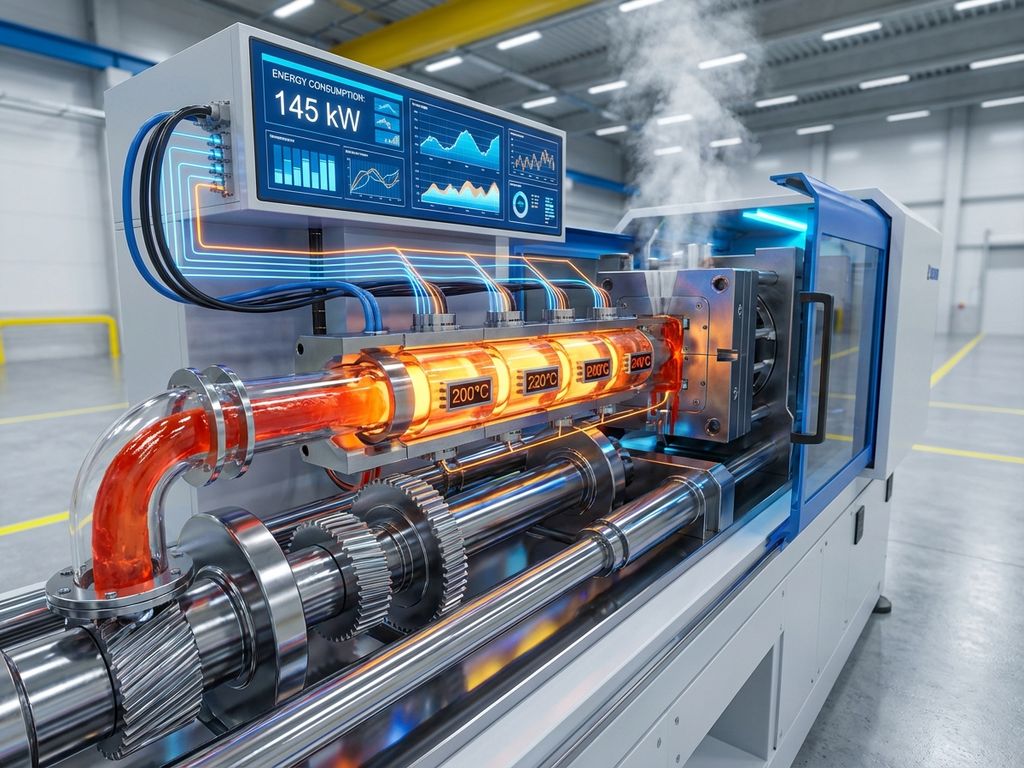
Injection moulding is a manufacturing process in which molten or softened material is injected into a mould cavity under pressure. The material fills the cavity, takes its shape, and is then cooled or cured before the finished product is ejected.
It is widely used for producing large quantities of identical, accurate, and detailed products.
Step-by-Step Injection Moulding Process
1. Material Preparation
The required material, commonly plastic pellets or granules, is prepared and fed into the injection moulding machine.
2. Heating and Melting
The material is heated inside the machine until it reaches the required molten or flowable state.
3. Mould Closing
The mould is securely closed and clamped. The two mould halves must remain properly aligned during injection.
4. Injection
The molten material is pushed through the injection system and enters the mould through the sprue, runner, and gate. Pressure forces the material into the mould cavity.
5. Filling the Cavity
The material flows throughout the cavity and reproduces the shape and surface details of the mould.
6. Holding and Packing
Additional pressure may be maintained for a short period to compensate for material shrinkage and ensure that the cavity is properly filled.
7. Cooling or Curing
The material remains inside the mould while it cools and solidifies. Cooling channels in the mould help control the temperature and reduce cycle time.
8. Mould Opening
Once the product has sufficiently solidified, the mould opens.
9. Ejection
Ejector pins or another ejection mechanism push the finished product out of the mould.
10. Finishing and Inspection
Excess material from gates or runners may be removed. The product is then inspected for dimensions, appearance, defects, and overall quality.
Simple Injection Moulding Flow
Material → Heating → Melting → Mould Closing → Injection → Filling → Holding → Cooling → Mould Opening → Ejection → Finished Product
Main Components Involved
An injection moulding system typically includes:
- Hopper – Holds and feeds the raw material.
- Heating Barrel – Heats and melts the material.
- Screw – Moves and pressurizes the molten material.
- Nozzle – Transfers the material into the mould.
- Sprue – Main entry passage into the mould.
- Runner – Carries material toward the cavity.
- Gate – Controls material entry into the cavity.
- Cavity and Core – Form the final product.
- Cooling Channels – Control mould temperature.
- Ejector System – Removes the finished product.
Types of Injection Moulding
1. Single-Cavity Moulding
Produces one product during each cycle.
2. Multi-Cavity Moulding
Produces several identical products in one cycle, making it suitable for high-volume production.
3. Hot Runner Moulding
Keeps material in the runner system heated, which can reduce runner waste.
4. Cold Runner Moulding
The runner material cools along with the product and may need to be separated after moulding.
Important Factors
Injection moulding quality depends on:
- Material type
- Material temperature
- Mould temperature
- Injection pressure
- Injection speed
- Holding pressure and time
- Cooling time
- Mould design
- Gate and runner design
- Product thickness
Common Injection Moulding Problems
Incorrect process settings or mould design can cause:
- Short shots
- Flash
- Warping
- Sink marks
- Air bubbles or voids
- Burn marks
- Weld lines
- Uneven dimensions
- Surface defects
Proper machine settings, mould design, and material selection help minimize these problems.
Advantages of Injection Moulding
- High production speed
- Excellent repeatability
- Suitable for mass production
- Can produce complex shapes
- Good dimensional accuracy
- Can create fine surface details
- Easily automated
- Consistent product quality
Applications
Injection moulding is commonly used to manufacture containers, packaging products, household items, toys, automotive components, electrical parts, industrial components, medical products, and decorative items.
Conclusion
Injection moulding works by heating material until it becomes flowable, injecting it into a closed mould under pressure, allowing it to cool or cure, and then ejecting the finished product. Careful control of temperature, pressure, speed, cooling, and mould design is essential for achieving efficient production and high-quality results.