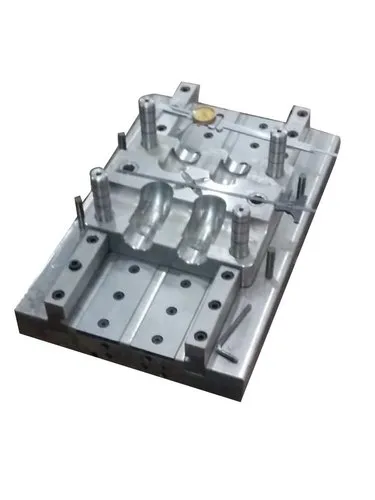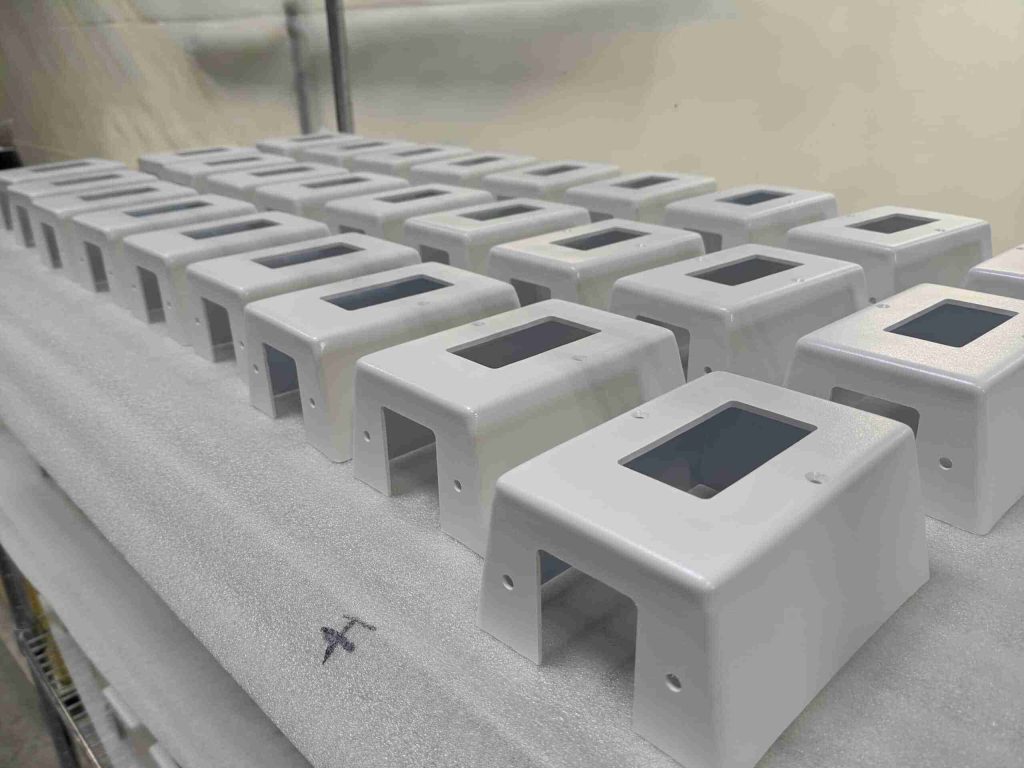
Thermoforming moulding is a manufacturing process in which a thermoplastic sheet is heated until it becomes soft and flexible, then formed over or inside a mould. Vacuum, air pressure, or mechanical force is used to make the heated material take the shape of the mould.
Once cooled, the material retains the mould’s shape and can be trimmed to create the finished product.
Step-by-Step Thermoforming Process
1. Sheet Preparation
A suitable thermoplastic sheet is selected according to the required product. The sheet is secured in a thermoforming machine.
2. Heating
The sheet is heated using heating elements until it reaches its appropriate forming temperature. It becomes soft enough to stretch and conform to the mould.
3. Positioning Over the Mould
The softened sheet is positioned over or inside the mould. The mould determines the final shape and surface details of the product.
4. Forming the Material
Depending on the process, different methods can be used:
- Vacuum Forming: Air is removed from between the sheet and mould, causing atmospheric pressure to pull the sheet tightly against the mould.
- Pressure Forming: Compressed air pushes the sheet against the mould, allowing greater detail.
- Mechanical Forming: A physical tool or mould helps press the heated sheet into the desired shape.
5. Cooling
After forming, the material is cooled while it remains in position. Cooling allows the thermoplastic to become rigid and retain the mould’s shape.
6. Demoulding
Once sufficiently cooled, the formed product is carefully removed from the mould.
7. Trimming and Finishing
Excess material around the edges is removed. Additional operations such as drilling, cutting, or surface finishing may be performed depending on the product.
Simple Thermoforming Flow
Thermoplastic Sheet → Heating → Softening → Moulding → Vacuum/Pressure → Cooling → Demoulding → Trimming → Finished Product
Common Thermoforming Methods
Vacuum Forming
Vacuum forming is one of the simplest thermoforming methods. A heated sheet is placed over a mould, and a vacuum pulls the sheet against the mould surface.
Pressure Forming
Pressure forming uses compressed air along with vacuum or other forming methods. It can produce more detailed shapes and sharper surface features.
Twin-Sheet Thermoforming
Two heated sheets are formed separately and then joined together to create a hollow product with greater structural strength.
Important Factors
Successful thermoforming depends on several factors:
- Type of thermoplastic
- Sheet thickness
- Heating temperature
- Heating time
- Mould design
- Vacuum or air pressure
- Forming speed
- Cooling time
- Product depth and shape
- Ease of demoulding
Advantages of Thermoforming
- Suitable for producing lightweight products
- Can create large and complex shapes
- Relatively fast production process
- Suitable for prototypes and production runs
- Can reproduce mould surface details
- Moulds can be economical for certain applications
- Suitable for packaging and decorative products
Applications
Thermoforming is commonly used for packaging trays, food containers, protective packaging, automotive components, appliance parts, disposable products, display items, and various decorative products.
Conclusion
Thermoforming moulding works by heating a thermoplastic sheet, forming it against a mould using vacuum, pressure, or mechanical force, and then cooling it until it becomes rigid. Proper control of temperature, forming pressure, mould design, and cooling is essential for producing accurate, high-quality products.