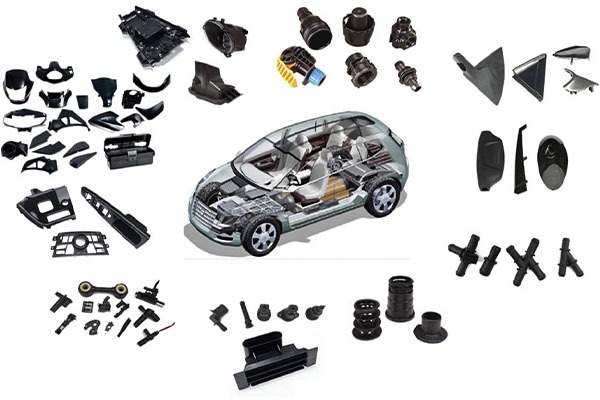
Blow moulding is a versatile and cost-effective manufacturing process used to create hollow plastic components by inflating a heated plastic tube (parison) inside a mould cavity. In the automotive industry, blow moulded parts play a critical role due to their lightweight, design flexibility, and ability to produce complex shapes with uniform wall thickness. These advantages contribute to vehicle weight reduction, fuel efficiency, and cost savings—key priorities in modern automotive design.
Key Automotive Components Made Using Blow Moulding
Fuel Tanks
One of the most significant applications of blow moulding in the automotive sector.
Blow moulded fuel tanks are lightweight, corrosion-resistant, and can be designed with complex geometries to fit into limited spaces.
Multilayer blow moulding allows for barrier layers that reduce hydrocarbon emissions.
Air Ducts and HVAC Components
Air intake ducts, ventilation tubes, and HVAC distribution systems are commonly produced using blow moulding.
These components require precision in shape and size to ensure optimal airflow and noise reduction.
Blow moulding offers the flexibility to create long, curved ductwork with consistent wall thickness.
Washer Fluid and Coolant Reservoirs
Containers for windshield washer fluid and engine coolant are typically blow moulded due to their hollow structure requirements.
These parts benefit from blow moulding’s ability to produce durable and chemically resistant containers.
Seat Backs and Headrests (Structural Components)
Some seat backs, armrests, and headrest frames are made using blow moulding to save weight without compromising strength.
The process supports integrated design features such as mounting points and channels for wiring or padding.
Battery Casings and EV Components
With the rise of electric vehicles (EVs), blow moulded housings are used for battery compartments and thermal management systems.
These parts require precise engineering to meet safety, thermal, and structural specifications.
Bumper Supports and Energy Absorption Components
Blow moulded parts can be used for impact energy absorption in bumper systems.
Their lightweight structure and inherent flexibility help reduce collision damage while maintaining crash safety standards.
Engine Covers and Protective Housings
Blow moulding is used to produce non-load-bearing covers and shields around engines and mechanical systems.
These components are valued for their thermal insulation and resistance to oil and heat.
Advantages of Blow Moulded Automotive Parts
Lightweight: Reduces overall vehicle weight, enhancing fuel efficiency.
Design Flexibility: Supports complex geometries and integration of multiple functions into a single part.
Cost-Effective: Lower tooling and production costs for high-volume manufacturing.
Durability: Excellent resistance to chemicals, temperature variations, and physical stress.
Recyclability: Many blow moulded parts can be made from recyclable or bio-based plastics.
Common Materials Used
High-Density Polyethylene (HDPE): Widely used for fuel tanks and fluid reservoirs.
Polypropylene (PP): Common for air ducts, interior parts, and structural applications.
Polyamide (Nylon): Used in engine components and high-temperature applications.
Thermoplastic Elastomers (TPEs): For flexible ducts and seals.
Conclusion
Blow moulded parts have become indispensable in modern automotive design and manufacturing. Their adaptability, combined with performance and economic benefits, make them ideal for a wide range of automotive applications—from fuel systems and HVAC to structural and protective components. As vehicles continue to evolve, especially with the rise of EVs, the scope for blow moulded innovations is expected to grow even further.