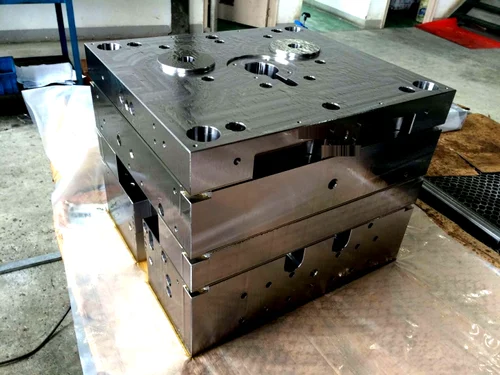
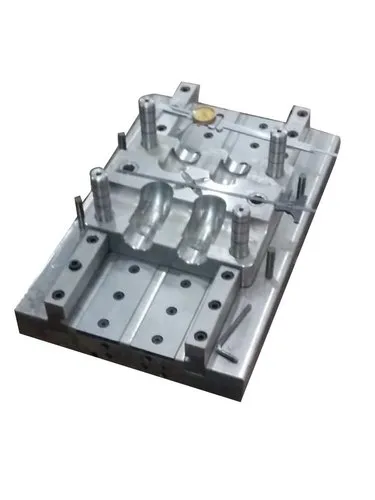
Die and mould bases are foundational components used in manufacturing processes to shape, form, or cut materials into desired forms. These bases act as support structures for dies and moulds, ensuring accurate alignment, repeatability, and durability during high-volume or precision manufacturing. Their applications span across various sectors due to their versatility and critical role in tooling systems.
1. Injection Moulding Industry
One of the most common applications of mould bases is in plastic injection moulding, where molten plastic is injected into a mould cavity to form parts.
Used for mass production of plastic components such as automotive parts, consumer goods, electronics housings, and packaging products.
Mould bases provide accurate cavity alignment, structural integrity, and heat dissipation during the injection and cooling cycles.
2. Die Casting
Die bases are heavily used in die casting where molten metal (e.g., aluminum, zinc) is injected into metal dies under high pressure.
Applied in the production of metal components like engine blocks, housings, gears, and brackets.
Mould and die bases ensure dimensional accuracy, resistance to thermal fatigue, and consistent performance under high pressure.
3. Metal Stamping and Forming
In sheet metal industries, die bases are integral to stamping and forming operations such as blanking, punching, bending, and deep drawing.
Used in the automotive, appliance, and aerospace industries for components like body panels, brackets, and enclosures.
Die bases ensure precision alignment of punches and dies, reducing tool wear and improving repeatability.
4. Thermoforming and Compression Moulding
In these processes, mould bases are used to support tools that shape heated plastic sheets or thermosetting materials.
Common in packaging, automotive interiors, and composite manufacturing.
Mould bases contribute to uniform pressure distribution, rigidity, and accuracy during forming.
5. Rubber Moulding
Rubber components, such as seals, gaskets, and hoses, are manufactured using moulds supported by strong mould bases.
Mould bases maintain shape and structural integrity under the compressive forces and temperatures of rubber moulding processes.
Essential for ensuring the dimensional accuracy of rubber parts.
6. Precision Tooling and Prototyping
In tool rooms and R&D environments, die and mould bases are used to fabricate prototype parts or tooling elements for new designs.
Used for small-scale or pilot production.
Allow for modular design and rapid changeover, which is vital in prototyping.
7. Electronics and Micro-manufacturing
Miniature dies and mould bases are used in the manufacture of electronic components, connectors, and micro-devices.
Precision is critical due to the micron-scale features of electronic parts.
Mould bases provide rigid, vibration-free platforms for high-accuracy operations.
8. Aerospace and Defense Manufacturing
High-strength die and mould bases are used for components requiring tight tolerances and complex geometries.
Applications include turbine blades, structural components, and specialized enclosures.
Materials for bases must withstand high stress and temperature cycles.
9. Packaging Industry
Moulds and dies supported by bases are used in the production of packaging components such as caps, containers, trays, and blister packs.
Enables fast cycle times and mass production with consistent quality.
Bases ensure alignment of cavities and moving parts during repeated operations.
Conclusion
Die and mould bases are essential components across a wide range of manufacturing processes. They serve as the structural backbone for tooling systems, enabling precision, repeatability, and durability in production. Their applications span across industries such as automotive, electronics, aerospace, packaging, and consumer goods, underlining their importance in modern manufacturing ecosystems.