1. Introduction to Thermoforming Sheet Materials
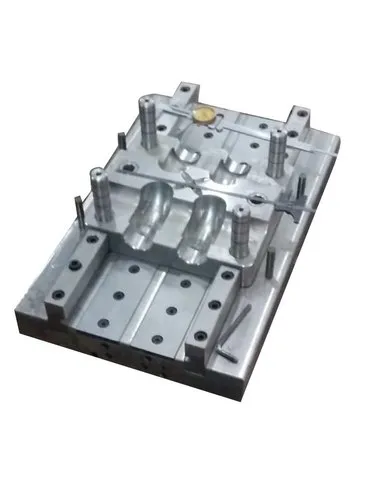
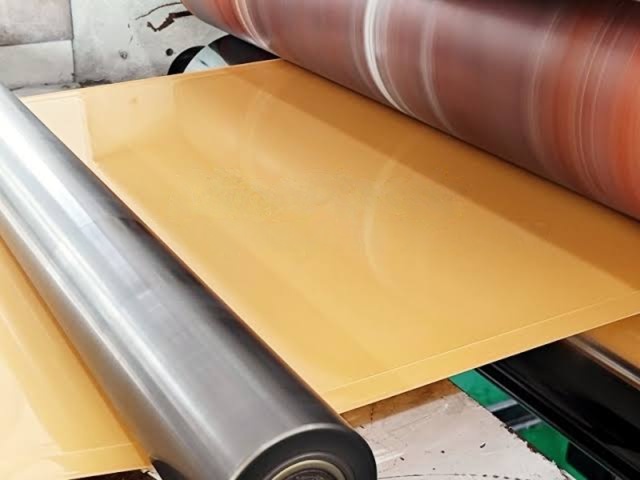
Thermoforming is a plastic manufacturing process in which a thermoplastic sheet is heated until it becomes soft and flexible, shaped over or into a mould, and then cooled to retain the required shape.
The selection of sheet material is one of the most important decisions in thermoforming because it affects the product’s strength, flexibility, transparency, surface finish, chemical resistance, forming temperature, and production cost.
Different plastics behave differently when heated and stretched. Some materials are ideal for transparent packaging, while others are better suited to automotive panels, appliance housings, food trays, or industrial components.
The most commonly used thermoforming sheet materials include:
- ABS (Acrylonitrile Butadiene Styrene)
- HIPS (High-Impact Polystyrene)
- PET and PETG
- PVC (Polyvinyl Chloride)
- PP (Polypropylene)
- PE (Polyethylene)
- PC (Polycarbonate)
- PMMA (Polymethyl Methacrylate or acrylic)
- HDPE (High-Density Polyethylene)
- PS (Polystyrene)
Each material has distinct advantages, limitations, and processing requirements.
2. ABS (Acrylonitrile Butadiene Styrene)
ABS is a widely used thermoplastic known for its toughness, impact resistance, and relatively good formability. It is frequently selected for products that require a combination of strength and an attractive surface finish.
Main Properties
- Good impact resistance.
- Good dimensional stability.
- Relatively easy to thermoform.
- Available in various colours and surface textures.
- Can be machined, painted, or finished using suitable methods.
Applications
ABS sheets are commonly used for:
- Automotive interior panels.
- Appliance housings.
- Luggage shells.
- Equipment covers.
- Machine enclosures.
- Protective housings and panels.
Advantages
- Good balance of strength and formability.
- Suitable for moderately complex shapes.
- Offers a wide range of surface finishes.
- Can provide durable products for everyday use.
Limitations
- Standard ABS is not inherently suitable for prolonged outdoor exposure without an appropriate grade or protective treatment.
- It is generally less transparent than PETG, PC, or PMMA.
- Heat resistance varies by grade.
- The sheet may require drying when moisture-sensitive grades or specific processing conditions demand it.
Best suited for: Durable housings, automotive trim, equipment covers, and products requiring good impact resistance.
3. HIPS (High-Impact Polystyrene)
HIPS is a modified polystyrene material designed to provide improved impact resistance compared with general-purpose polystyrene.
It is popular in thermoforming because it is relatively economical and can be formed into a wide range of shallow and moderately deep shapes.
Main Properties
- Good formability.
- Relatively low material cost.
- Good impact resistance compared with standard polystyrene.
- Available in many colours.
- Generally suitable for printing and decorative finishing.
Applications
- Refrigerator liners.
- Disposable food trays, where the grade is suitable.
- Point-of-sale displays.
- Packaging inserts.
- Product trays.
- Lightweight covers and panels.
Advantages
- Economical for many high-volume applications.
- Suitable for rapid production.
- Relatively easy to trim and finish.
- Offers a useful balance of stiffness and impact resistance.
Limitations
- Lower heat resistance than some engineering plastics.
- Limited resistance to certain chemicals and solvents.
- Standard HIPS is opaque rather than transparent.
- Outdoor durability depends on the grade and exposure conditions.
Best suited for: Cost-sensitive packaging, display components, refrigerator liners, and lightweight products.
4. PET (Polyethylene Terephthalate)
PET is a widely used thermoplastic polyester. It is valued for its clarity, strength, and suitability for many packaging applications.
PET sheet is used in thermoforming for products where visibility, rigidity, and an attractive appearance are important.
Main Properties
- Good transparency in suitable grades.
- Good stiffness and strength.
- Useful barrier properties for many packaging applications.
- Good resistance to dilute acids and various chemicals, depending on the chemical and exposure conditions.
- Available in different sheet thicknesses and formulations.
Applications
- Food packaging trays.
- Blister packaging.
- Product display packaging.
- Protective packaging inserts.
- Transparent lids and covers.
- Some medical and consumer-product packaging.
Advantages
- Good visual clarity.
- Useful mechanical strength.
- Suitable for many high-volume packaging operations.
- Can be available in recyclable material streams, depending on the specific formulation and local recycling infrastructure.
Limitations
- Forming behaviour depends on the specific PET formulation and sheet structure.
- Some grades require careful drying before processing.
- Excessive heating can cause degradation or poor surface quality.
- Recycling compatibility depends on coatings, additives, labels, and product construction.
Best suited for: Transparent packaging, food trays, blister packs, and display applications.
5. PETG (Glycol-Modified Polyethylene Terephthalate)
PETG is a modified polyester that generally offers good clarity, impact resistance, and ease of thermoforming.
Compared with some other clear plastics, PETG can be easier to form at relatively moderate processing temperatures. However, the exact forming window depends on the grade and sheet thickness.
Main Properties
- High transparency.
- Good impact resistance.
- Good formability.
- Suitable for complex shapes.
- Can be cut and finished using appropriate methods.
Applications
- Retail displays.
- Protective covers.
- Product packaging.
- Equipment guards.
- Point-of-sale displays.
- Clear housings and enclosures.
Advantages
- Good balance of clarity and toughness.
- Suitable for detailed shapes.
- Often easier to thermoform than some higher-temperature engineering plastics.
- Can provide an attractive finished surface.
Limitations
- Can scratch more easily than some harder materials.
- Heat resistance may be insufficient for high-temperature service.
- Chemical resistance depends on the substance and exposure conditions.
- Some formulations may not fit standard PET recycling streams.
Best suited for: Clear displays, protective covers, formed packaging, and applications requiring transparency with good impact resistance.
6. PVC (Polyvinyl Chloride)
PVC is a versatile thermoplastic available in rigid and flexible formulations. Rigid PVC sheet can be thermoformed for applications requiring chemical resistance and a relatively economical material.
Main Properties
- Available in rigid and flexible forms.
- Good resistance to many acids and alkalis.
- Useful electrical insulation properties.
- Available in a range of colours.
- Can be formed into a variety of shapes.
Applications
- Packaging components.
- Equipment covers.
- Industrial housings.
- Chemical-resistant panels.
- Some medical and technical products.
Advantages
- Good resistance to many chemicals.
- Can be economical for suitable applications.
- Available in different formulations.
- Can be used for products requiring specific electrical or chemical properties.
Limitations
- Processing requires careful temperature control because overheating can cause thermal degradation and release hazardous decomposition products.
- Heat resistance varies by formulation.
- Environmental and end-of-life considerations may be more complicated than for some alternative plastics.
- Some additives used in flexible PVC may affect material properties and regulatory suitability.
Best suited for: Selected chemical-resistant components, industrial covers, and packaging where the specific PVC grade meets the application requirements.
Processing note: PVC should be processed using the supplier’s recommended temperature range and appropriate ventilation and safety controls.
7. PP (Polypropylene)
Polypropylene is a lightweight thermoplastic with good chemical resistance and useful fatigue resistance. It is frequently used in packaging, automotive components, and household products.
However, PP can be more challenging to thermoform than some other plastics because its shrinkage, crystallisation behaviour, and forming characteristics require careful control.
Main Properties
- Low density.
- Good chemical resistance.
- Good resistance to repeated flexing in suitable grades.
- Good moisture resistance.
- Useful toughness and fatigue performance.
Applications
- Packaging trays.
- Automotive interior components.
- Reusable containers.
- Industrial trays.
- Appliance components.
- Selected food-contact products.
Advantages
- Lightweight.
- Resistant to many acids, alkalis, and other chemicals.
- Suitable for products requiring repeated flexing.
- Can offer good chemical durability.
Limitations
- Shrinkage and warpage can be challenging to control.
- Forming conditions may require more specialised process development.
- Adhesion and surface finishing can be more difficult than with some other materials.
- Heat resistance depends on grade, load, and operating conditions.
Best suited for: Lightweight packaging, chemical-resistant components, and selected reusable products.
8. PE (Polyethylene)
Polyethylene is available in several grades, including low-density polyethylene (LDPE), linear low-density polyethylene (LLDPE), and high-density polyethylene (HDPE).
These grades differ in stiffness, flexibility, toughness, and processing behaviour.
Main Properties
- Good chemical resistance.
- Low moisture absorption.
- Good impact resistance in suitable grades.
- Available in flexible and relatively rigid forms.
- Often economical for industrial applications.
Applications
- Protective liners.
- Industrial trays.
- Containers and covers.
- Chemical-handling components.
- Packaging inserts.
- Protective panels.
Advantages
- Good resistance to many chemicals.
- Low moisture absorption.
- Good impact performance in suitable grades.
- Useful for products requiring chemical durability.
Limitations
- Relatively high thermal expansion can affect dimensional stability.
- Some grades are difficult to bond or print without surface treatment.
- Forming shrinkage and warpage may require careful control.
- Heat resistance varies by grade.
Best suited for: Chemical-resistant components, protective liners, and industrial products.
9. PC (Polycarbonate)
Polycarbonate is an engineering thermoplastic known for its high impact resistance and transparency. It is used where products need to withstand mechanical loads while allowing light to pass through.
Main Properties
- High impact resistance.
- Good transparency in suitable grades.
- Good dimensional stability.
- Higher heat resistance than many commodity plastics.
- Suitable for technical and protective applications.
Applications
- Machine guards.
- Protective panels.
- Safety covers.
- Equipment enclosures.
- Industrial transparent components.
- Certain lighting and display components.
Advantages
- Strong impact performance.
- Good optical clarity.
- Useful heat resistance.
- Suitable for demanding protective applications.
Limitations
- Material cost is generally higher than that of commodity plastics.
- Careful drying may be required before thermoforming.
- Surface scratching can be a concern.
- Chemical compatibility must be checked because some solvents can cause crazing or stress cracking.
Best suited for: Impact-resistant transparent panels, machine guards, and technical components.
10. PMMA (Polymethyl Methacrylate or Acrylic)
PMMA, commonly called acrylic, is valued for its optical clarity, surface appearance, and weatherability in suitable grades.
It is often selected for applications where appearance and light transmission are particularly important.
Main Properties
- Excellent optical clarity in suitable grades.
- Good surface gloss.
- Good weatherability in appropriate formulations.
- Available in transparent, translucent, and coloured sheets.
- Suitable for decorative and display products.
Applications
- Display covers.
- Lighting components.
- Signage.
- Decorative panels.
- Retail display units.
- Transparent covers and housings.
Advantages
- Attractive optical appearance.
- Good surface gloss.
- Suitable for outdoor applications when the grade and design are appropriate.
- Available in a wide range of colours and finishes.
Limitations
- More brittle than polycarbonate under many impact conditions.
- Can crack if subjected to unsuitable stresses.
- Heating and forming conditions must be controlled to avoid defects.
- Scratching can occur during handling.
Best suited for: Decorative panels, display components, signage, and applications requiring high optical clarity.
11. PS (General-Purpose Polystyrene)
General-purpose polystyrene is a relatively rigid thermoplastic that can be transparent and is easy to process in suitable thermoforming applications.
It is less impact-resistant than HIPS, so its use depends on the mechanical demands of the finished product.
Main Properties
- Good clarity in suitable grades.
- Relatively low cost.
- Good stiffness.
- Easy forming for many simple shapes.
- Suitable for lightweight applications.
Applications
- Disposable trays.
- Packaging inserts.
- Lightweight product containers.
- Display packaging.
- Selected food-service packaging.
Advantages
- Economical.
- Suitable for high-volume production.
- Can provide good clarity.
- Easy to process in many straightforward applications.
Limitations
- Relatively brittle.
- Lower impact resistance than HIPS.
- Limited heat resistance compared with engineering plastics.
- Environmental and recycling suitability depends on the product and local facilities.
Best suited for: Lightweight, cost-sensitive packaging and products that do not require high impact resistance.
12. Comparison of Common Thermoforming Sheet Materials
The following table provides a general comparison. Actual properties depend on the grade, thickness, additives, and processing conditions.
| Material | Transparency | Impact Resistance | Chemical Resistance | Relative Cost | Common Applications |
|---|---|---|---|---|---|
| ABS | Generally opaque | Good | Moderate; depends on chemical | Medium | Automotive panels, housings |
| HIPS | Generally opaque | Good for a polystyrene grade | Limited to moderate | Low | Packaging, trays, liners |
| PET | Good in suitable grades | Good | Good against many substances | Low to medium | Food trays, blister packaging |
| PETG | High | Good | Varies by chemical | Medium | Displays, clear covers |
| PVC | Depends on formulation | Varies by grade | Good against many acids and alkalis | Low to medium | Industrial and packaging components |
| PP | Usually opaque or translucent | Good in suitable grades | Good against many chemicals | Low to medium | Trays, reusable components |
| PE | Usually opaque or translucent | Good in suitable grades | Good against many chemicals | Low to medium | Liners, protective components |
| PC | High in clear grades | Very high | Sensitive to some chemicals | High | Guards, protective panels |
| PMMA | Very high | Moderate; can be brittle | Varies by chemical | Medium to high | Displays, signage, decorative panels |
| PS | High in clear grades | Low to moderate | Limited to moderate | Low | Lightweight packaging |
Relative cost is indicative only. Actual prices vary by region, thickness, grade, supplier, order volume, and material availability.
13. Factors Affecting the Selection of Thermoforming Sheet Materials
Choosing the correct material requires consideration of the finished product and the production process.
13.1 Product Application
The intended use is the first consideration.
- Packaging: PET, PETG, HIPS, and suitable PP grades are common options.
- Automotive interiors: ABS and selected PC blends may be suitable.
- Transparent protective covers: PC, PETG, and PMMA are possible choices, depending on the impact and optical requirements.
- Chemical-resistant components: PP, PE, and selected PVC grades may be appropriate.
- Decorative products: PMMA and ABS can provide attractive finishes.
These are starting points rather than universal recommendations.
13.2 Mechanical Strength
The sheet must withstand the loads expected during use.
Consider:
- Impact resistance.
- Stiffness.
- Flexibility.
- Resistance to cracking.
- Long-term loading.
For impact-critical applications, the complete product design and material grade must be evaluated rather than relying on a general material name alone.
13.3 Transparency and Appearance
If visibility is important, consider PET, PETG, PC, PMMA, or suitable PS grades.
If the product requires an opaque surface, ABS, HIPS, PP, or PE may be more suitable.
The final appearance also depends on sheet quality, heating uniformity, mould finish, and the amount of stretching during forming.
13.4 Temperature Resistance
The finished product must tolerate its intended operating temperature.
Materials such as PC may be suitable for applications requiring higher heat resistance than standard HIPS or PS, but the exact service temperature depends on the grade, applied load, and exposure duration.
The forming temperature and the maximum service temperature are different properties and should not be confused.
13.5 Chemical Resistance
For products exposed to cleaning agents, oils, acids, alkalis, or solvents, verify compatibility using the supplier’s chemical-resistance data.
A material that resists one chemical may be damaged by another, even when both substances are commonly used in industrial environments.
13.6 Thickness and Forming Depth
Sheet thickness affects stiffness, heating time, material distribution, and the strength of the final product.
Deep-draw products can experience substantial thinning in stretched areas. The starting sheet thickness must therefore be selected with the forming geometry and minimum required wall thickness in mind.
13.7 Cost and Availability
The material’s purchase price is only one part of the total cost.
Also consider:
- Scrap and material utilisation.
- Heating time.
- Drying requirements.
- Trimming costs.
- Tooling compatibility.
- Product rejection rates.
- Recycling or disposal requirements.
A material with a higher purchase price may be more economical if it reduces scrap or improves product performance.
14. Common Defects Associated with Thermoforming Sheet Materials
Different materials can produce different defects when heating, forming, or cooling conditions are unsuitable.
| Defect | Possible Causes | General Corrective Actions |
|---|---|---|
| Webbing or folds | Excess material gathering between mould features | Adjust forming conditions, sheet layout, or mould geometry |
| Excessive thinning | Deep drawing or uneven material distribution | Review sheet thickness, heating, and forming strategy |
| Bubbles | Moisture, trapped air, or material degradation | Check drying requirements and heating conditions |
| Surface marks | Contaminated sheets, poor handling, or mould defects | Clean the sheet and mould; improve handling |
| Warpage | Uneven heating, cooling, or residual stress | Improve temperature uniformity and cooling |
| Incomplete forming | Insufficient heating, unsuitable forming conditions, or inadequate vacuum or pressure | Verify the material’s forming window and equipment settings |
| Cracking | Excessive stretching, unsuitable temperature, or material limitations | Review geometry, heating, and grade selection |
The correct remedy depends on the material, equipment, mould design, and specific defect.
15. Best Practices for Handling Thermoforming Sheets
Proper handling and storage help maintain material quality before forming.
Storage
- Store sheets in a clean, dry environment according to supplier recommendations.
- Keep sheets protected from dust, oil, and other contamination.
- Avoid excessive heat and direct sunlight when these may affect the material.
- Follow any requirements for humidity-controlled storage.
Pre-Processing
- Confirm the material grade and sheet thickness.
- Check for scratches, contamination, and other visible defects.
- Dry the material when required by the supplier.
- Ensure the heating system is suitable for the selected polymer.
During Thermoforming
- Use the recommended forming-temperature range.
- Maintain uniform sheet heating.
- Avoid excessive heating that can cause degradation.
- Monitor material distribution in deep-draw areas.
- Adjust vacuum, pressure, or plug-assist settings as required by the process.
After Forming
- Cool the part sufficiently before removal.
- Trim the component using suitable methods.
- Inspect dimensions, wall thickness, and surface quality.
- Store finished products to prevent scratches, deformation, and contamination.
Conclusion
The main sheet materials used in thermoforming include ABS, HIPS, PET, PETG, PVC, PP, PE, PC, PMMA, and PS. Each material offers a different balance of transparency, strength, chemical resistance, heat resistance, formability, and cost.
- ABS: Suitable for durable housings and automotive components.
- HIPS: Economical for many packaging and display applications.
- PET and PETG: Useful for transparent packaging and formed displays.
- PVC: Appropriate for selected applications requiring chemical resistance.
- PP and PE: Valuable for lightweight, chemically resistant products.
- PC: Suitable for demanding impact-resistant transparent components.
- PMMA: Ideal for applications requiring excellent optical clarity and an attractive finish.
- PS: Useful for lightweight, cost-sensitive packaging.
The best sheet material is determined by the product’s intended use, required performance, forming depth, production volume, and total manufacturing cost. Selecting the correct material and controlling heating, forming, and cooling conditions are essential for producing consistent, high-quality thermoformed products.