1. Introduction
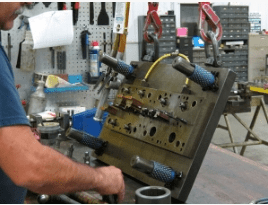
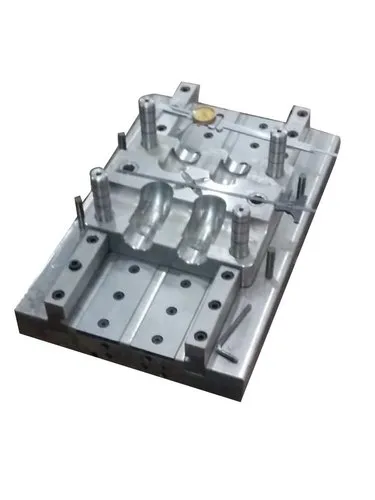
Dies are essential tools in manufacturing processes such as forging, extrusion, stamping, and die casting. They are subjected to extreme mechanical, thermal, and chemical stresses, which can lead to wear and eventual failure. Understanding die wear mechanisms and conducting systematic failure analysis are crucial to extending die life, improving product quality, and reducing production costs.
2. Types of Die Wear
Die wear refers to the gradual degradation of the die material due to repeated use. The primary types include:
2.1 Abrasive Wear
Cause: Hard particles or asperities on the workpiece surface sliding over the die.
Effect: Material removal from the die surface, resulting in dimensional inaccuracies.
Prevention: Use of harder die materials or coatings, improved lubrication, and surface treatments.
2.2 Adhesive Wear (Gallling)
Cause: Material transfer due to adhesion between the die and workpiece surfaces.
Effect: Surface tearing, scoring, or built-up edge formation.
Prevention: Surface coatings (e.g., nitriding, PVD), optimized lubrication, and material pairing.
2.3 Thermal Fatigue (Heat Checking)
Cause: Repeated heating and cooling cycles during hot working processes.
Effect: Formation of fine surface cracks (heat checks) perpendicular to heat flow.
Prevention: Preheating dies, using thermal shock-resistant materials, applying surface coatings.
2.4 Mechanical Fatigue
Cause: Cyclic mechanical loading leading to crack initiation and propagation.
Effect: Fatigue cracks that can propagate and lead to catastrophic failure.
Prevention: Stress-relief treatments, die design optimization, proper alignment.
2.5 Erosive Wear
Cause: High-velocity fluid or particle impact in processes like die casting.
Effect: Localized material loss and pitting.
Prevention: Use of wear-resistant materials, surface hardening, and better cooling design.
3. Causes of Die Failure
Die failure occurs when the tool can no longer perform its intended function. Common causes include:
Improper material selection
Inadequate heat treatment
Poor die design (e.g., sharp corners, stress concentrations)
Overloading or misalignment during operation
Lack of maintenance or improper handling
4. Failure Analysis Process
Failure analysis is a systematic investigation to determine the root cause of die failure. The process generally includes:
4.1 Visual Inspection
First step to identify visible cracks, wear patterns, discoloration, or deformation.
4.2 Dimensional Inspection
Measurement of critical die features to detect wear or distortion.
4.3 Material Analysis
Chemical composition and microstructural analysis using techniques like optical microscopy, SEM, and EDS.
4.4 Hardness Testing
Evaluates whether heat treatment was effective or if there was softening during use.
4.5 Fractography
Study of fracture surfaces to identify crack initiation points and modes of failure (brittle, ductile, fatigue, etc.).
5. Remedies and Preventive Measures
To reduce die wear and prevent premature failure:
Material Selection: Use high-performance tool steels or carbide materials suited to the application.
Heat Treatment: Proper hardening and tempering to enhance wear and fatigue resistance.
Surface Treatments: Coatings like TiN, CrN, or nitriding to enhance surface hardness and reduce friction.
Design Improvements: Avoid sharp corners, include radii, optimize cooling channels, and ensure proper die alignment.
Lubrication: Use appropriate lubricants to reduce friction and thermal loads.
Monitoring and Maintenance: Regular inspections and maintenance to detect early signs of wear or damage.
6. Conclusion
Die wear and failure are inevitable in high-stress manufacturing environments, but understanding the mechanisms involved allows for the development of effective prevention and mitigation strategies. Through careful material selection, design optimization, and regular analysis, the service life of dies can be significantly extended, leading to increased productivity and reduced manufacturing costs.