1. Introduction
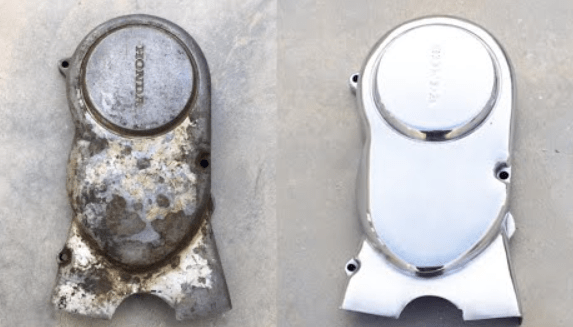
Polishing and finishing are critical post-machining processes in die manufacturing. These techniques enhance surface quality, improve dimensional accuracy, and extend the life of the die by reducing wear and friction. A well-polished die not only ensures the production of high-quality parts but also minimizes defects such as sticking, galling, and scoring.
2. Objectives of Die Polishing and Finishing
Enhance surface smoothness and appearance
Reduce surface friction and wear
Improve part ejection and mold release
Remove machining marks and burrs
Ensure dimensional consistency and tolerances
Prolong die life
3. Common Polishing and Finishing Techniques
3.1 Manual Polishing
Manual polishing involves skilled labor using abrasive tools and compounds to achieve the desired finish.
Tools Used:
Diamond paste
Emery papers (from coarse to fine grits)
Polishing stones
Felt bobs
Applications: Ideal for areas that are hard to reach with machines or for final fine polishing.
3.2 Mechanical Polishing
Mechanical polishing is performed using machines that apply abrasives to the die surface with high-speed rotating tools.
Common Equipment:
Rotary polishers
Buffing machines
Lapping machines
Advantages: Faster than manual polishing and provides consistent results over large surface areas.
3.3 Ultrasonic Polishing
Uses ultrasonic vibrations combined with abrasive tools to remove material and polish surfaces.
Benefits:
Precise and delicate polishing for intricate features
Reduced operator fatigue
Minimal thermal distortion
Typical Use: Used in precision molds and dies with fine details or tight tolerance requirements.
3.4 Electro-Polishing
An electrochemical process that removes material from the surface to smooth and polish it.
Process: Involves immersing the die in an electrolytic bath and applying a current.
Advantages:
Uniform material removal
Excellent for hard-to-reach internal cavities
Corrosion-resistant finish
3.5 Lapping
A precision technique involving the use of a lapping plate and abrasive slurry to produce an ultra-smooth, flat surface.
Uses: Critical where flatness and surface finish are crucial, such as in sealing dies or high-precision forming dies.
4. Surface Finishing Grades
Die surfaces are often finished to specific grades based on their application:
| Grade | Surface Roughness (Ra, µm) | Application |
|---|---|---|
| A1 | 0.05 – 0.10 | Mirror finish, optical parts |
| A2 | 0.10 – 0.20 | High-gloss parts, transparent plastics |
| B1 | 0.20 – 0.40 | General-purpose molded parts |
| C1 | 0.40 – 0.80 | Non-visible or structural parts |